A Creative Hobby Is Cheaper Than Therapy (And the Research Backs It Up)
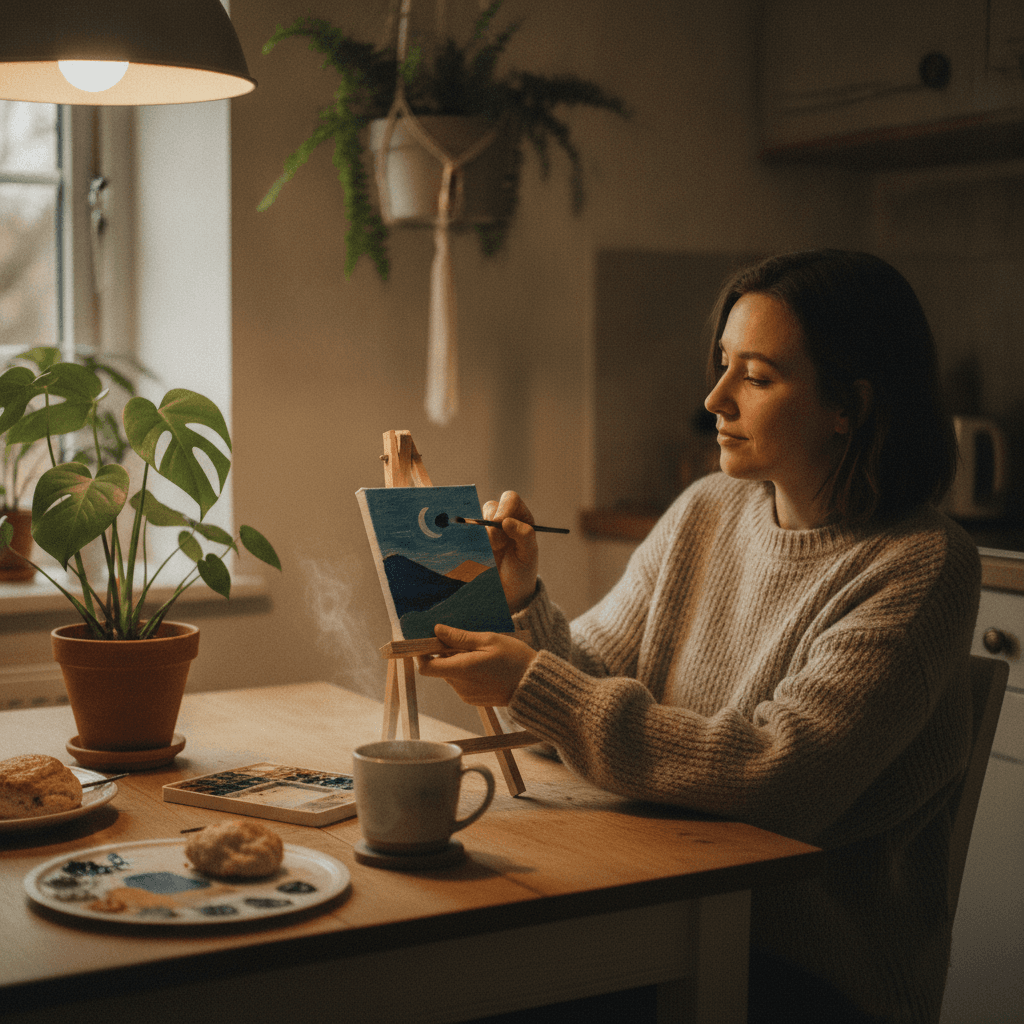
Let's be precise at the start: creative hobbies are not a substitute for therapy when therapy is what's needed. But as a maintenance practice for an overworked nervous system, the evidence for regular creative activity is remarkably strong — stronger than most people assume, and cheap enough that the only real cost is the guilt about 'wasting time.' Let's dismantle that guilt with data.
What the Research Actually Found
Highlights from the literature: the Drexel cortisol study (45 minutes of art-making lowered cortisol in ~75% of participants, regardless of skill); large-scale epidemiological work from the UK (the UCL cohort studies) linking regular arts participation — even attendance, not just creation — to lower rates of depression and slower cognitive decline; and dozens of flow-state studies showing that absorbed creative activity quiets the default mode network, the brain's rumination engine. Summarized: making things regularly measurably calms, and you don't need talent for the benefit to show up.
The Economics: Hobby vs. Burnout
Run the numbers on stress coping: a weekly creative hobby costs $10–40/week (supplies amortized, or one class). Burnout costs — sick days, sleep dysfunction, the weekend spent too fried to enjoy, the therapist bill when things tip over — orders of magnitude more. This isn't an argument against therapy; it's an argument that prevention-grade stress management is absurdly cost-effective. A paint class, a baking session, a sketchbook habit: these are maintenance, like oil changes, and skipping them to save $30 is the same species of false economy.
Why 'Creative' Specifically (Not Just Any Hobby)
Any absorbing hobby beats Netflix, but creative hobbies have a particular profile: (1) tangible output — you end with a thing, and visible progress is motivating in a way pure consumption isn't; (2) embodied work — hands busy, eyes off screens, which the attention research shows is what actually restores depleted focus; (3) permissible imperfection — unlike work output, hobby output can be bad, and the practice of making bad art on purpose is the exercise your perfectionism needs; (4) identity spillover — 'I'm someone who paints on Thursdays' is a self-story with room to grow into, and behavioral science knows identity-based habits stick hardest.
Making It Happen: The 20-Minute Protocol
The research protocols usually involve 45+ minutes, but adherence beats intensity, so start ridiculously small:
- Week 1–2: 20 minutes, twice a week, scheduled. Not 'when I have time' — nobody has time; the calendar makes it.
- Week 3–4: add one longer session weekly (45–60 min), and enroll in one structured session — a class, a workshop, a paint night — because social commitment survives motivation dips better than solo willpower.
- Month 2+: keep the rhythm, drop the guilt. The output is not the point; the *time in the state* is the point.
The hobby that survives is the one whose setup lives in sight: paints on the desk, apron on the hook. Friction is the enemy, visibility the ally.
For the Skeptics in the Back
If this all sounds like wellness-flavored marketing, fair — here's the falsifiable version: commit to four weeks, twenty minutes twice a week, any creative practice you don't hate, and track your own stress (a 1–10 nightly number in your notes app is enough instrumentation). If nothing moves, you've lost about 10 hours and gained evidence; if it does move, you've bought a maintenance practice for the price of lunch. The effect size in the literature is solid enough that we like your odds.
The Bakery's Stake in This
Obviously we have opinions — we run a business on the overlap of creativity and comfort. But it's worth saying from inside the building: the bakers, decorators, and paint instructors who work here visibly decompress while doing the work. There's a reason people in food and art jobs describe the physical making as the good part of the day. We built the paint studio precisely so that feeling could be had on purpose, by anyone, without buying a stand mixer first. Come borrow our hobby — the research suggests you'll feel the difference before the paint dries.
Your nervous system has been asking for a creative outlet. Answer it — twenty minutes, two hours, or a whole paint night; it's all maintenance.