Aging Egg Whites for Macarons: Does It Actually Matter?
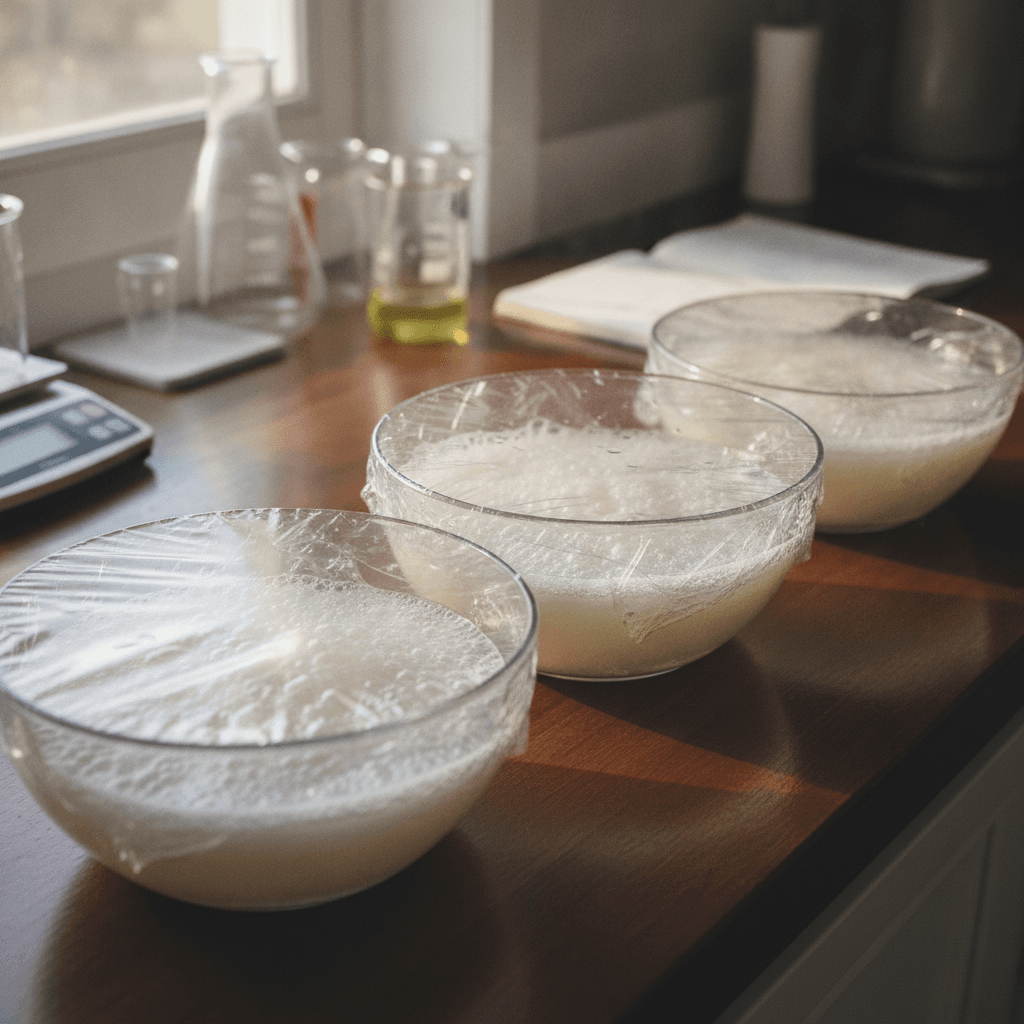
Macaron recipes from the old masters insist on "aged" egg whites — whites separated 24 to 48 hours ahead and left in the fridge or even on the counter. Modern recipes often shrug and say fresh is fine. Who's right? We ran the comparison in a working bakery, and the answer is satisfying: it matters, but not for the reason you probably heard.
The Theory Everyone Repeats
The standard explanation: aging lets water evaporate from the whites, concentrating proteins, and it relaxes the protein structure (reduces elasticity), producing a more stable meringue that's easier to fold without over-deflating. This is mostly true — but the evaporation part is doing less work than the protein-relaxation part, which is why *covered* resting still helps despite blocking evaporation. Some of the lore survives contact with food science; some doesn't.
The Science Bit, Translated
Fresh egg whites are thick and gloopy because the proteins are tightly coiled and the whites contain clusters of thick albumen (the globby part) and thin albumen (the watery part) that barely mix. Over 24–48 hours, enzymes loosen those protein coils, the two fractions integrate, and the whites whip up faster and more evenly. Meanwhile, a small amount of moisture loss (if uncovered) nudges the protein:water ratio up slightly. The result in the bowl: meringue that reaches stiff peaks with less whipping — and less whipping means less chance of over-whipping, which is the real win.
What We Actually Found in Side-by-Side Batches
Our bakery observations across batch comparisons:
- Aged (48h, covered, room temp then fridge): meringue whipped faster, felt silkier during macaronage, fold window felt wider, fewer hollow shells on humid days
- Fresh, cold, straight from the shell: needed longer whipping to the same peak, batter ran slightly stiffer, marginally higher defect rate — but *batches still succeeded*
- Fresh, brought to room temp 2 hours: landed between the two, much closer to aged than to cold
The punchline: aging helps most at the margin cases — humid days, borderline ovens, new bakers. If your process is dialed, fresh-and-room-temp works. Which is why honest recipes say both things.
The Practical Aging Protocol
If you want the benefit, do it safely:
- Separate eggs while cold (cleaner separation), whites into a clean glass or metal bowl — no plastic, no fat residue
- Cover with plastic wrap poked with a few holes (or a loose lid), mark the weight — you're aiming to lose about 2–3g per 100g of whites if you want to quantify it
- Fridge 24–48 hours (48 is the sweet spot; beyond 72 you're not gaining much and food-safety conservatism says stop)
- Always bring back to room temperature before whipping — cold whipped whites are half the problem fresh whites have
- If you're mid-bake-itch and can't wait: microwave-free quick-age — leave whites at room temp 4+ hours uncovered; it recovers maybe 70% of the benefit
Carton Whites and Powdered Whites: The Exceptions
Pasteurized carton whites whip more slowly and to slightly less volume, but they're remarkably consistent — and consistency is the whole game at scale (we use them in production for exactly that reason; there's zero shame in it). Powdered albumen is a real ingredient, not a hack — professional kitchens use it to fortify weak whites, typically swapping 5–10% of white weight with reconstituted powder when shells keep coming out hollow. If your homemade batches are inconsistent across weeks, aging plus weighing (or a carton brand you stick with) removes two variables at once.
The Verdict for Home Bakers
Age your whites if: you're new at macarons, it's humid, you've been getting hollows, or you bake the French method (which has less stabilizing chemistry to rescue borderline meringue). Skip aging if: you use the Italian method in decent conditions with room-temperature fresh whites — you'll lose little to nothing. And when it comes to the shells' final texture, the 24-hour maturation after filling matters about ten times more than the 48-hour aging before baking. Priorities: mature your macs, age your whites if convenient, and if all else fails, calibrate against a box of ours while you practice.
For more macaron deep-dives, browse our baking guides — or skip the chemistry and let us ship you the finished argument.