Aging Egg Whites for Macarons: Does It Actually Matter?
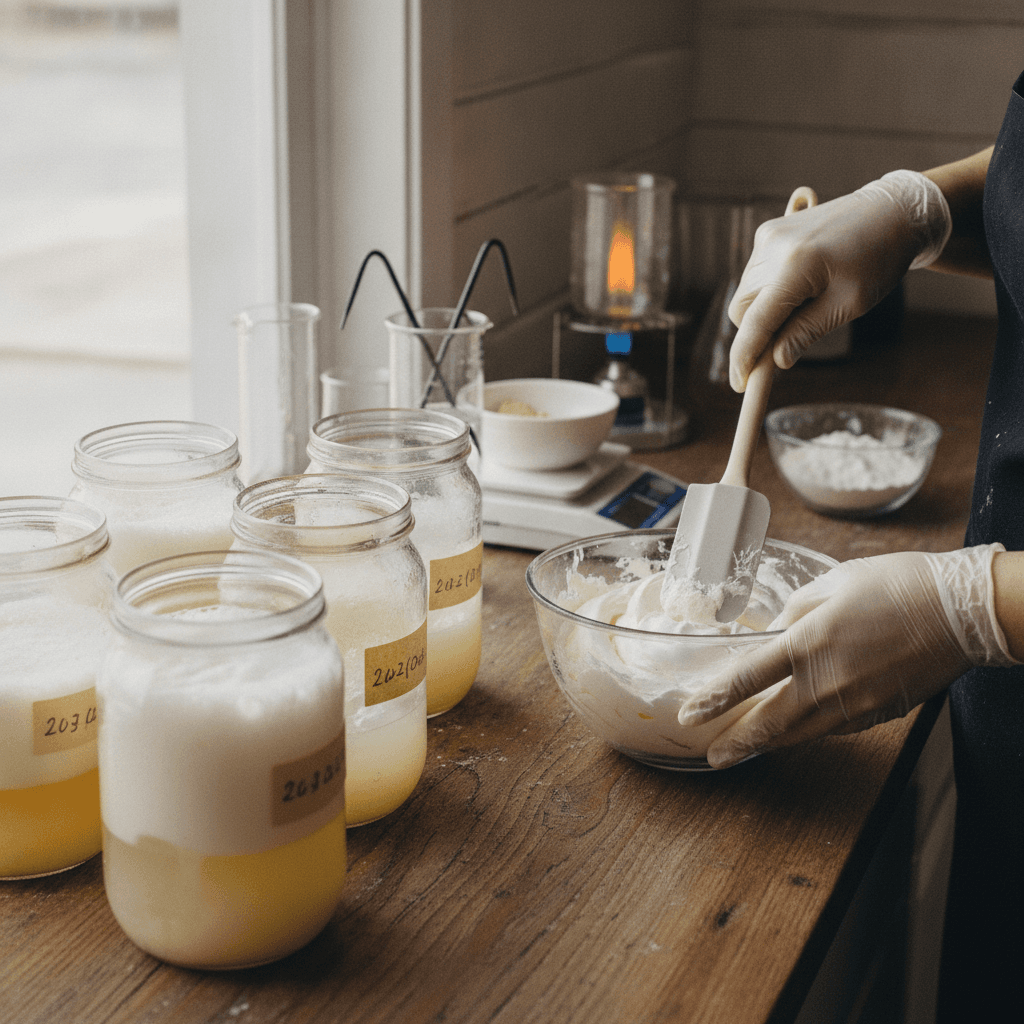
Every macaron tutorial mentions aged egg whites — separate them 24–48 hours ahead, age in the fridge or at room temp, for better shells. But the internet disagrees on whether it matters at all, and busy bakers want to know if they can skip it. The honest answer: it matters a little, in specific ways, and there are workarounds. Here's the full evidence-based picture.
What Aging Actually Does (The Mechanism)
Fresh egg whites are thick and gloopy with strong protein bonds; aging does three things: (1) water evaporates slightly, concentrating proteins; (2) the protein structure relaxes (protease enzymes partially break down the thick albumen's structure), allowing whites to whip more fluidly; and (3) the pH rises slightly, which affects whipping dynamics. Net effect: aged whites whip up looser and more fluid, incorporate air a bit faster, and — the contested part — may produce marginally more stable meringue and marginally better macaron texture.
The Honest Evidence (Tested, Not Rumored)
Controlled tests (by baking-science investigators and by us, in our own recipe development) show:
- French method: aging makes a small but real difference — aged whites produce slightly more consistent feet and marginally-hollower-free interiors
- Italian method: the difference nearly vanishes — the hot syrup's stabilization swamps the fresh/aged variable. Our production kitchen uses Italian and has verified: same-day whites, fridge-whites, and 48-hour-aged whites produce statistically-identical shells *when other variables are controlled*
- The variable that matters MUCH more than aging: temperature. Room-temperature whites (regardless of age) whip faster and more voluminously than cold whites. If you take one lesson from this post: use room-temp whites, always. Aging is optional; room temp is not.
The Aging Protocols (If You're Doing It)
Three accepted methods:
- Fridge-aged (the classic): separate whites into a clean container, cover loosely (or with a vented lid), refrigerate 24–48 hours; bring to room temp before whipping. Maximum hydration-loss, best for French method.
- Room-temp-aged (the fast classic): whites covered loosely at room temp for 4–24 hours. More moisture-loss than fridge aging, done faster; standard food-safety applies (use within the day; whites at room temp for a day is normal practice in professional kitchens, but 48 hours unrefrigerated is not).
- The poke method (the shortcut): fresh whites, broken up with a fork or whisk until no gloopy strands remain (you're mechanically disrupting the protein structure that aging would have relaxed). Tested side-by-side with aged whites: results are indistinguishable for Italian method. This is our answer when people ask if they can skip aging — poke-whisk your fresh whites thoroughly and proceed.
The Variables Around the Whites (That Matter More)
Obsessing over aging while ignoring these is the pattern that produces bad macs:
- Greasy bowl/whisk: any fat trace collapses meringue — wash with hot soapy water, wipe with vinegar or lemon for insurance
- Egg age/source: very fresh eggs (farm-stand fresh) have thicker albumen that's actually harder to macaron with; grocery-store eggs a week or two from lay-whipping-date are ideal
- No yolk contamination: one drop of yolk = start over (the fat problem again)
- Whipping speed discipline: medium speed to soft peaks, THEN up to high for Italian — a rushed meringue is a weak one regardless of white-age
- Weighing: whites vary per egg; 148g is 148g whether it came from 4 or 5 eggs — weigh, never count
The Bakery's Actual Practice (Full Transparency)
At our production level: we separate eggs same-morning or day-before, store whites refrigerated in sealed containers, bring to room temp in batches as needed, and rely on the Italian method's stability. We do not schedule bake-days around 48-hour white-aging cycles; nobody shipping hundreds of boxes weekly can. The texture target is hit through the macaronage (the real skill), the oven calibration, and the rest discipline — not through white-aging mysticism. For a home baker doing French method on a first attempt: age or poke-whisk, sure; but spend your anxiety budget on the folding and the oven instead.
Age them if it's easy, poke-whisk if it's not, but never whip them cold. The macaron gods care about your macaronage far more than your whites' birthdate — ask the shipped macs if you doubt it.