Almond Flour for Macarons: Brand, Grind, Storage — The Complete Guide
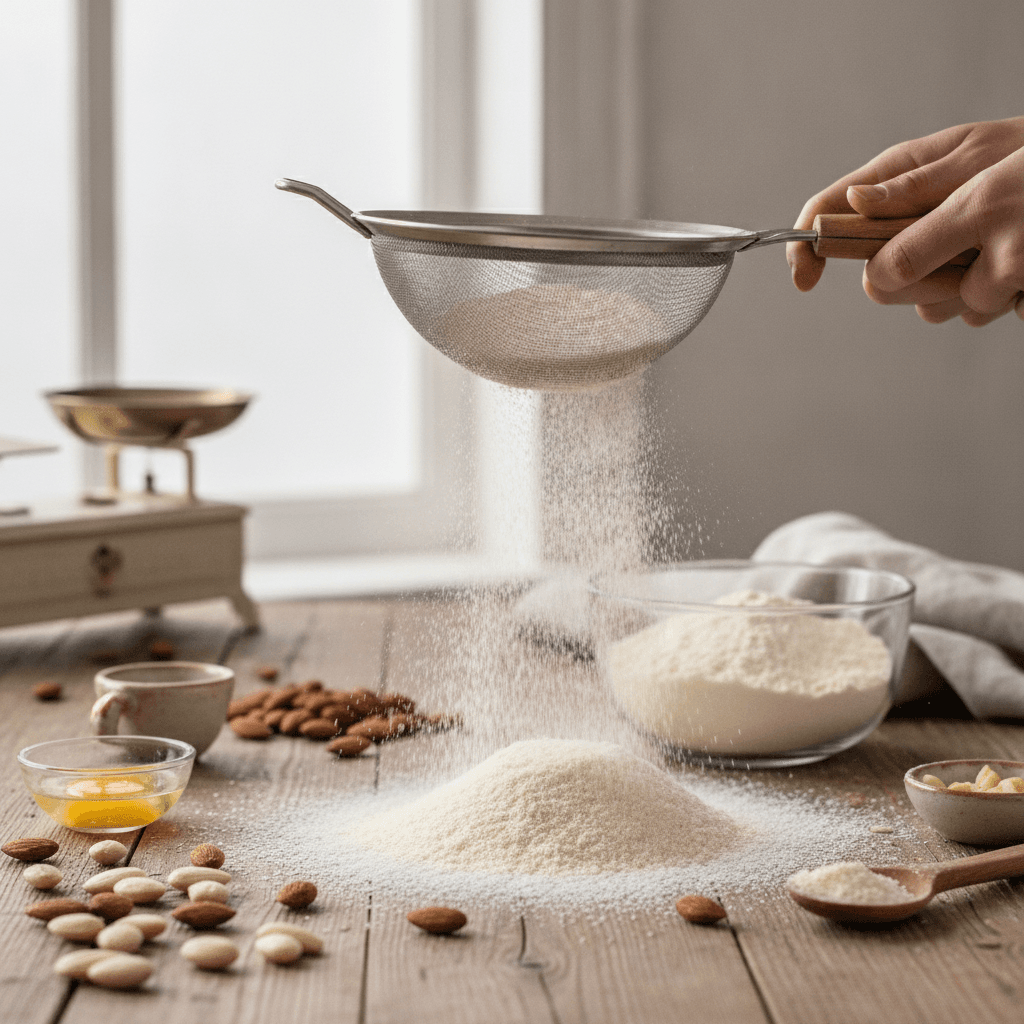
Half the macaron troubleshooting questions we get turn out to be almond flour questions in disguise. Your flour's grind, freshness, and oil content determine your batter's behavior more than any single technique you apply to it. Here's the full field guide — what to buy, what to avoid, and how to fix what's in your pantry right now.
What Macarons Need From Almond Flour
Macaron batter is a suspension: almond particles held in a meringue foam. For smooth shells and proper feet, those particles need to be fine, uniform, and dry-ish. Coarse particles leave bumps and weak spots; oily flour (old or over-processed) weighs down the meringue and makes shells spread. So the ideal flour is: blanched (skins off — skins add flecks and bitter notes), finely ground, and fresh enough that the oils haven't started weeping out of the particles.
Blanched vs. Unblanched: This One's Easy
Use blanched, always, unless a rustic flecked look is the specific goal (it almost never is for macs). Skins are fibrous and dark; they show as specks in shells, slightly disrupt the skin formation while resting, and add a faint bitterness that delicate fillings have to fight. Blanched flour costs a bit more and returns the difference in shell smoothness on the very first batch.
The Grind Question: Fine, Finer, Finest
Grocery-store almond flour varies wildly. What you want is labeled 'super-fine' — and even then, you must sift. The pro protocol: pulse the flour with the powdered sugar in a food processor for 8–10 seconds (this re-grinds slightly and dries the mix via the sugar), then sieve through fine mesh, discard or repurpose what doesn't pass. Expect to lose 5–10% to the sieve; that's normal, budget for it, don't force the chunky bits through — they are exactly the bits that crater your shells.
What about almond meal? It's coarser and usually unblanched: fine for frangipane, wrong for macarons. The labels are maddeningly inconsistent across brands, so judge by appearance and feel, not the front of the bag.
Freshness and Oil: The Silent Batch Killers
Almond flour is fatty — about 50% oil by weight — and that oil goes rancid and weeps over time, especially in warm pantries. Old flour clumps, smells flat or paint-ish instead of sweet-nutty, and makes batter that behaves like wet sand. Rules:
- Buy from a store with turnover (the dustless bag at the back of a quiet shelf is not your friend)
- Smell the bag when you open it — sweet and marzipan-adjacent = good; anything else = return or repurpose into cookies that don't care
- Store airtight in the freezer for anything beyond a month — frozen flour works perfectly straight from the freezer
- If your flour feels damp or clumps when squeezed, spread it on a sheet pan and dry in a 200°F oven for 10 minutes, cool fully, then proceed
When You Can Only Find Coarse Flour
The rescue protocol for coarse flour: process it with the powdered sugar in longer pulses (5 x 3 seconds, shaking the processor between), sift, then process the retained coarse bits again with a spoonful of the sifted mix (the fine powder keeps the almonds from turning to butter in the processor). Repeat until you've reclaimed 95%. It's tedious and it works. The failure mode is over-processing dry flour alone — almond butter happens faster than you think, and almond butter macarons are a tragedy nobody should experience twice.
Brand Notes and the Consistency Principle
Rather than name-and-shame, here's the operational rule professional kitchens use: pick one brand your batches like, and never casually switch. Different grinds absorb moisture differently; a brand change mid-recipe-testing invalidates your fold counts and rest times. Most US bakers land happily on one of the widely available super-fine blanched brands and stick there. At the bakery we buy in bulk from a single supplier for exactly this reason — consistent flour is a recipe ingredient just as much as sugar is. And if your best batch ever was followed by a mystery failure, check the bag: brands reformulate quietly.
Great flour is the foundation — but the finished texture is the proof. Compare your next batch to our Italian-meringue macs, shipped nationwide from New Windsor.