Baking as Therapy (Literally): The Rise of Kitchen Therapy in 2026
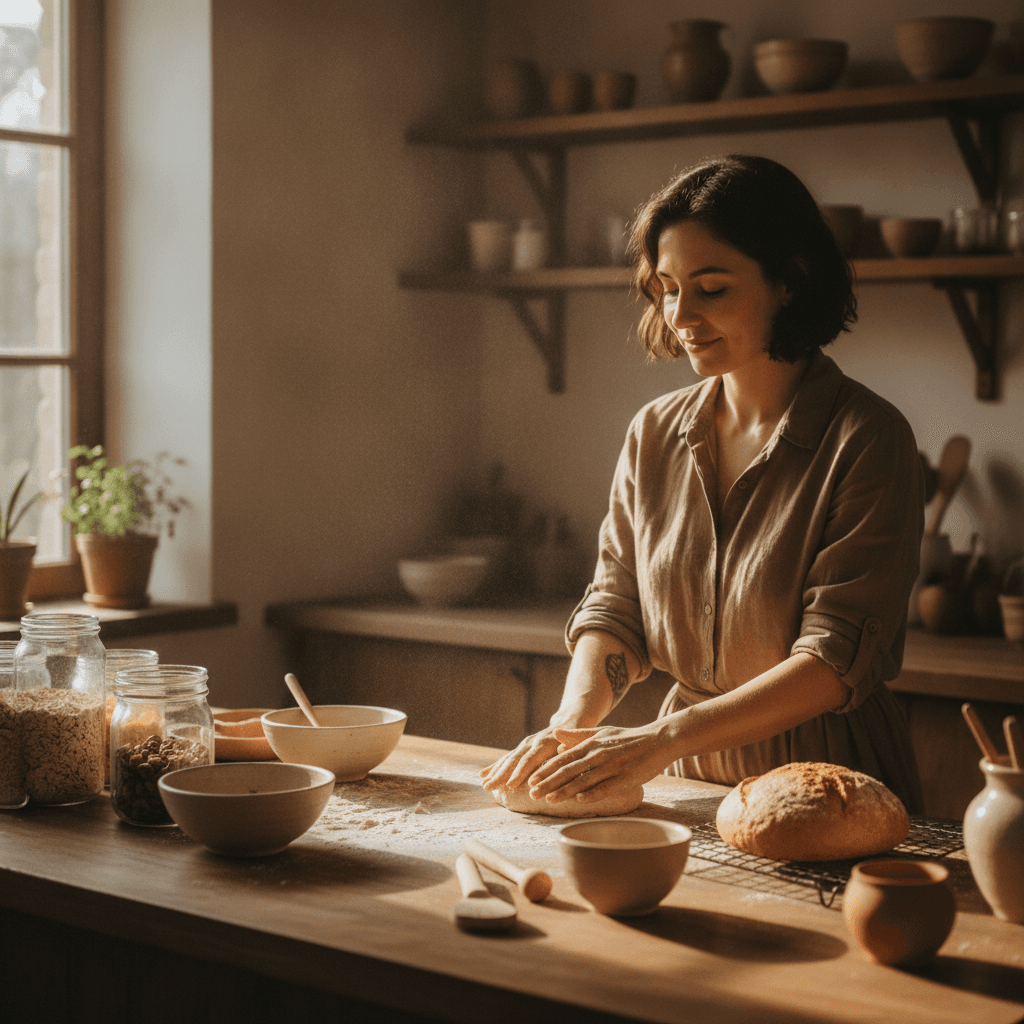
'Kitchen therapy' has graduated from a jokey phrase to an actual wellness practice in 2026 — and unlike most wellness trends, it has rigorous research underneath it. Baking as a self-regulation tool is effective enough that therapists have started prescribing it as a supplement to treatment. Here's what the science says and how to use your kitchen (or a class) as a deliberate mental-health practice.
The Science (Beyond the Obvious)
A 2016 study in the Journal of Positive Psychology found that small daily creative acts — including cooking and baking — predicted next-day increases in positive affect and 'flourishing' measures. The mechanisms identified in the broader literature: (1) procedural memory calming — following a recipe is a 'safe' structured task where the outcome is determined; (2) sensory groundedness — flour texture, butter smell, oven warmth are the definition of 'grounding' in the therapy sense; (3) generosity built in — you end with something to give, which loops social connection into the benefit; (4) flow state — baking hits the flow criteria (clear goal, immediate feedback, moderate challenge) as reliably as painting does.
Why Baking Specifically (vs. Other Hobbies)
Baking is a particular sweet spot among creative practices:
- Time-bounded: it has a start and a clear end (the timer); you can't overwork a cookie into rumination
- Sensory and embodied: hands in flour, the smell of caramelizing sugar — full-sensory engagement that pulls you out of your head
- Nurturing output: baked goods feed people; the act is care-forward by design
- Failure-tolerant: bad cookies are still edible, learning curve is kind, and the cost of a failed batch is low
- Scales with energy: on low-energy days, brownies; on high-energy days, a layer cake; the hobby flexes with your capacity
This is why baking shows up so consistently in mental-health-adjacent communities — it's the hobby that adapts.
The Therapeutic Baking Practice (How to Actually Do It)
As a deliberate mental-wellness practice, baking works like this:
- Scheduled weekly session — same day/time, protected (this is an appointment with yourself, not an optional hobby)
- Simple first bakes, then growing complexity — the first month is cookies and bars; complexity arrives when the practice is established
- No perfection allowed: the rule of the practice is that the product isn't the point (see 'sketchbook habits') — burned edges are not a failure, they're Tuesday
- The give-away rule: some portion of each bake goes to another person — the gift loop is where the emotional value multiplies
- Journal the practice (optional but powerful): one line after each session — date, what you baked, one sentence about the experience
Consistent 20–30 minute weekly sessions accumulate quickly into a practice that actually changes baseline mood.
Baking During Acute Stress (The Emergency Deployment)
The crisis-mode version — baking as acute stress response — has a specific protocol: pick a recipe you know (familiar is calming, novel is engaging; acute-stress baking wants calming), measure everything before starting (mise en place reduces in-process anxiety), work slowly (this is not efficiency time), and give the result away as soon as it cools. Many of the bakers we know learned baking as their crisis response long before they learned it as a hobby; the fact that the tradition of 'bake when things are hard' exists across cultures says something real.
When to Bake and When to Call a Professional (Both/And)
Important clarity: baking is a wellness practice, not a treatment. For situational stress, burnout, and the general maintenance of mental health — baking is evidence-supported and recommended. For clinical conditions, grief at depth, depression, anxiety disorders — baking is a helpful adjunct, and therapy/healthcare is the treatment. The two are not in competition; the best version is both. If stress has been heavy lately, a weekly baking practice plus talking to someone qualified is a stronger stack than either alone — and you'll also have cookies.
The Social-Baking Amplifier (Where We Fit)
Solo baking works; baking with company amplifies. The communal version — baking with a friend, a family member, or at a class — stacks the social-benefit on top of the flow-benefit. Our paint nights offer a different-medium version of the same practice (the art-therapy evidence is the same as the baking evidence); the choice is which creative practice fits you, not which one is 'better.' What matters is the practice, the rhythm, and the fact that in a distracted world, two hours of making something with your hands is a genuinely radical act of self-care.
The kitchen is a pharmacy with butter. Bake this week — or join us at a paint night if painting is your medium — and notice how you feel by Friday.