Can You Make Macarons Without a Stand Mixer? Hand and Hand-Mixer Methods
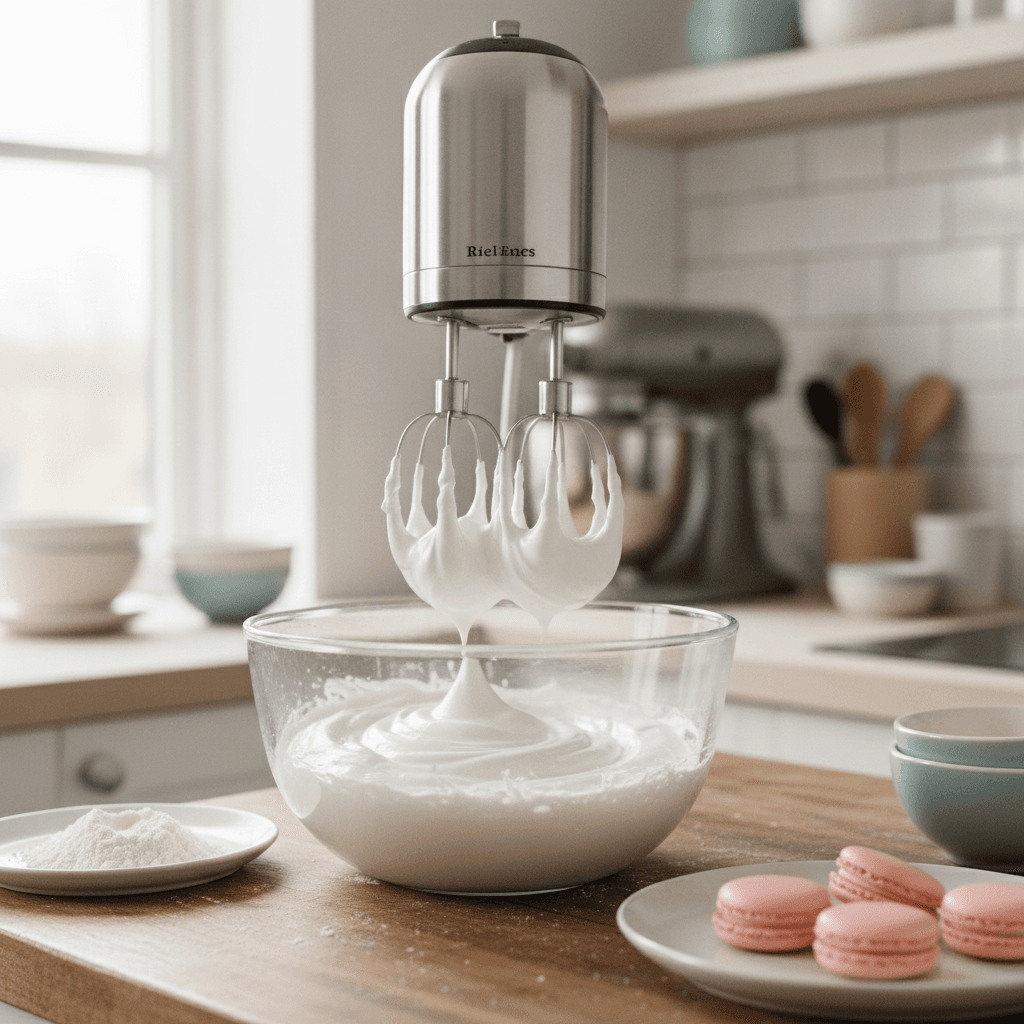
The macaron world has a stand-mixer gatekeeping problem — recipes assume one, troubleshooting assumes one, and people without one feel locked out of the whole dessert. You can make genuinely good macarons without a stand mixer. It requires adjustments, not miracles. Here's the equipment-light playbook.
Hand Mixer (Electric Beater) Method
A $25 hand mixer can absolutely make macaron meringue, with these adjustments:
- French meringue method only — Italian (hot syrup streamed into whipping whites) requires two hands and a third for the syrup; the Swiss method (warm-whisk-then-beat) is hand-mixer-compatible but trickier
- Slower whipping, longer time: hand mixers whip slower than stand mixers; plan 2–3x the whipping time and watch for glossy peaks rather than counting minutes
- Bowl matters: use a tall, narrow bowl rather than wide — hand mixers are more efficient in narrow columns of whites
- Arm fatigue management: whip in 90-second bursts with 20-second rests; your arm lasts longer and so does the motor
Quality comparison: hand-mixer meringue is *slightly* less stable than stand-mixer at the extremes, but for home batches in reasonable conditions, the difference rarely decides the outcome. Fold count and oven calibration matter far more.
Fully Manual: Whisking by Hand
The hand-whisk macaron is genuinely possible and historically precedented (stand mixers are younger than macarons), but be honest about what it means:
- Time: 8–12 minutes of active whisking for French meringue, and you cannot stop mid-way (the whites collapse if you pause)
- Technique: big, fast, full-arm circles in a copper or stainless bowl — copper truly helps (the chemistry is real, not lore: copper ions stabilize the foam)
- Team lift: having a second person alternate whisking shifts is the traditional solution
- Volume cap: batches above ~25 macarons start to physically exceed hand-whisking practicality
Our honest assessment: hand-whisk macarons are a worthy flex and a real project — do it once to know you can, then buy the hand mixer.
Swiss Meringue as the Equipment-Light Sweet Spot
The Swiss method — whites and sugar warmed together over a water bath to ~60°C (140°F), then whipped — produces a stable meringue with less whipping effort than French, and without the syrup-timing complexity of Italian. For hand-mixer bakers this is the sweet spot: the warming step does some of the stabilization work for you, and the resulting batter is forgiving of slightly imperfect whipping. Texture trade-off: shells trend slightly less crisp-exterior than Italian, more tender — many people prefer them.
The Equipment That Actually Matters Most
Ranked by impact on your macarons:
- Oven thermometer ($10) — decides more batches than any mixer
- Digital scale ($15) — volumetric cups are chaos for macaron ratios
- Fine-mesh sieve ($10) — lumpy shells are usually un-sifted almond flour
- Parchment and a flat sheet pan — better than silicone mats for beginners' feet
- Mixer (any kind)
That list is deliberate: a properly-calibrated oven and a working scale rescue more batches than any equipment upgrade. If you have $35 to spend, spend it on the top three before any mixer concern — and if the budget question is really about access to macs in the interim, the bakery exists precisely for the gap months.
Realistic Expectations and the Learning Budget
Equipment-light macarons have a slightly higher early failure rate — budget 3–5 batches before consistency. This is the same budget as stand-mixer beginners, honestly; the practice curve dominates equipment. Track each batch (resting time, fold feel, oven temp, outcome) and your learning accelerates. There's nothing wrong with the equipment hierarchy 'oven thermometer + scale + hand mixer + patience' as your macaron kit — it produces excellent macs in all the home kitchens we know of.
When to Upgrade (If You Catch the Bug)
Signs the stand mixer has moved from 'nice' to 'needed': you're baking macarons more than twice a month; you want to try Italian method; your arm hates you after batch three; you're considering selling at a farmers market. When you upgrade, buy mid-grade and used (KitchenAid classics hold value for a reason) — a refurbished 4.5-quart does everything a macaron baker needs for a decade. But no piece of equipment is standing between you and macaron-making — the only true requirement is wanting to.
Equipment-flexible recipes and more live in our guides. Or grab a box of macs as your 'control sample' while you test your setup.