Chocolate Macaron Guide: The Recipe, the Ganache, the Mistakes
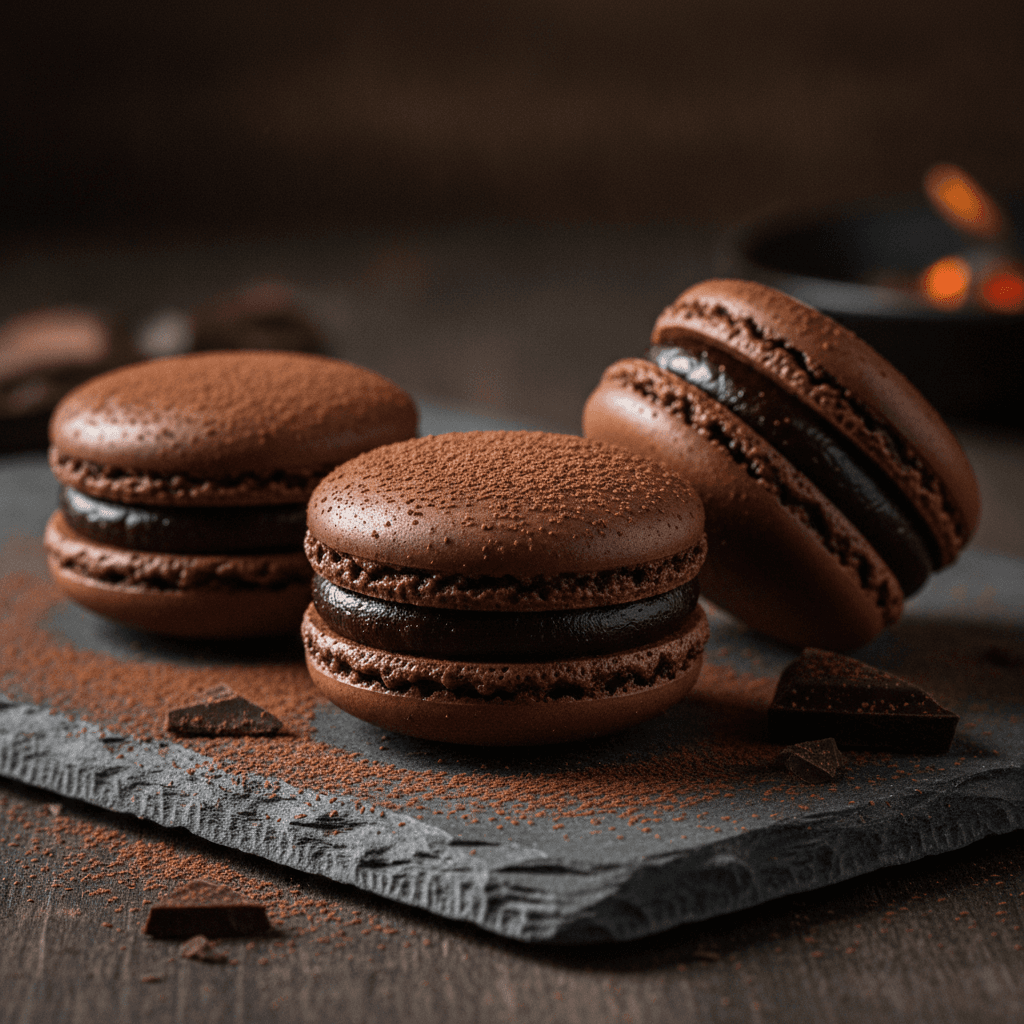
Chocolate macarons are the most-requested flavor and the most-frequently-failed (yes, even more than plain) because adding cocoa to a macaron shell changes the batter's physics. Cocoa powder is dry and fat-free, and it shows. Here's the complete guide — the adjusted recipe, the ganache science, and the five chocolate-specific failure modes.
The Cocoa Adjustment (Why the Recipe Must Change)
Cocoa powder absorbs more moisture than the almond flour/powdered sugar it replaces, and it doesn't contribute fat. Adding cocoa without adjusting wet ingredients yields a dry, stiff batter that produces cracked or hollow shells. The fix: replace dry weight with slightly less cocoa than you'd think (15–20g cocoa for a batch, substituted for the same weight of powdered sugar or almond flour), and consider a *Dutch-processed* cocoa (alkalized) for smoother, less-acidic flavor and slightly easier batter behavior.
Ingredients (Chocolate Shell, Italian Method)
Shells:
- 185g almond flour
- 15g Dutch-processed cocoa powder (black cocoa if you want near-black shells — but it's intensely flavored)
- 200g powdered sugar
- 148g egg whites, divided 74g/74g
- 200g granulated sugar
- 50g water
- Optional: 1 tsp espresso powder (amplifies chocolate perception)
Ganache filling:
- 200g dark chocolate (64–70%), chopped
- 100ml heavy cream
- Pinch of salt
Step 1: The Shells (With Chocolate-Specific Care)
Sift almond flour, cocoa, and powdered sugar together twice — cocoa clumps aggressively and the clumps become surface bumps in the finished shells. Follow the standard Italian shell process (paste with first whites, syrup to 118°C, whip second whites, stream, whip glossy, macaronage to ribbon). Chocolate batter should flow slightly looser than plain because cocoa tightens the batter as it sits; if the batter thickens noticeably in the piping bag, work quickly.
Pipe, rest 30–45 min to touch-dry, bake at 300°F for 14–16 minutes. Chocolate shells hide browning but not hollows; check by lift-test at minute 14.
Step 2: Ganache Science (The Ratio Chart)
Ganache is a ratio formula, not a recipe. For macaron filling (firm-set texture):
- Dark chocolate (64–70%): 2:1 chocolate-to-cream by weight
- Milk chocolate: 2.5:1 (milk solids soften; it needs more chocolate)
- White chocolate: 3:1 (white is cocoa butter and milk; it's structurally soft)
Method: heat cream to steaming (not boiling), pour over chopped chocolate, wait 2 minutes (no stirring yet — premature stirring breaks the emulsion), then stir slowly from center until glossy. Cool at room temp, stirring every 15 minutes until pipeable. Refrigerated ganache overshoots to rock-hard; if that happens, microwave 8 seconds, stir, wait, repeat until it comes back.
Step 3: Assembly and the 24-Hour Transformation
Pipe a generous dollop, cap, twist, refrigerate airtight 24 hours. Chocolate macs are the best maturers in the family: the ganache is nearly water-free, so shell softening is slow and perfect at day 1, still great at day 4. They're also the best shippers and best freezers of all the macs, which is why our shipped chocolate macs survive cross-country transit with the best texture of the lineup.
The 5 Chocolate-Mac-Specific Failure Modes
- Cracked + dry shells: cocoa wasn't compensated for in wet ingredients → check your substitution math (equal weight, and slightly looser batter)
- Bitter/burnt chocolate note: cocoa was non-Dutch (natural cocoa is acidic) OR the shells overbaked (chocolate hides browning until it's too far)
- Ganache grainy: the emulsion broke (cream too hot, or stirred too early) — rescue by gently warming and stirring in a teaspoon of warm cream
- Ganache won't set: wrong chocolate-to-cream ratio for the cocoa % — re-melt and add more chopped chocolate to stiffen
- Shells look grey/brownish instead of deep brown: insufficient cocoa or too-pale cocoa variety — use 15g minimum, and Dutch or black cocoa for dramatic darkness
Variations That Earn Their Keep
- Espresso ganache: infuse the hot cream with a tablespoon of ground espresso (strain before pouring onto the chocolate)
- Chocolate-raspberry: dam method — ganache ring around a raspberry-jam center; the dark-tart flavor pairing is perfect
- Chocolate-hazelnut: swap 30% of the chocolate for Nutella or a real gianduja
- Mexican hot chocolate: cinnamon + pinch of cayenne in the ganache
- Salted dark: flake salt on top of the shells immediately post-piping; the salt against rich chocolate is unbeatable
- Plain chocolate: honestly, the best-selling mac year after year — the version above is the one people mean when they ask for 'the chocolate one'
The chocolate mac is the macaron family's anchor. Bake it, and when you want the benchmark — our dark chocolate macs ship nationwide.