Dessert Table Math: Exactly How Much to Serve Per Guest
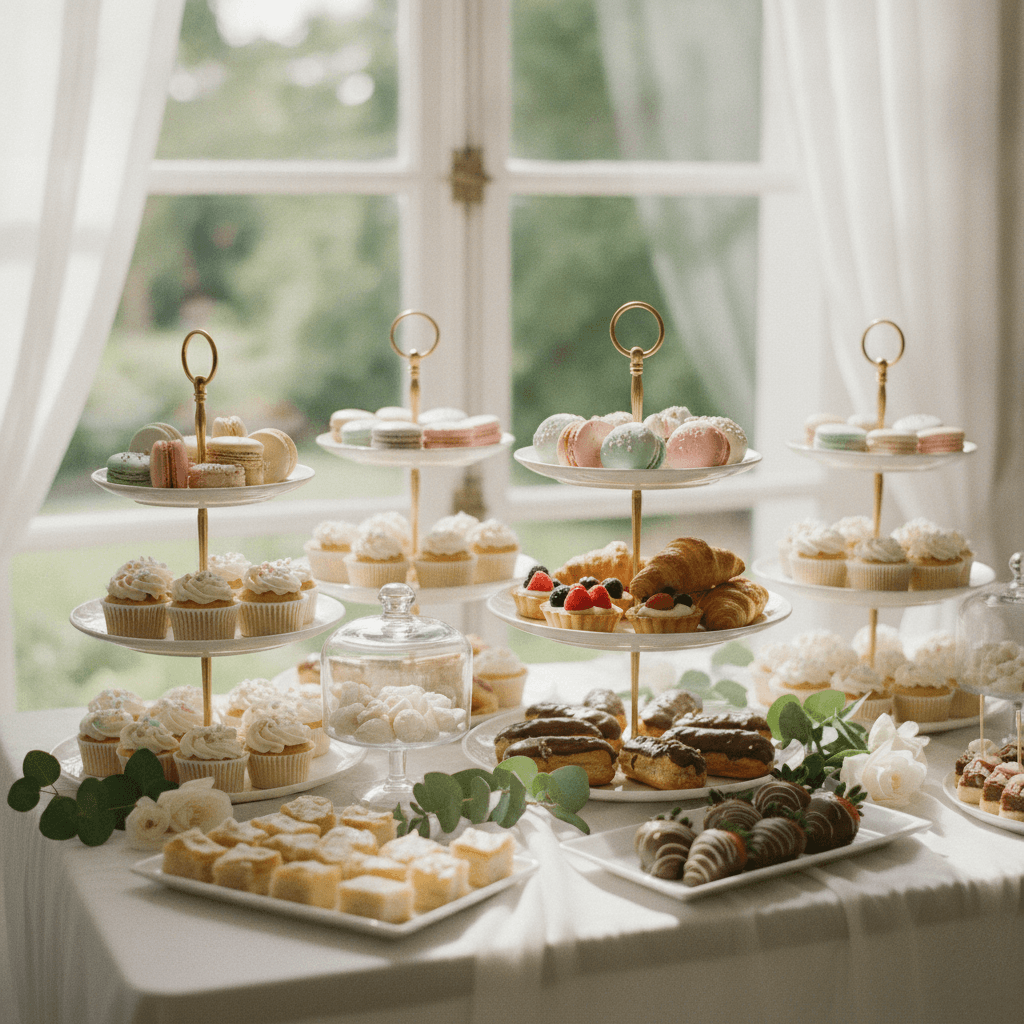
The most common panic text we get at the bakery isn't about flavors — it's about quantity. "How many desserts do I need for 50 people?" has a real answer, and it's more nuanced than "one per person." After building dessert tables for hundreds of Hudson Valley events, here's the math that actually works.
The Base Formula
If dessert follows a full meal: 1.5 pieces per guest for a single-dessert table, or 2–2.5 mini pieces per guest if you're offering variety (guests will sample more than one type). If the dessert table IS the food — a cocktail-style party, an afternoon shower — bump to 3–4 pieces per guest. Children under 10 count as half an adult. That's the whole base formula; everything below is refinement.
Why Variety Multiplies Consumption
Here's a counterintuitive truth: the more types of dessert you offer, the more people eat — even if portion sizes are small. Guests who would eat one cupcake will try a mini macaron AND a cupcake AND a chocolate-dipped strawberry if all three exist. A good variety rule is one dessert type per 10 guests, minimum 3 types for any table. For 50 people: 4–5 types, roughly 2.5 pieces each = 125 pieces total. For 100: 5–7 types, 250 pieces.
Adjusting for Event Type
Weddings: guests eat less dessert than you'd expect (dancing cuts into grazing time) — 2 mini pieces is safe, plus cake servings at 80% of guest count. Baby/bridal showers: peak dessert energy, daytime events, mostly seated — go 3+ pieces. Kids' birthdays: 1 cupcake per kid plus 5% buffer; the adults will raid the adult dessert table, so count them separately. Corporate events: people take desserts back to desks — boxed individual items perform better than platters, and leftovers are a feature, not a problem. See our corporate dessert options for formats that travel well.
The Display Multiplier Nobody Mentions
A dessert table needs to look abundant *at the end of the event*, not just at the start. Guests judge a picked-over table as a planning failure, so pros add a 10–15% display buffer purely for visual fullness. That buffer also absorbs the two teenagers who eat seven macarons each. If budget is tight, spend it on varied heights and stands rather than extra pieces — elevation makes 100 pieces look like 150.
Sample Quantities by Guest Count
For a mixed dessert table after dinner:
- 25 guests: 3–4 types, 60–65 total pieces
- 50 guests: 4–5 types, 125–135 pieces
- 75 guests: 5–6 types, 190–200 pieces
- 100 guests: 6–7 types, 250–270 pieces
- 150 guests: 7–8 types, 375–400 pieces
Add the 10–15% buffer if the table is a focal point of the decor. And if you're serving a cutting cake alongside, subtract roughly one cake serving's worth from the mini count per guest.
Storage and Timing Logistics
Quantity planning fails if half the table wilts. Buttercream items handle 2 hours at room temperature happily; whipped cream and custard items don't. Macarons are the endurance athletes of dessert tables — they hold texture for hours, don't need refrigeration during service, and stack beautifully, which is why they anchor so many of the dessert tables we build. Plan the table so the most temperature-sensitive items are smallest in quantity and refilled last.
Planning an event in the Hudson Valley? Send us your guest count and we'll build the quantity plan with you — it's the part of our job we do free and happily.