Gel vs Liquid Food Coloring for Macarons: Why the Wrong Choice Kills Your Batter
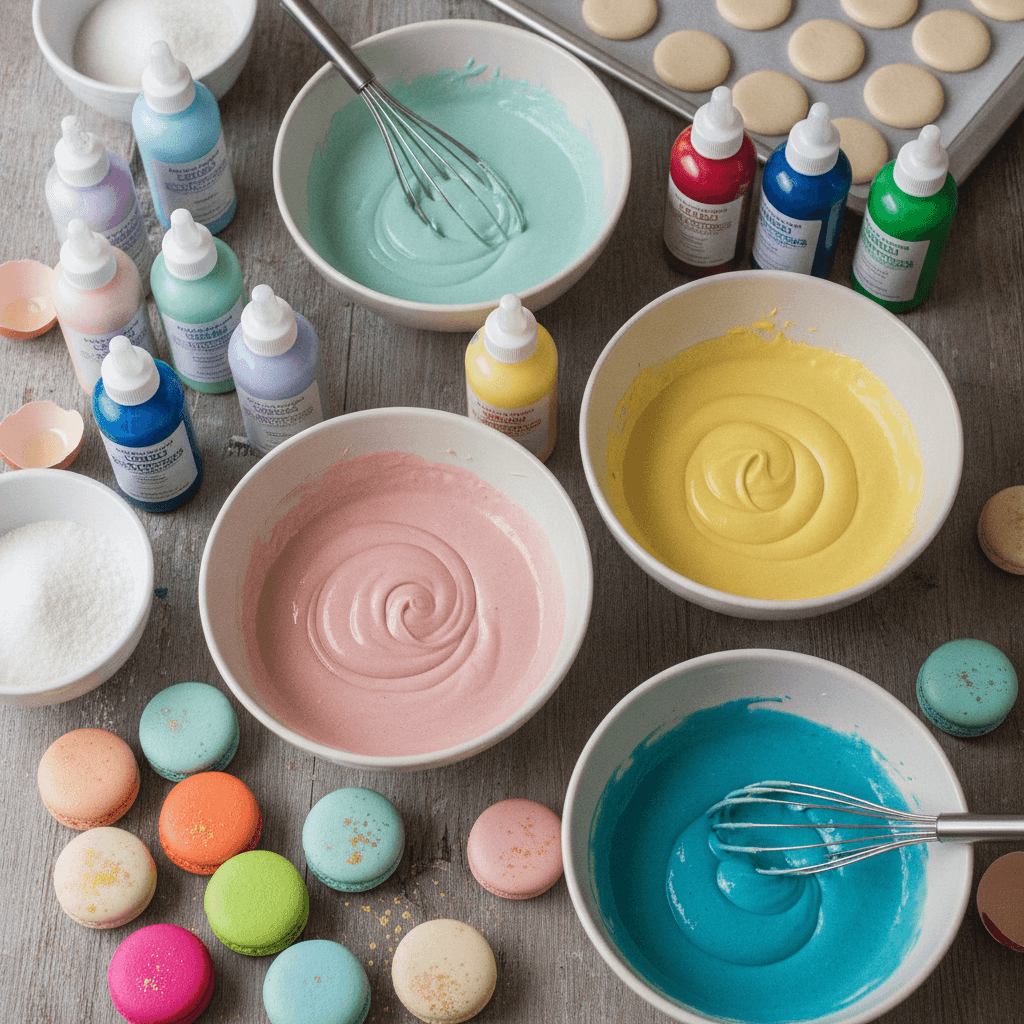
Food coloring is the smallest ingredient in your macaron recipe by volume and the most likely to quietly sabotage the whole batch. The difference between gel and liquid isn't preference — it's physics. Here's the complete guide to coloring macarons without wrecking your batter, including the color-shift problem nobody warns you about.
The Physics: Why Liquid Coloring Is the Enemy
Macaron batter's consistency is a precisely balanced foam. Liquid food coloring (the grocery-store dropper kind) is essentially water, and even 2 teaspoons of added water measurably thin the batter — which means spread, flat shells, no feet. That's exactly the wrong outcome to get from an ingredient you added purely for aesthetics. Gel colors are concentrated pigment in a corn syrup or glycerin base; you use 1/10th the volume for the same intensity, so the batter never registers the addition. The rule: if it pours, don't put it in macarons.
Gel Colorants Ranked for Macarons Specifically
From bakery experience, in order:
- Americolor and Chefmaster gels — the workhorses; consistent, widely available, true colors
- Sugarflair and Wilton concentrated gels — Sugarflair particularly for pastels (their paste texture and muted tones are hard to beat); Wilton is fine but slightly less concentrated
- Powdered food colors (petal dusts) — zero moisture, excellent for deep colors; harder to distribute evenly, so bloom them in a tiny bit of your egg white or vanilla before adding
- Natural colors (beet powder, matcha, cocoa, freeze-dried fruit powders) — use these as part of your dry mix (replace a few grams of powdered sugar), accepting that natural colors are muted and often shift in the oven
Generic-brand water-based gels exist and work; you're just working with weaker pigment and more of it.
How Much to Use: The Toothpick Method
Gel coloring is potent; the right amount is almost always 'less than instinct says.' The protocol: dip a toothpick in the gel, scrape it against the inside of the mixing bowl (this is one toothpick-scrape — roughly a grain of rice's worth), mix into the meringue in the final whipping minute, wait 30 seconds, check. Repeat as needed. For pastels, one or two scrapes is enough. For vivid deep colors (royal blue, true red), you'll use considerably more — and vivid reds/purples are where powdered colors earn their keep because they don't add moisture even at high doses.
The Color-Shift Problem (Why Your Red Looks Like Terracotta)
Colors fade and shift in the oven, always. The rules of the shift:
- All colors fade 10–30% in the bake — plan for it by coloring slightly past where you want to end
- Reds and pinks fade most and shift toward brown with overbaking
- Purples split into pink-blue marbling if your oven runs hot (red pigments are heat-fragile)
- Blues are stable, greens are stable-ish, yellows are nearly bulletproof
- Underside browning (overheated bottoms) darkens the whole shell's apparent color
Also: gel colors deepen over a few hours of rest. Mix your color at 80% intensity and check before piping; the batter quietly darkens while you weren't looking.
Two-Tone, Marbled, and Painted Shells
Beyond single colors:
- Marble: stripe the inside of your piping bag with gel, or fold in a second color with 2–3 gentle folds at the end of mixing
- Two-tone shells: pipe with two bags simultaneously twisted together — tricky but beautiful
- Painted shells: bake completely plain (white), cool, then paint with gel color thinned with vodka or lemon extract (the alcohol evaporates, leaving dry pigment). This is how the fancy floral and Hokusai-wave macs at the shop get made, and it's a learnable skill in two sessions
Common Coloring Mistakes (All Seen in the Wild)
- Adding liquid color directly to the dry mix to 'disperse it' (the batter's foam is your only dispersion medium — tint the meringue, not the flour)
- Chasing 'bright pink' with red alone and landing on orange-pink (pink requires actual pink gel or red + the tiniest blue)
- Trying to make true-black shells with black gel alone (you'll use half the bottle and still get grey; start with a dark cocoa base and add black)
- Coloring a full batch before knowing your oven (run a small test batch with a new oven/method/color combo; 10 shells is enough data)
- Forgetting that filling color shows through thin white shells — that's a feature when intentional (raspberry hearts through white shells are gorgeous), a bug when it isn't
Perfect color, every time — or let us do it: Antonio's macs come in every pastel and bold tone you can imagine, no toothpick-scraping required.