How Long Does Almond Flour Last? (And the Freezer Trick)
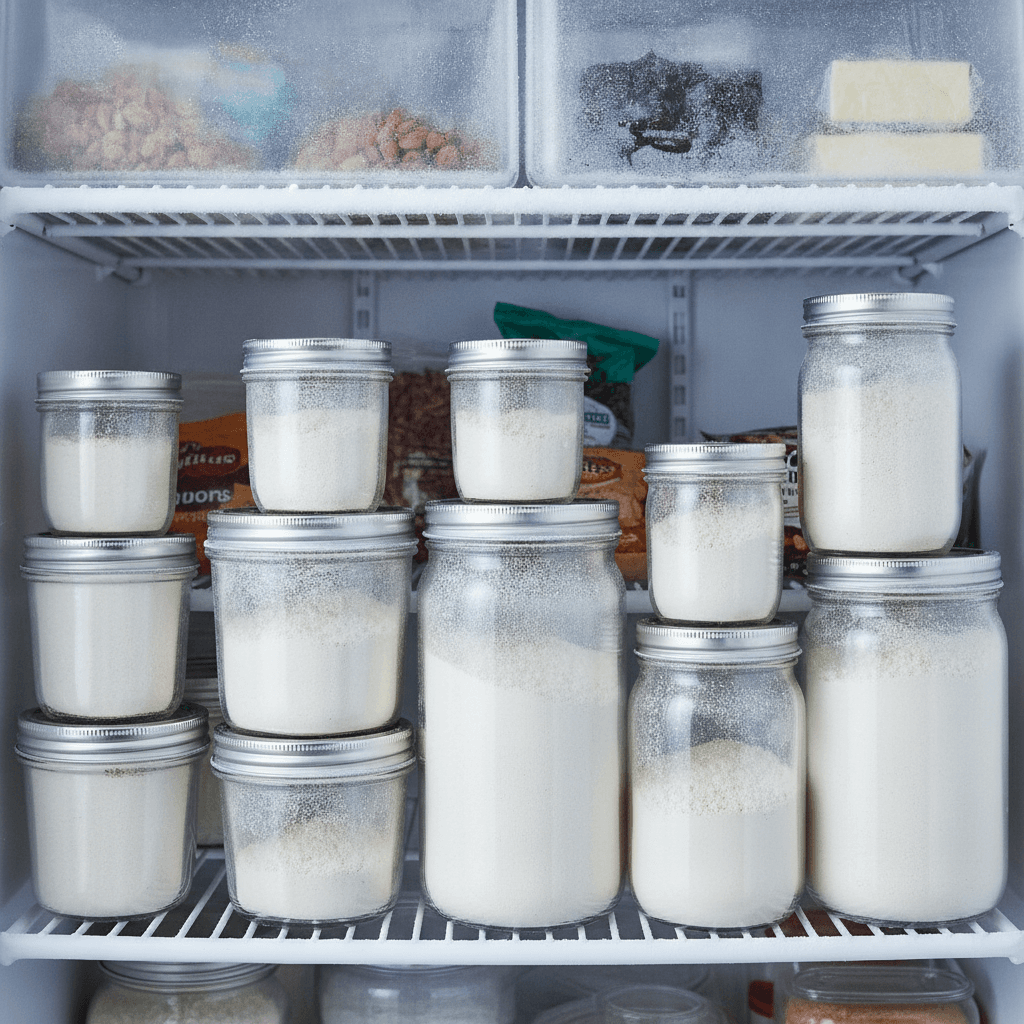
Almond flour's shelf life is shorter than the bag suggests and longer than the internet sometimes claims — the honest answer depends almost entirely on storage. Here's the complete freshness timeline with the storage rules that maximize it, plus what to do when you've bought the Costco-size bag and you're not a professional bakery.
The Honest Timeline
Almond flour shelf life from opening:
- Pantry (room temp, airtight, dark): 2–3 months before quality degrades noticeably; up to 6 months before rancid
- Refrigerator (airtight): 6–8 months good quality
- Freezer (airtight, wrapped): 12+ months with no meaningful quality loss
Why the variance: almond flour is 50% fat, and fat oxidizes faster with heat, light, and air exposure. The pantry timeline is a race against your kitchen's ambient temperature. A summer kitchen (75°F+) shortens the pantry life dramatically. The freezer effectively stops time — oxidation slows to near-nothing at freezer temperature.
How to Check Freshness Right Now
The quick test protocol (covered in detail in our freshness guide): sniff the bag (sweet and marzipan-ey = good; painty/stale = done); squeeze a pinch (falls apart = good; clumps into a lump = getting old); look for color consistency (uniform pale = good; yellowed or oil-stained = past prime). Rancid almond flour won't make you sick — it's not a food-safety issue at this scale — but it will bake like sand and taste like regret, and in macarons specifically it ruins the batch.
Why the Freezer Is the Answer
The freezer converts almond flour from a 'use it up' ingredient to a 'have it forever' ingredient. Practical protocol:
- Freeze the whole bag unopened if it's vacuum-sealed
- Once opened: transfer to truly airtight containers (glass with a good seal or freezer-quality zip bags with all air pressed out)
- Label with date — freezer amnesia is real
- Use straight from frozen — no thawing needed for baking; weighed-into-recipe frozen flour behaves identically to fresh
- Return to the freezer immediately after scooping — don't leave the open bag out
A 3-pound Costco bag frozen in 1-cup-equivalent portions = a year of macaron bakes without worry.
Buy the Right Size for Your Baking Frequency
The mistake most home bakers make is buying the big bag because it's 'better value.' The math changes with storage:
- Frequent baker (2+ macs bakes/month, or regular anything): the big bag frozen is the best value genuinely
- Occasional baker (few times a year): the small bag used fresh beats the big bag slowly rancidifying in the pantry
- One-time experimental baker: buy Bob's Red Mill or similar 1-pound grocery-store size and don't worry about freezer strategy for a single bag
Know your pattern before you buy. The flour's value is as an ingredient for your cooking, not as a pantry resident.
What to Do With Flour That's Past-Prime but Not Rancid
The intermediate stage — flour that fails the macaron sniff-test threshold but isn't fully rancid — has redemption paths: use it in recipes with strong complementary flavors (chocolate cookies, spice cakes, banana bread) where the mild off-note is masked; use it in non-macaron items where texture demands are lower (crumbles, pancakes, quick breads); or compost/discard if it's truly gone. Never use sub-prime flour for macs — they're the most unforgiving of your ingredients' freshness, and the batch's failure will make you sad at exactly the moment you invested the most effort. See the troubleshooting guide for what to test when nothing else explains a failure.
Storage as a Baking Discipline
Zoom out: ingredient freshness is the silent baseline of good baking. The bakers who consistently produce good things aren't necessarily more skilled; they're working with better inputs. Fresh flour, fresh leavening, fresh spices — the pantry discipline is the invisible half of the craft. Five minutes spent on storage (good containers, freezer use, labeling) prevents a year of mystery failures. This is the bakers' equivalent of mise en place — invisible work that makes everything else work. Your future macaron batches will thank you.
Freeze it, label it, use it frozen. Fresh flour is the secret ingredient nobody lists. And if your flour's past prime, the bakery is the backup plan with the flour always fresh.