How to Store Macarons: Fridge, Freezer, and Counter — Tested Times
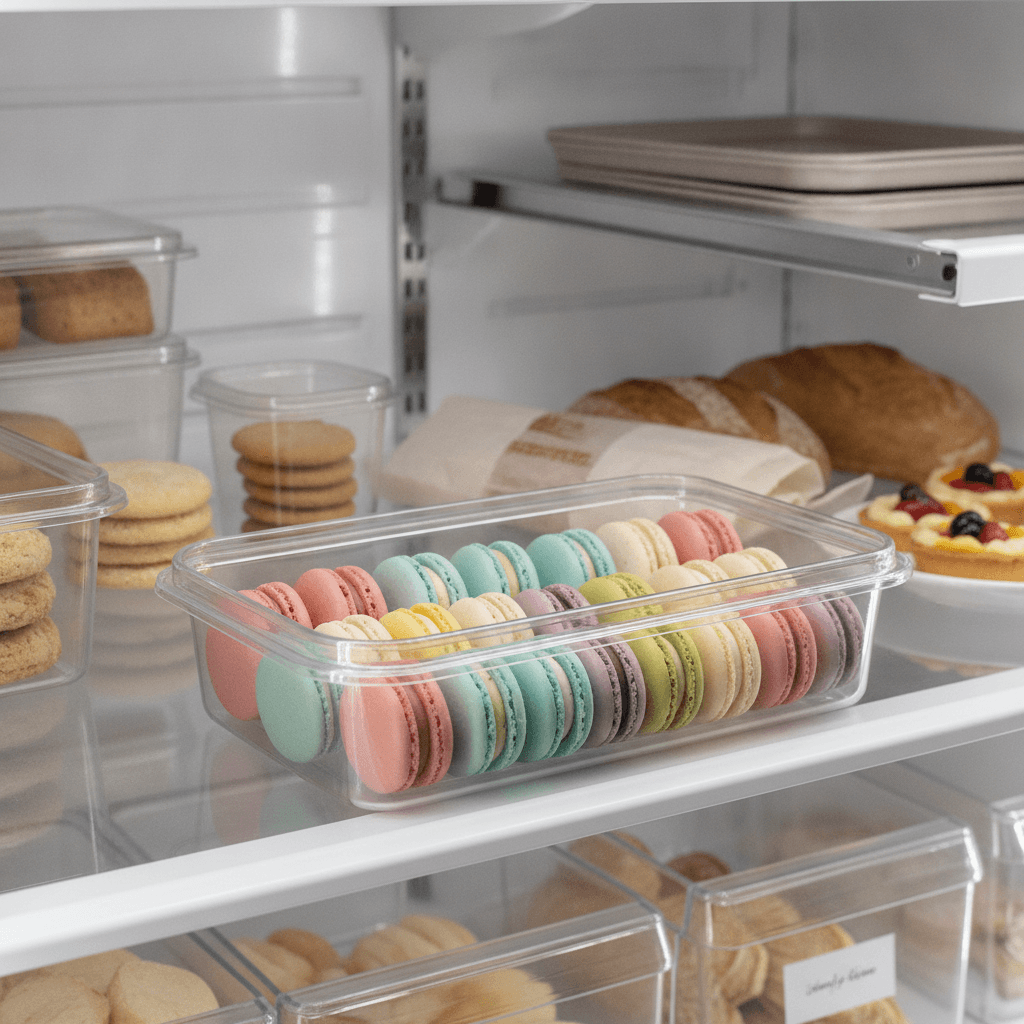
Macarons are one of the few desserts with a genuinely counterintuitive storage rule: they're better after a day in the fridge than the hour they're made. But get storage wrong and they go stale, soggy, or pick up last night's leftover-garlic smell. Here's the complete, tested guide to keeping macarons at peak texture — whether you baked them yourself or a box just arrived at your door.
The Day-Zero Rule: Mature Before You Judge
Fresh-filled macarons are too crisp. The magic happens during maturation: 24 hours refrigerated in an airtight container, during which the filling's moisture migrates into the shell and transforms it from crisp to chewy-tender. Any storage plan starts with this step. Macarons eaten before maturation aren't bad — they're just a different, less good dessert. This is why every box we ship has spent its day resting before it sees a delivery truck.
Counter Storage: Handle With Care
Unfilled shells can sit airtight at room temperature for a day or two with no drama. Filled macarons should not. Dairy-based fillings (buttercream, ganache) are food-safety-fine for a few hours at room temp — perfect for a party display — but texture degrades: shells dry at the edges and the crisp-chewy contrast fades. Counter rule: display confidently for up to 4 hours, then re-chill what survives.
Refrigerator: The Sweet Spot
Filled macarons in an airtight container keep 5–7 days refrigerated at peak-ish quality. Days 1–3 are the golden window. Three rules make the difference:
- Airtight means airtight — macarons are odor sponges. A macaron next to uncovered onion dip becomes onion-dip macaron.
- Single layer with parchment between layers if stacking — they bruise.
- Take out 20–30 minutes before serving. Cold mutes flavor; the fat in the filling needs to soften. A macaron served fridge-cold tastes like half its potential.
Freezer: Long-Term Storage Done Right
Macarons freeze remarkably well — better than almost any pastry. Filled or unfilled, airtight container, parchment between layers, up to 3 months (some pros push 6 without meaningful loss; we notice slight texture drift past 3). The thaw protocol matters more than the freeze: transfer from freezer to fridge overnight, then fridge to counter 30 minutes before serving. Skipping the fridge step causes condensation on the shells — and condensation means splotchy, weeping macs that look like they had a hard night.
What About Shipped Macarons?
Shipping is just mobile refrigeration if done right. Properly packed shipped macarons ride in insulated packaging with cold packs and arrive within their golden window. When your box arrives: refrigerate immediately, still sealed; let the cold packs stabilize everything for a few hours; then serve per the 20-minute rule. If you're planning a party, order to arrive 1–2 days before the event, not the day of — shipping buffers exist and they do not care about your party date. Browse what ships best if you're planning from afar.
Signs a Macaron Has Gone Past Its Prime
- Stale shell: dry, crumbly, tastes of nothing — from air exposure or a container that wasn't sealed
- Soggy shell: wet filling + time — usually from over-wet fruit fillings or condensation
- Off smell: absorbed fridge odors — prevention is the only cure
- Weeping surface: condensation from aggressive thawing
A macaron a week old that's been airtight in the fridge is almost always still delightful. A macaron two days old that rode home loose in a paper bag is not. The container is the whole game.
Want macarons that arrive at peak maturity? Our nationwide shipping is built around the golden window — baked, matured, packed with cold packs, on your doorstep in 1–2 days.