Italian Meringue vs French Meringue Macarons: Which Method Should You Use?
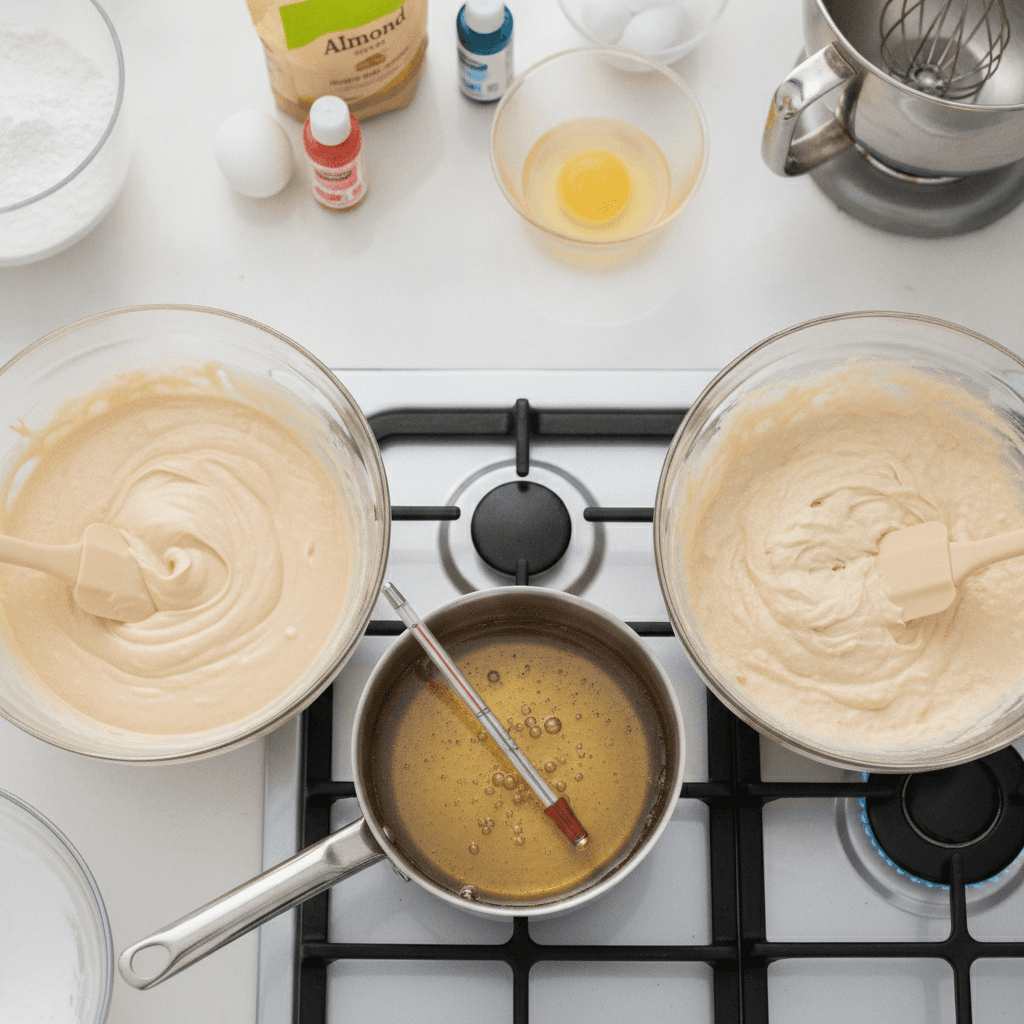
Every macaron baker eventually picks a side in the great meringue debate. French method: simple ingredient list, whip and fold. Italian method: hot sugar syrup streamed into whipping whites — fussier equipment, more stable results. We use both at the bakery, chosen by batch and weather. Here's the honest comparison, without the internet's usual religious fervor.
What Each Method Actually Is
French meringue method: whip room-temperature egg whites with granulated sugar to stiff peaks, then fold into the almond flour/powdered sugar mixture. Minimal equipment; the classic home method.
Italian meringue method: cook sugar and water to a 118°C (244°F) syrup, stream it into whipping egg whites, and beat until cool and glossy — essentially making a cooked meringue — then fold that into a paste of almond flour, powdered sugar, and unwhipped whites. Requires a candy thermometer and stand mixer; the classic professional method.
Stability: Where Italian Wins Decisively
The hot syrup partially cooks the egg proteins, forming a far more stable foam. In practice: Italian batter is more forgiving of slightly imperfect folding, holds up on humid days, survives longer resting periods without degrading, and tolerates gel food coloring and flavored additions better. On a rainy April day in the Hudson Valley (ask us how we know), French batter can feel defiant and Italian batter behaves like it's on your side. If you bake in a humid climate, Italian isn't a preference — it's climate control.
Texture Differences You'll Actually Taste
Honest assessment: done well, the finished macarons are very close. French-method shells tend marginally lighter and airier; Italian shells trend slightly denser and chewier with a smoother interior crumb. Blind tests split nearly even on preference. Where texture diverges in practice is *consistency* — Italian batches turn out similar to each other across conditions, which is why nearly every commercial bakery (us included) runs Italian for scale. The texture difference between a good French batch and a bad French batch is bigger than the difference between the two methods.
The Difficulty Trade-Off
French's simplicity is real but overstated — the method is simpler, the *execution window* is narrower. Your meringue peak-stiffness judgment matters more, humidity punishes you, and macaronage is less forgiving. Italian's complexity is front-loaded (thermometer, hot syrup safety, timing) but once the syrup is in, the batter practically mixes itself and announces its readiness more clearly. Our actual recommendation for beginners: learn French to understand macarons, then switch to Italian and stay there. If you only ever learn one, learn Italian and skip the humid-day heartbreak.
When We Use Which
Transparency from the kitchen:
- Italian: all commercial production, humid days, colored shells, any flavored shell additions, teaching new bakers
- French: small experimental flavor batches in dry weather where the lighter texture plays well with delicate fillings like plain fruit curds
If you're baking at home and want one rule: French for dry winter days and learning, Italian for everything else. If you're troubleshooting chronic cracks or hollows with French, switching methods fixes more mystery failures than any single other change.
The Hybrid Worth Knowing
There's a less-discussed middle path: Swiss meringue macarons (whites and sugar warmed together over a water bath to 55°C, then whipped). No thermometer timing, stable-ish, single-bowl cleanup. Shells are slightly softer but respectable. It's the method we suggest for bakers without stand mixers, because hand-whisking an Italian syrup stream while mixing is how syrup ends up on the ceiling. Whatever method you land on, the target is the same: glossy ribbon, figure-8 test, proper feet, chewy interior — the finished thing should make you slightly reluctant to share.
Curious which method ours are? All Antonio's macarons are Italian-meringue shells, matured 24 hours, and shipped anywhere in the US — taste the stability argument in its finished form.