Italian vs French Meringue for Macarons: Which Should You Actually Use?
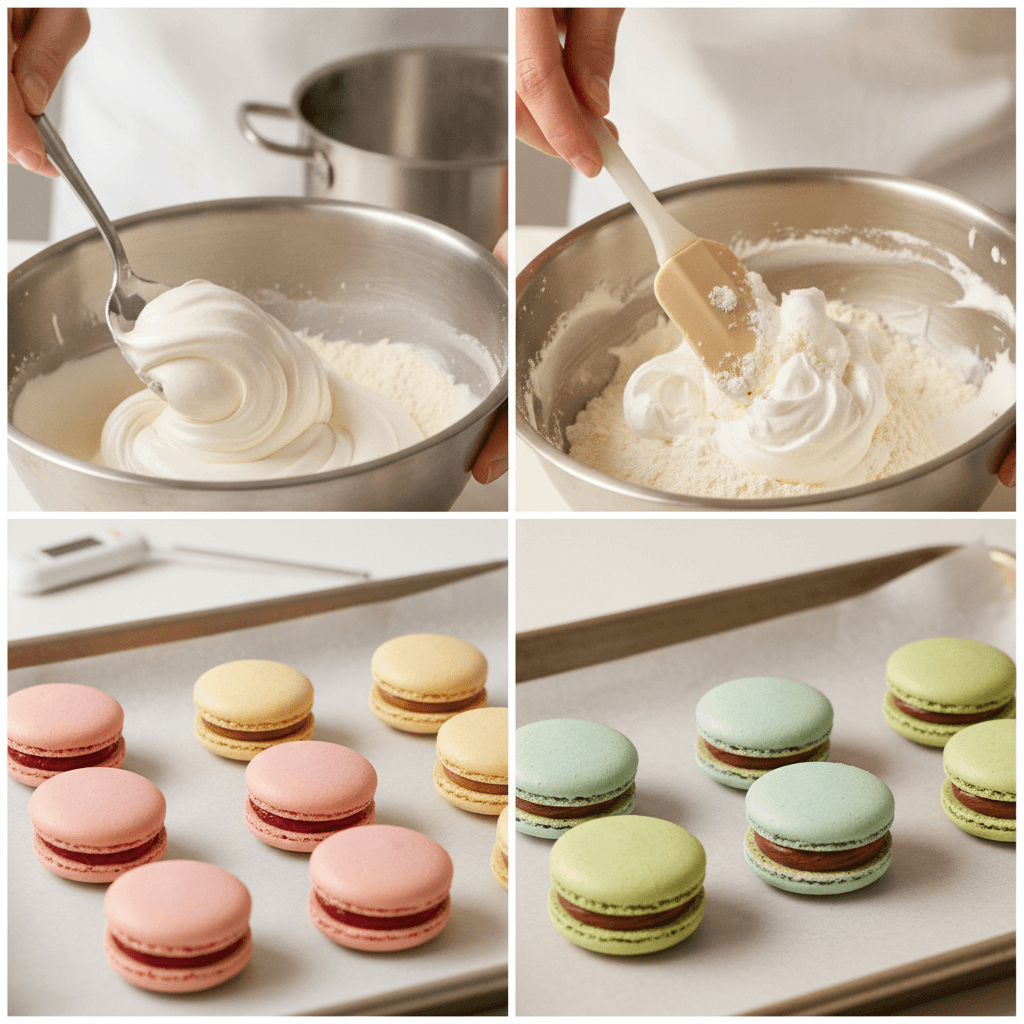
The macaron world's oldest argument: French meringue (simple, fussy) versus Italian meringue (technical, stable). Both produce excellent macs; they produce them differently, and the 'which should I use' answer depends on who you are as a baker. Here's the honest comparison from a bakery that switched to Italian for production and recommends French for learning.
The Mechanical Difference (30 Seconds)
- French: raw whites whipped with dry sugar to stiff peaks, folded into the almond-sugar mix. One bowl for the meringue, no heat.
- Italian: sugar syrup cooked to 118°C/244°F, streamed into whipping whites — the hot syrup cooks and stabilizes the meringue — then folded into a paste of almond flour, sugar, and raw whites. Two components to make (paste + cooked meringue), one bowl's worth of temperature management.
Stability and Forgiveness (The Decisive Category)
Italian wins, not close. The cooked meringue is structurally reinforced — it holds its air through mixing, tolerates humid weather better, forgives slightly-aggressive macaronage, and has a wider ribbon-window (see macaronage guide). French meringue is fragile: it deflates if you look at it sideways in August humidity, and the window between under- and over-mixed is half the width. For commercial production, Italian is nearly universal for this reason — we couldn't ship consistent macs nationwide on French batter in July; Italian is the insurance policy.
Texture and Taste Differences (The Subtle Category)
Honestly assessed:
- Foot and shell: Italian shells tend toward smooth domes with compact, even feet; French shells can be slightly lighter-crisped with frillier feet. Both are 'correct'; the aesthetic difference is slight.
- Interior: French interiors run slightly airier-chewy; Italian slightly denser-fudgier. After 24-hour maturation with filling, most palates can't distinguish them blind — the filling dominates texture perception.
- Sweetness: identical by recipe design (the Italian's syrup sugar equals the French's whip sugar).
- The honest verdict: texture differences are real but second-order. Method choice should be made on stability and workflow, not texture — anyone claiming a dramatic superiority of one method's crumb is tasting their own preference.
The Difficulty Reality (For Home Bakers)
French is easier to start, harder to master: fewer components, no thermometer, no hot-syrup handling — but the meringue demands finesse and the environment matters (humid days punish it). The failure modes (flat, cracked) are common and discouraging for beginners.
Italian is more equipment, less anxiety: a candy thermometer and a stand mixer you trust are required; the syrup step is exacting but *exact* — once you hit 118°C and stream correctly, the meringue is nearly guaranteed. Home bakers with thermometer discipline succeed faster on Italian. The hot-syrup safety note (stream slowly, pointed at the bowl wall between whisk and side) is the one real handling skill.
Which Should You Use? (The Decision Tree)
- First 5 batches: French. Learn the texture states (ribbon stage, foot formation) without juggling syrup temperatures. Accept some failures as tuition.
- After you can identify ribbons: try Italian and feel the stability difference — most bakers who try both keep Italian for anything important
- Humid climate / summer baking: Italian, decisively
- Small kitchen, no mixer: French by necessity (hand-whisking Italian meringue is genuinely hard — streaming syrup while whipping solo is the two-person job it's always been)
- Production, gifting, high-stakes: Italian — the batch-to-batch consistency is the point
- Our use: Italian exclusively (all recipes in this blog series default to it) for exactly the reasons above
The Hybrid Reality (What Pros Actually Do)
Many professional kitchens run Italian for production and teach French in classes because the skills transfer better (learning macaronage and meringue-reading without the thermometer crutch builds intuition). The methods aren't rivals; they're an ordered curriculum. Learn French to understand the batter; adopt Italian for the insurance. And when even the stable method fails you on a humid August day — which it will, occasionally, because macarons remain macarons — the shop exists as your fallback, shipped with Italian-meringue consistency every time.
French to learn, Italian to keep, both are legit. Pick your method by your kitchen and your humidity — and let the test-shell protocol arbitrate the rest.