Lavender Honey Macarons: A Spring Recipe With Real Measurements
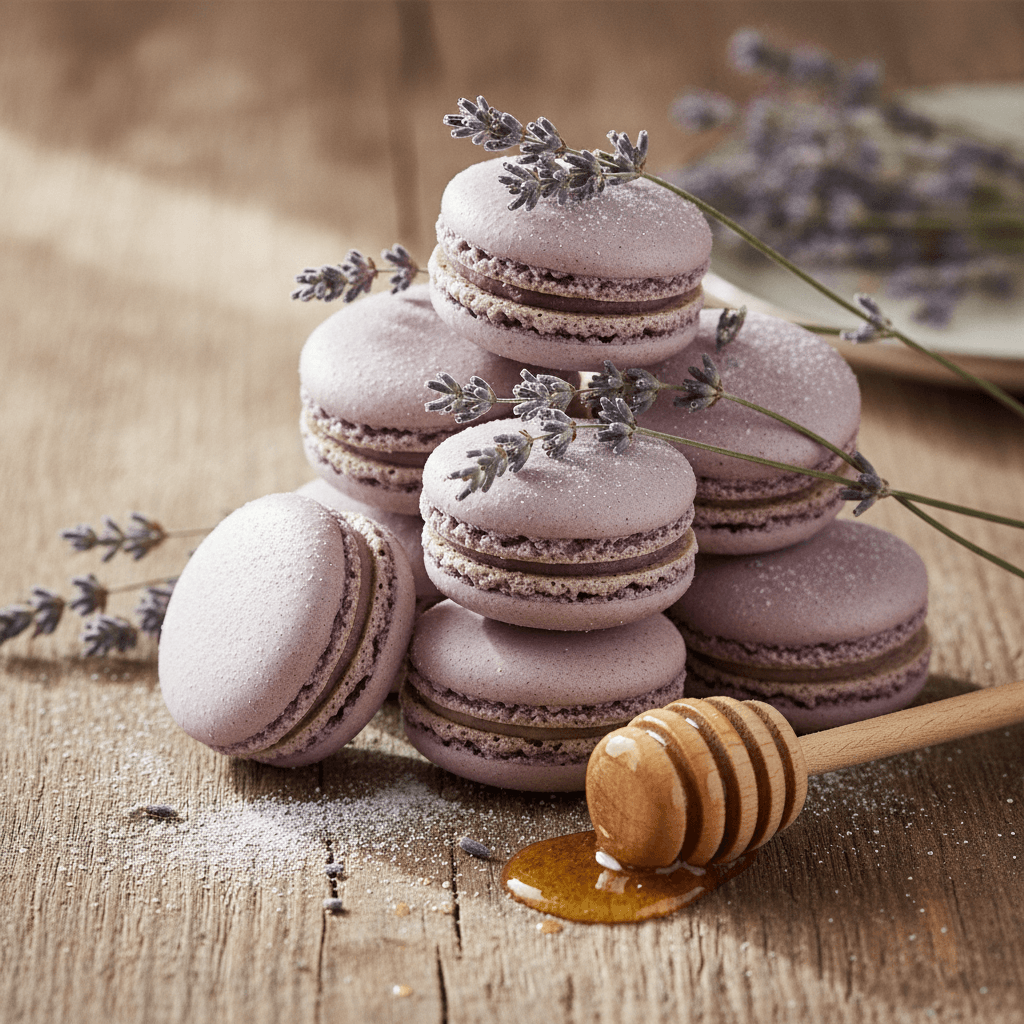
April is when lavender starts sounding like a good idea again — and in a macaron, it's magnificent *if* you respect it. Use too much and you're eating soap; use the right amount and you get a floral whisper against a honey-silk buttercream. This is a French-method recipe scaled for a home kitchen: about 30 filled macarons.
Ingredients
Shells:
- 200g finely ground almond flour
- 200g powdered sugar
- 1.5 tsp culinary-grade dried lavender, ground to powder in a spice grinder, then sifted
- 148g egg whites (about 5 large eggs), room temperature, divided into two 74g portions
- 200g granulated sugar
- 50g water
- Gel food coloring: a toothpick-scrape of violet (optional but pretty)
Honey buttercream:
- 113g unsalted butter, softened
- 60g honey (a light, floral honey — clover or orange blossom)
- 120g powdered sugar, sifted
- Pinch of fine sea salt
- 1–2 tsp heavy cream as needed
Step 1: Prep the Dry Mix
Pulse the almond flour and powdered sugar together in a food processor for 10 seconds — no longer, or you'll release almond oils. Sift through a fine mesh sieve into a large bowl, discard the stubborn bits, and whisk in the ground lavender. Pour the first 74g of egg whites over the dry mix and stir into a thick paste. Cover with plastic wrap touching the surface.
Step 2: Make the Sugar Syrup and Meringue
In a small saucepan, combine the granulated sugar and water over medium heat. When the syrup hits 110°C (230°F), start whipping the second 74g of egg whites in a stand mixer on medium speed. When the syrup reaches 118°C (244°F), pour it in a thin stream down the side of the mixing bowl with the mixer running. (Yes, this is technically the Italian method built into a French-style ratio — it's the most stable hybrid for home ovens and humid spring days.) Whip on high until glossy, stiff, and the bowl is barely warm — about 5 minutes. Add food coloring in the last minute.
Step 3: Macaronage
Scrape one-third of the meringue into the almond paste and mix hard to loosen it — you're sacrificing this portion, so be rough. Add the remaining meringue in two additions, folding with a spatula: scrape around the bowl, cut through the center, repeat. The batter is ready when it flows off the spatula in a slow ribbon and a figure-8 drawn in the bowl holds without cracking. Count your folds — most batches land between 35 and 50.
Step 4: Pipe, Rest, Bake
Pipe 3.5cm rounds onto parchment or silicone mats over a template. Bang each tray on the counter 4–5 times, pop surface bubbles with a toothpick, and rest until the surface is touch-dry — 30–45 minutes. Bake at 300°F (verified with an oven thermometer) one tray at a time, 14–16 minutes, rotating at the 8-minute mark. Feet should appear around minute 5–6. Shells are done when they don't wobble when nudged gently.
Step 5: Honey Buttercream and Assembly
Beat the butter for 3 minutes until pale. Add the honey and salt, beat 2 more minutes, then add powdered sugar in two batches, beating until fluffy. Add cream a teaspoon at a time only if it's too stiff to pipe. Match shell pairs by size, pipe a nickel-sized dollop of buttercream on the flat side of one, and sandwich with a gentle twist. Mature the filled macarons in an airtight container in the fridge for 24 hours — this is not optional. The shell softens into that chewy texture as it absorbs moisture from the filling.
Troubleshooting This Specific Recipe
- Shells crack: you rested too little or your oven runs hot — see our cracked macaron guide
- Soapy taste: you used too much lavender or non-culinary lavender. 1.5 tsp of *ground* bud is the ceiling for 30 macarons
- Hollow shells: whip the meringue 30 seconds longer and drop oven temp by 10°F
- Buttercream splitting: your butter was too cold or the honey was hot — both should be true room temperature
No time to bake? Our spring macaron boxes often include lavender and other seasonal flavors — made in New Windsor, shipped nationwide.