Macaron Batter Too Thick? The 6 Causes (Plus the Rare One That's Actually Good)
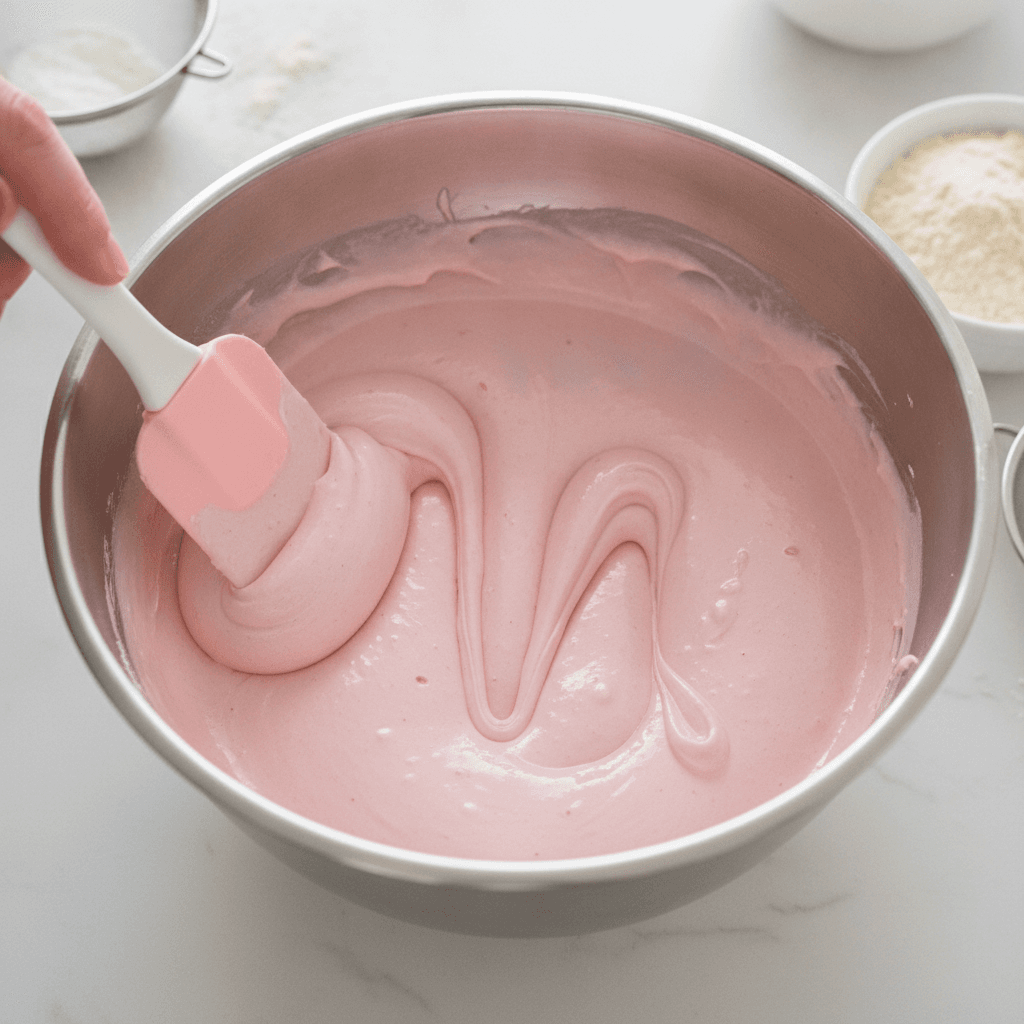
While most batter troubleshooting focuses on runny batter, the opposite problem — batter too thick to pipe or that pipes into bumpy, peaked rounds that don't settle — is its own category. Stiff batter has more causes than you'd guess, and one of them is actually the *correct* state that most bakers pass through without stopping. Here are the six causes ranked, and how to tell them apart.
Cause 1: Under-Mixed Macaronage (The Most Common by Far)
The classic. Macaronage has a wide window where the batter looks too thick but hasn't actually reached the ribbon stage. If your batter holds peaks, falls in blobs instead of ribbons, and piped shells keep their peaks — you just haven't folded enough. Fix: keep folding. Three to five strokes at a time, test the figure-8, stop when it ribbons and the 8 closes. Most home bakers stop folding too early because they're afraid of the over-mixed state — but the distance from 'too stiff' to 'just right' is usually bigger than the distance from 'just right' to 'too runny.' When in doubt, fold more.
Cause 2: Over-Whipped Meringue (The Stiff-but-Dry One)
If the meringue was whipped too far (grainy, dry-looking, clumpy), the batter will fold in but stay stiff in a *chalky* way — it never gets glossy. Test: stiff batter + no gloss = this. Fix: unfixable mid-batch. Bake it anyway (the shells will be imperfect but edible), and next batch whip the meringue just to glossy-firm. This cause is less common than under-mixing but produces a similar symptom with a different texture (dry vs. wet stiffness).
Cause 3: Cold Ingredients or Cold Kitchen
Cold meringue and cold almond paste resist integration; the batter stays stiff because it's cold, not because it's unmixed. Test: check the bowl's temp with the back of your hand; if it feels cool, that's some of the issue. Fix: let the mixed batter sit at room temperature 10–15 minutes (it relaxes and loosens), then continue the folding until it ribbons. Or, prevent it: room-temp everything before starting, always. Our aged-whites post covers the ingredient-temperature side.
Cause 4: Syrup Too Hot (Italian Method Specific)
If your syrup went past 118°C (soft-ball into hard-ball) the resulting meringue is over-cooked and stiffer than intended. The batter mixes but is dense and paste-like. Fix: thermometer discipline next batch; mid-batch there's no direct fix but the batter often loosens after resting 10 minutes and additional folding. Bake and recalibrate.
Cause 5: Ingredient Ratio Drift
Too much almond flour/powdered sugar relative to wet: scooped-not-weighed dry ingredients can compress 20% more mass into the volume than the recipe assumed, skewing the ratio toward dry. Fix: weigh everything, always. This cause is the reason for the scale-elevation in every macaron guide we've written — volume measures are the silent batter-killer of home macaron baking.
Cause 6: The 'Stiff Is Correct' Case (Sometimes It's Right)
Italian-meringue batter in particular can look stiff compared to French and still be exactly right — the cooked-meringue structure holds more body. The figure-8 test and the test-shell check are the arbiters: if the ribbons hold, the 8 closes, the piped shell settles its peak in 30 seconds — the batter is right, regardless of how 'stiff' it looks compared to a YouTube video. Trust the behavior, not the appearance, and see the consistency guide for the full test protocol.
The Real-World Triage
When your batter's too thick right now:
- Test the figure-8 — if it fails, fold more (Cause 1)
- Check the gloss — no gloss means possible over-whipped meringue (Cause 2)
- Feel the bowl — cool means warm it (Cause 3)
- Recall your syrup temp — too hot means Cause 4
- Recount your weights — Cause 5
- If the behavior tests pass — it might be right (Cause 6)
Most of the time it's Cause 1, and the answer is 'fold more.' When in doubt: fold more. Macaronage punishes under-folding much more gently than over-folding.
Stiff batter is usually just unfinished batter. Fold on, trust the figure-8 — and remember the calibration samples at the shop if you need the texture reference.