Macaron Feet Not Forming? The 6 Real Reasons (With Fixes)
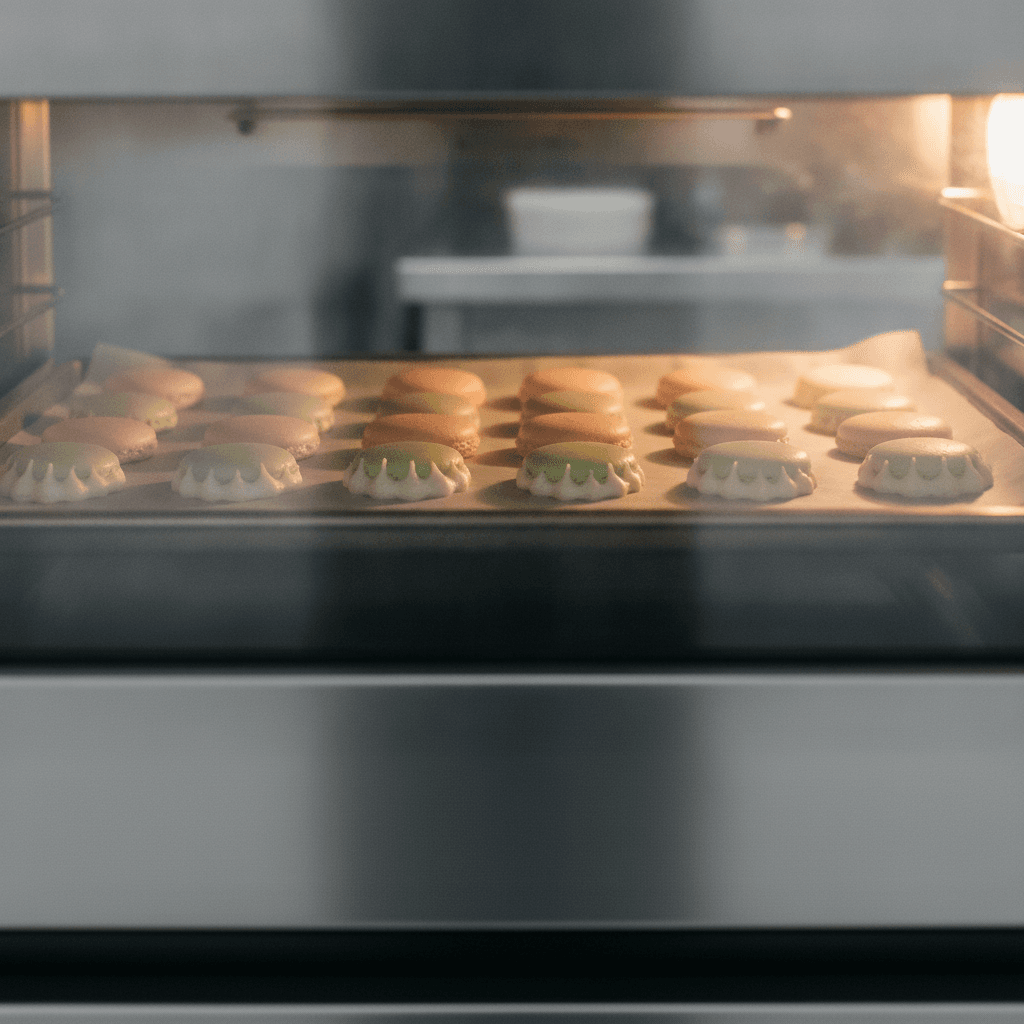
The "feet" — that ruffly, textured band at the base of a macaron shell — are the universal sign of a successful bake. No feet means the steam escape went wrong somewhere, and unlike cracks (which at least give you a cookie to eat), footless shells usually come with other texture problems. Here are the six causes in order of likelihood, and what to change.
What Feet Actually Are
Feet form when expanding air and steam, trapped by the dried skin on top, force their way out the bottom edge of the shell — pushing the shell up and leaving that ruffled rill at the margin. So feet require: (1) a proper skin on top forcing exit downward, (2) enough internal pressure, and (3) the right heat delivery to make it all happen before the structure sets. Every cause below breaks one of those three requirements.
Cause 1: The Shell Rest Was Too Short
Under-rested shells have no skin, so steam escapes straight up instead of down — you get cracks or smooth-sided domes with zero feet. Fix: the touch test. Batter dots should feel dry and slightly leathery, with no batter transferring to your finger. In humid weather this can take over an hour; don't rush it.
Cause 2: Oven Temperature Too Low
The single most common cause in our troubleshooting inbox. Feet need a burst of bottom heat to drive that air expansion early in the bake. A cool oven heats everything gradually; the shell sets before pressure builds. Fix: verify with an oven thermometer, bake at 300–315°F true (French method likes the lower end, Italian tolerates the higher), and if your oven heats slowly, preheat for a full 30 minutes.
Cause 3: Batter Over-Mixed
Over-mixed batter has lost its foam structure — there's not enough trapped air to build pressure, so nothing pushes the shell up. The tell: shells spread flat right after piping and bake up thin and wrinkled. Fix: fold less next batch — pass the figure-8 test and stop. If your batter pours like cake batter, it's already over.
Cause 4: Meringue Too Soft
Under-whipped meringue (droopy peaks) creates a weak foam that can't hold expansion. Similar result to over-mixing, and often confused with it. Fix: whip to firm, glossy peaks. If there's any doubt — whip 30 seconds more. Under-whipped meringue is more forgiving of extra whipping than under-mixed batter is of extra folding.
Cause 5: Wrong Baking Surface
Here's the under-discussed one: your sheet pan and liner change bottom-heat delivery dramatically. Thin warped pans create hot and cold zones; double-thick insulated pans block the initial heat pulse feet need; dark pans run hot; silicone mats insulate slightly (some bakers get better feet on parchment). Fix: use a heavy, flat aluminum half-sheet pan with parchment, center rack. If you're on silicone and feet are weak, test one batch on parchment before changing anything else.
Cause 6: Humidity (Yes, Again)
High ambient humidity prevents skin formation and adds moisture to the batter itself — the shell never sets up the pressure differential that creates feet. On humid days feet are shorter even in good bakes. Fix: rest longer with a fan nearby, or switch to the Italian method on wet-weather days, or bake first thing in the morning when household humidity is lowest. And if none of this works and you need macarons this week for an event — that's literally what we're here for; no shame in outsourcing a deadline.
The Variable-Change Rule
Macaron troubleshooting has one iron law: change one thing per batch. Bakers who change oven temp AND resting time AND brand of almond flour simultaneously can never learn what worked. Keep a bake log — one line per batch: date, weather, rest time, oven true temp, fold count estimate, result. Ten batches of data will diagnose your kitchen's personality better than any guide, including this one.
Need proof of what proper feet look like? Order a flavor box and inspect our ruffly little workhorses — calibration by dessert.