Macaron Troubleshooting Flowchart: Every Defect, One Page
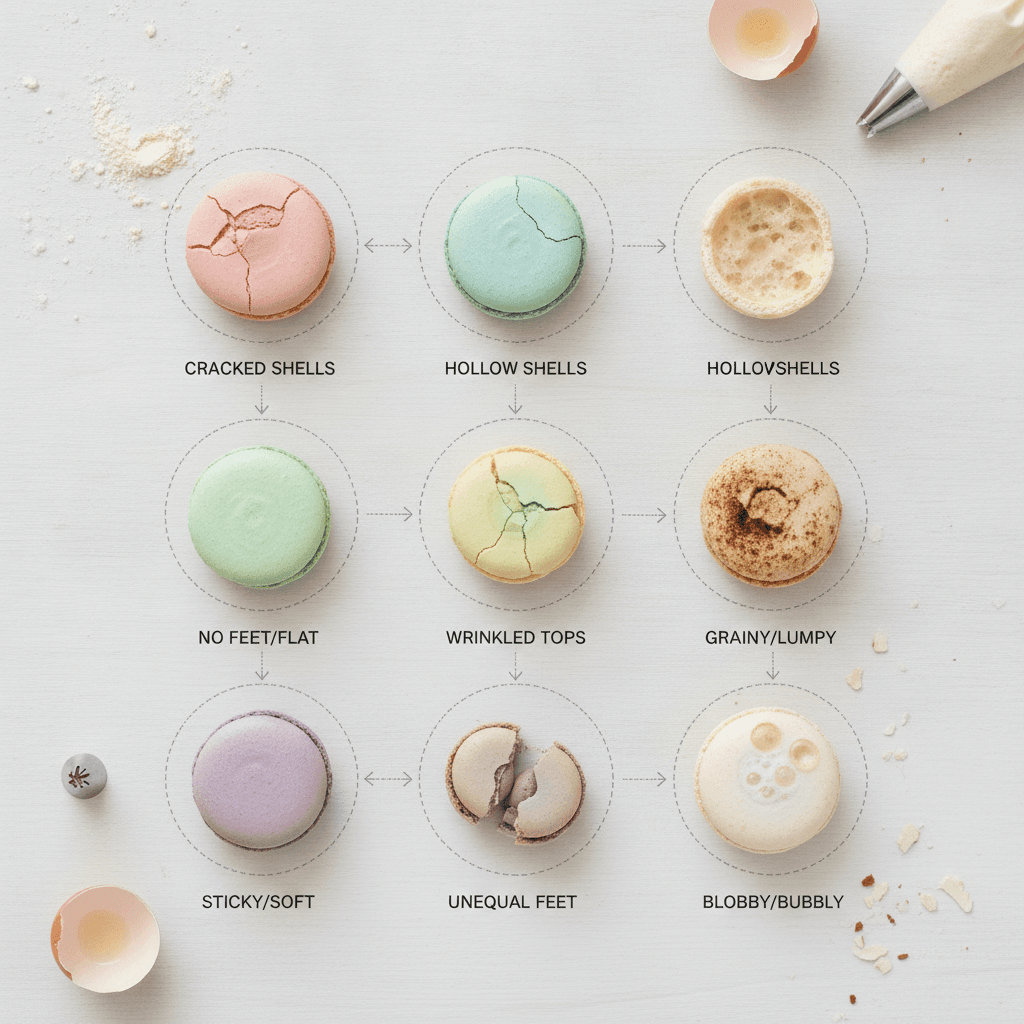
Every macaron defect has been covered in detail across our baking guides — but when you're standing over a failed tray, you need the diagnostic, not the essay. This is the single-page master reference: symptom → likely cause → fix. Bookmark it; print it; tape it inside the pantry door where the almond flour lives.
Surface Cracks
Cracked tops:
- Skin didn't form before baking → rest longer (touch test: no tack)
- Oven too hot → thermometer; drop 10–15°F
- Air bubbles not popped → bang trays, pop with toothpick
- Under-mixed batter (lumpy + cracked) → fold closer to ribbon stage
- Humid day → fan the rest, humidity guide
- Weak meringue → whip to firm glossy peaks
Hollow Shells
Empty gap under the top:
- Oven too LOW (the surprise cause) → verify with thermometer; raise temp
- Over-whipped meringue → stop at glossy-firm, not dry
- Over-mixed batter → fewer folds next batch
- Over-long rest → rest only until touch-dry
- Full diagnosis: hollow macaron guide
Feet Failures
No feet / tiny uneven feet / burst-out sides:
- Rest too short → skin must be touch-dry
- Oven too low → feet need the heat pulse, check thermometer
- Batter too runny (over-mixed) → fold less; test-shell check
- Weak meringue → firmer peaks
- Baking surface issue → heavy aluminum sheet pan, parchment
- Feet explode outward (too much, frilly) → oven slightly too hot or batter slightly under-mixed
Texture and Shape Defects
Wrinkled/pruny: oily/old almond flour; too-low oven; over-mixed
Bumpy/grainy tops: almond flour not sifted finely enough; some unmixed meringue bits
Flat/spreading shells: over-mixed batter; liquid additions; weak meringue
Tilted/lopsided shells: uneven oven heat (rotate trays); piping at an angle; drafts
Stuck to parchment: underbaked — add 1–2 min; or shells not cooled fully before peeling
Browned: oven hot; or rack too high
Internal Texture Problems
Too chewy/hard: overbaked → drop 1–2 min; shells stored too airtight without filling (crispiness is normal pre-maturation)
Too soft/soggy: over-matured or filling too wet → shorten rest, use dam method for wet fillings
Air pockets in the chew: under-mixed (large bubbles) or over-mixed (flat interior) — the fold window is the fix
Gritty texture: almond flour too coarse → finer flour, sift harder
If You Change One Thing, Change This
The bakery's honest ranking of impact per effort:
- Oven thermometer — the single most common fix (ovens lie by 15–30°F routinely)
- Digital scale — eliminates the volumetric chaos of cups
- The touch-test rest (not timer-based rest)
- One-variable experiment batches — never change two things at once
- Italian method on humid days
That list solves ~90% of home macaron failures we've helped diagnose. The remaining 10% is usually ingredient-specific (almond flour quality, gel vs liquid color, egg white source) and each has a guide in the troubleshooting archive. And when the troubleshooting has worn you down and you just need macs that work — we ship.
Print this, tape it up, and bake fearlessly. Calibration samples always available at the shop.