Painting With Your Kids: Age-by-Age Guide to a Shared Hobby
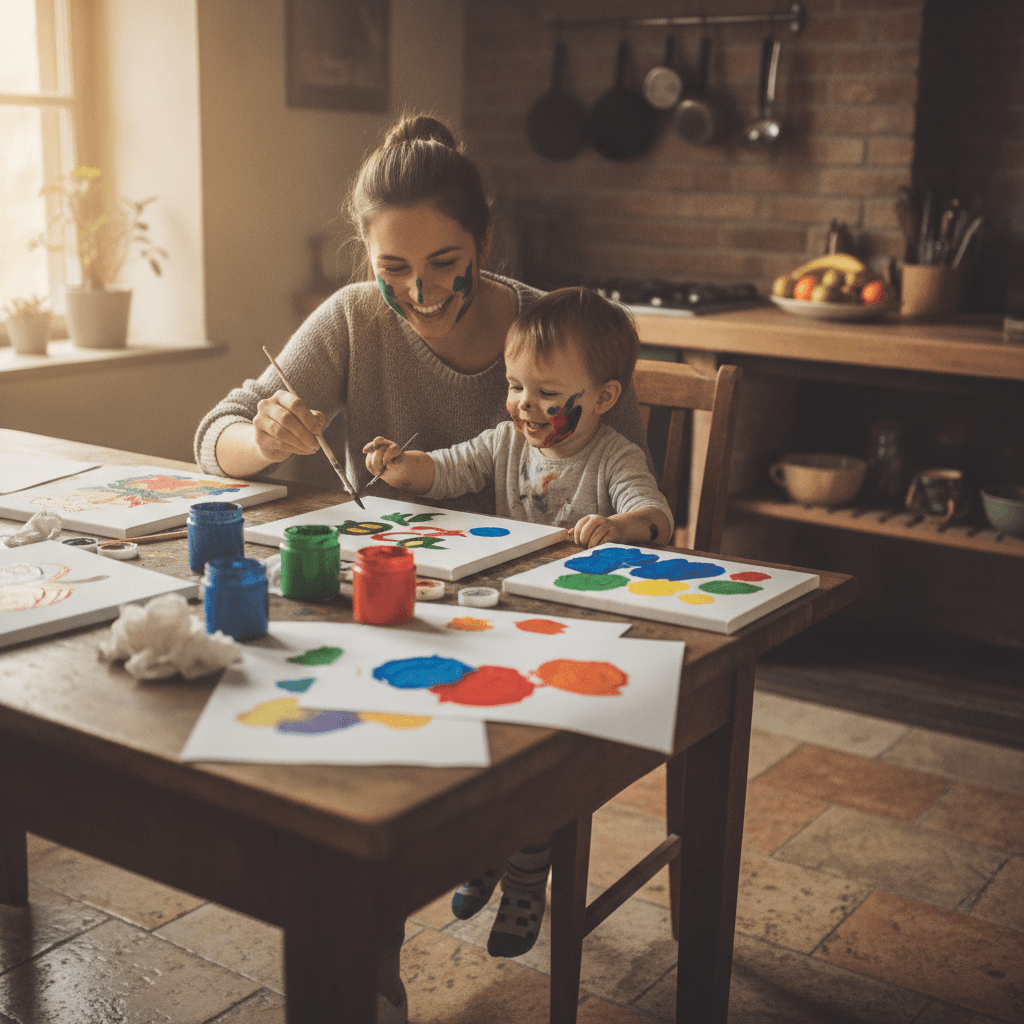
Painting alongside your kid is one of those activities that sounds idyllic and frequently isn't — unless you match the format to the age. The same 'let's paint together' session at ages 4, 8, and 13 requires three entirely different approaches. Here's the age-sequenced guide, from a business that hosts a lot of multigenerational painting and can tell you which ages are which kind of joy.
Ages 3–5: Pure Process (No Product)
At this age painting is a sensory activity, not an art activity. The right structure:
- Medium: washable tempera, big brushes, big paper (butcher paper over the whole table is ideal)
- Goal: no goal. They will mix all the colors into brown, paint their own hands, and be delighted. This is correct usage.
- Your role: paint your own thing alongside without 'helping' their page; parallel play is the connection at this age
- Duration: 20 minutes max, end on a high note
- The magic moment: narrating their work without evaluation ('you used a LOT of blue') teaches the vocabulary of observation without teaching self-judgment
The paintings from this age are refrigerator classics, and the practice sets up 'art is something we do together' as a family baseline for a decade.
Ages 6–8: The Follow-Along Sweet Spot
Kids this age can genuinely follow a leader, which opens the 'we both painted the same thing' format:
- Medium: still washable, but now canvas paper or small canvases are in play; watercolor is a good add
- Format: a paint night style mini-session at home — you paint the same picture step-by-step, both of you
- The comparison guardrail: at this age kids start ranking 'whose is better' — head it off with 'we're painting two different versions' and never one version right
- Duration: 45–60 minutes, one painting
- The win: this age produces the first paintings kids want to frame — let them frame one. The framing is the signal 'this is worth keeping' and it matters.
Ages 9–12: Skill Building, If They Want It
This is the age when some kids become genuinely interested in improving and others drift to other pursuits — follow their lead:
- If interested: teach real technique (color mixing, brush types, how to sketch before painting); this is the age when instruction sticks and the 'I want to get good' motivation shows up
- If lukewarm: keep it social — paint nights at studios, painting alongside a parent with a podcast on, the 'we do this because we do this' format
- Medium: acrylics on canvas (the real materials land at this age — kid-grade supplies start feeling condescending), watercolor for the travel-sketchbook kids, some kids this age start in digital (Procreate on an iPad) — all fine
- The key move: never force more sessions than they'd choose; the forced-practice kid becomes the adult who 'used to paint'
Ages 13–17: Treat Them Like Collaborators
Painting with a teenager requires renegotiating the entire relationship — they are not your student; they're your peer-artist-in-training:
- Autonomy: they pick subjects, they get their own supplies, their work is theirs (never post without asking — teenagers and their art and social media is a whole conversation)
- Side-by-side sessions: parallel painting without commentary is actually one of the best teenager-hanging formats — you don't have to talk, the pressure is off, the activity is the point
- Attend together: a couples/pairs format paint night works great at this age — the studio environment validates the activity beyond 'a thing my parent makes me do'
- If they're better than you (they might be): celebrate it. The moment a kid's painting surpasses their parent's is a weird rite of passage and your response teaches them whether competence is safe at home.
The teen years are the highest dropout rate for shared creative hobbies, not because kids outgrow art but because they outgrow being parented during art. Adjust the relationship and the hobby survives.
Setting Up (At Any Age)
The logistics that make it actually happen:
- A dedicated space with a permanent painting kit (a caddy with brushes, washable paints, paper) that can emerge to the table in under 2 minutes — setup friction kills sessions
- A mess protocol kids own (even 4-year-olds can learn 'we put down the splat mat first') — owning the setup is part of their investment
- A display system — a wire with clips, a rotating frame, a hallway gallery — visible art is how kids learn their work matters
- No quality talk about their work, ever — 'I love the energy in this' beats 'that's good' because it doesn't hook their self-worth to the painting's outcome. Research on praise is clear: process praise builds persistence; outcome praise builds performance anxiety.
When to Outsource the Instruction
Your instruction works at 5 and under; once a kid wants skill-building, an outside teacher lands differently (kids famously accept correction from instructors that they bristle at from parents — this is universal and not a reflection on you). Family paint nights, kids' classes, and teen sessions at studios serve this role: the parent attends as a fellow student, which changes the dynamic entirely to 'we're both learning' — a relationship upgrade at any age, but essential at 10+.
Paint with them at any age — it scales with them as they grow. And when your kitchen table runs out of patience, the studio easels are ready.