Piping Bag Skills for Beginners: Macarons, Cupcakes, and Confidence
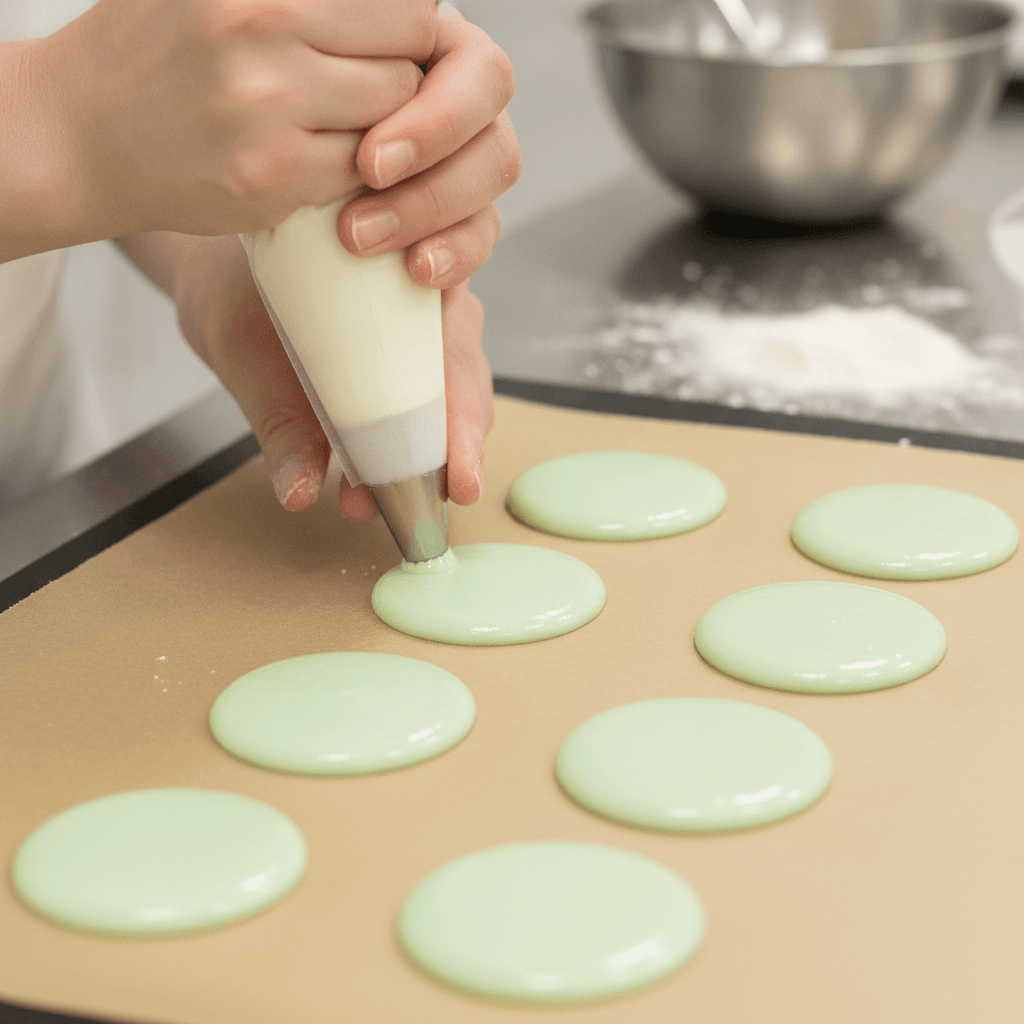
The piping bag is the divider between 'home baking' and 'this looks like a bakery made it.' It's also the tool most beginners hold wrong, fill wrong, and blame wrong — when reality is that piping is maybe 30% talent and 70% technique that nobody taught you yet. This is the tutorial, covering macarons and cupcake swirls with the same bag.
Bag Basics: Setup Without Disaster
Setup rules beginners always learn the hard way:
- Choose the right bag: disposable 12–16 inch bags for most purposes; reusable silicone ones fill easier but grip-slipperier
- Trim the tip correctly: cut less than you think — you can cut more, you can't cut less
- Fill to half, max — an overfilled bag is why beginners get batter on their elbows. Twist the top closed, and grip so the twist forces material DOWN, not back up (this is the famous 'choke up on the bag' point)
- The glass trick: stand the bag (tip in a glass) folded over the glass rim for easy single-person filling — nobody taught us this the first year either
Before any batch goes in the bag: test the tip on a plate to confirm the opening size and your hand pressure agreement.
Grip and Pressure: The Core Physics
Piping is the art of consistent downward pressure — the bag empties at whatever rate your hand squeezes, so variable squeeze = variable shells. Technique:
- The dominant hand twists and squeezes the bag top
- The other hand is not squeezing — it's a guide/steadier at the tip
- Squeeze from the BACK of the bag, pushing material forward — never wring the middle
- Pressure should be steady until you stop squeezing, then release pressure BEFORE lifting the bag (the amateur telltale: the string / tail that follows the tip up)
Practice pressure consistency on a plate of test-dots. Ten dots the same size means your hand has the motor control.
The Macaron Piping Motion (The Easiest Trick Nobody Teaches)
Macaron piping is deceptively simple:
- Hold bag perfectly vertical, tip a half-inch above the mat
- Squeeze steadily while counting 'one-one-thousand, two-one-thousand, three-one-thousand' — this is the timing for a 3.5cm round
- Stop squeezing completely on 'three'
- A tiny flick of the wrist as you lift straight up — the flick cuts the batter string cleanly
Common errors: bag at an angle (oval macs), tip too high (tails), tip too low (rings). The parchment-under-template combo (slide a printed template under parchment, trace by piping, remove template before baking) is every pro's training wheels.
The Cupcake Swirl (The Rosette Everyone Wants)
Standard cupcake swirl, from a big star tip (Wilton 1M or 2D tips are the classics):
- Start with the tip at the OUTER EDGE of the cupcake, half-inch above the surface
- Squeeze steadily and spiral INWARD, overlapping your own swirl slightly, working toward the center in 2.5 rotations
- At the center peak, stop squeezing, pull straight up
Variations from the same skill:
- Rosette: spiral outward from the center instead — a flatter, flower-like look
- High swirl: spiral in but build upward as you go (takes a stiffer buttercream)
- Rustic swirl: squeeze steady, move tip randomly over the surface — looks deliberate, forgives everything
Common Piping Mistakes and Fixes
- Air-bubble pops mid-swirl: batter/buttercream wasn't fully pressed into the tip — burp the bag by squeezing a test blob before every new bag
- Split buttercream streams: buttercream too cold — 15 seconds in the microwave on 50% power, re-mix, continue
- Swirl sagging: buttercream too warm — refrigerate the bag 10 minutes
- Hand cramping: your grip is wrong — squeeze with the whole hand, not the fingertips; take a rest between cupcakes, this is athletic
- Uneven macaron sizes: no template — use one, at least until the count motion is in muscle memory
- The tip falling INTO the bag's contents: bag overfilled or twisted badly — scrape back to the bowl and start clean; no shame, every baker has fished a tip out of batter
The Practice Plan
A short path to confidence:
- Week 1: piping dots on parchment with macaron batter-like consistency (practice with thick yogurt on a plate if you don't want to waste batter)
- Week 2: cupcake swirls on upside-down ramekins (reusable, no cupcakes baked yet)
- Week 3: real cupcake batch with full swirls
- Week 4: macaron piping into a real bake
By week 4 piping is motor memory, and the piping bag becomes the tool that converts good baking into beautiful baking. And if the swirls aren't swirl-worthy yet: the bakery counter covers you in the interim.
Piping is 10 minutes from 'how??' to 'oh, it's just this.' For finished specimens to study: Antonio's boxes, delivered and swirl-perfect every time.