Summer Team Offsite Ideas in the Hudson Valley (Beyond the Trust Fall)
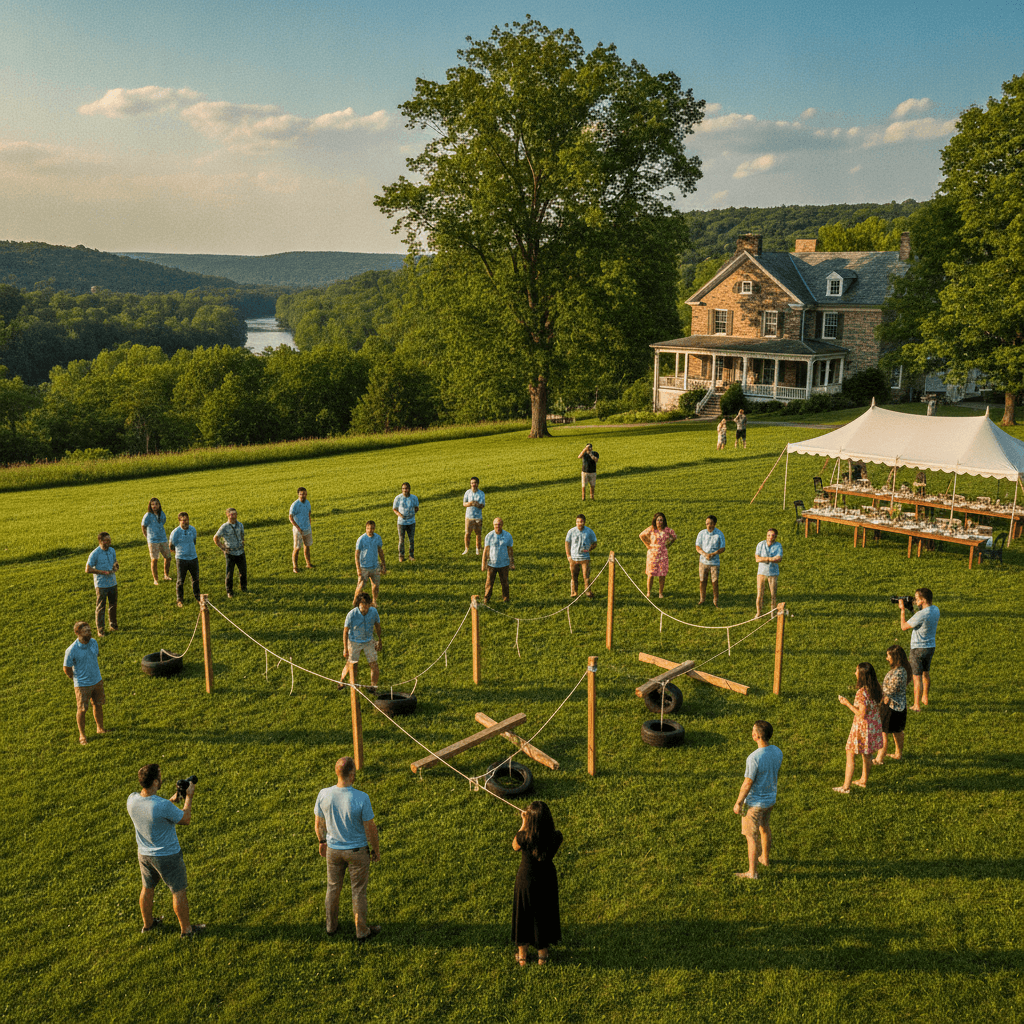
The team offsite is the rare workplace institution that's actually worth protecting — when it's done well. Done badly, it's a trust-fall in a Marriott conference room that everyone tolerates. The Hudson Valley, within 90 minutes of NYC, has quietly become one of the Northeast's best offsite regions because it offers the mix modern teams actually want: nature, culture, food, and activities that don't feel like HR designed them. Here's the planner's guide.
Why the Hudson Valley (For NYC-Adjacent Teams)
The valley works as an offsite region for structural reasons: 90-minute drive or train from Manhattan (a real day trip), dramatic scenery (the valley is genuinely beautiful, not 'conference-adjacent beautiful'), a real food scene (not catering-hall dependent), and activities spanning outdoors to creative. The cost per quality beats most destinations because you're not paying destination-resort premiums. And as a matter of team preference: people *want* to go somewhere beautiful for a work event; 'we're going to a nice place' is the frame that makes attendees arrive with positive energy.
The One-Day Offsite Structure That Works
The proven day structure:
- Morning (9–11): the work session — the strategy, the review, the planning. Do this first while brains are fresh, at a venue with water views when possible.
- Midday (11:30–1:30): lunch somewhere good (this is the Hudson Valley; lunch can be excellent)
- Afternoon (2–4): the activity — see below
- Late afternoon (4:30–5:30): closing reflections or loose social time; the best offsites end slightly early on a high note
- Optional evening: dinner for the subset that can stay; teams that can stay for dinner bond meaningfully, never mandatory
Key rule: activity after work session, never before. Tired-after-activity teams are bad at strategy; fed-and-active teams are good at talking.
Activity Options Ranked by Team Feedback
From what actually gets rated highest in post-offsite surveys:
- Creative workshops (painting, ceramics, cooking) — shared output, low pressure, inclusive. A private paint event at our studio is the valley's version of this; teams consistently rate it as the day's highlight
- Outdoor activity with choice: guided hike where faster people go ahead, kayaking on the Hudson, Storm King walk — key is low-intensity options for mixed fitness levels
- Food-focused: cooking class, farm tour + tasting, brewery/winery tour
- Genuinely social: lawn games, casual picnic setup, scavenger hunt (the fun ones, not the forced ones)
Avoid: competitive sports with skill disparity (the ex-high-school-varsity problem), high-exertion required activities (you'll lose people), and anything requiring people to perform individually in front of the group (karaoke at work events is a minefield).
Venue Types and the Hidden Costs
Venue options:
- Dedicated retreat venues (the valley has several): professional, expensive, seamless
- Hotel or restaurant private rooms: functional, variable ambiance
- Outdoor/ranch/farm venues: great for large groups, weather-dependent (the backup plan is essential)
- Studio/workshop venues: the activity is built in — our paint + event space model works this way: you arrive to the activity, everything else is the venue's problem
- The hidden costs to track: transportation coordination, dietary needs (get them in writing 2 weeks prior), weather contingency fees, and AV (if you're doing presentations, confirm the screen situation; 'we have a screen' has disappointed every team at least once)
Budget Structure (2026 Reality)
Hudson Valley one-day offsite per-person costs:
- Lean ($100–150/pp): picnic venue, own-transport, one activity, simple meals
- Standard ($175–250/pp): nice lunch venue, one facilitated activity, refreshments throughout
- Premium ($300+/pp): dedicated retreat venue, multiple activities, catered meals, professional facilitation
Where skimping hurts: on the activity quality and the food (these are what guests remember). Where skimping is invisible: venue prestige (a beautiful pavilion in a park beats a fancy conference room for summer offsites almost every time).
The Offsite Anti-Patterns (What to Not Do)
From observing corporate culture feedback loops, the offsite failure modes:
- All-work-no-play: calling a meeting 'an offsite' while leaving out the actual team-building part; the team's morale goes down
- All-play-no-work: the team suspects a layoff is being distracted-from
- Mandatory fun energy: 'this is FUN, everyone have FUN NOW' kills actual fun
- The founder-monologue: the day becomes a long form of 'let me tell you about the vision' while people sit in the sun
- No structure: 'we'll just hang out!' produces the day where everyone checks their phone by 2pm
The ratio that works: 30% work content, 40% shared activity, 30% social free-time. Balanced days are the ones teams actually rate as 'worth it.'
Bring your team to the Hudson Valley — and for the activity block, the studio hosts corporate paint sessions weekly. Strategy in the morning, canvases in the afternoon, bakery desserts all day. That's the offsite people describe to the next job.