Team Building Painting Events: A Planning Guide That Isn't Cringe
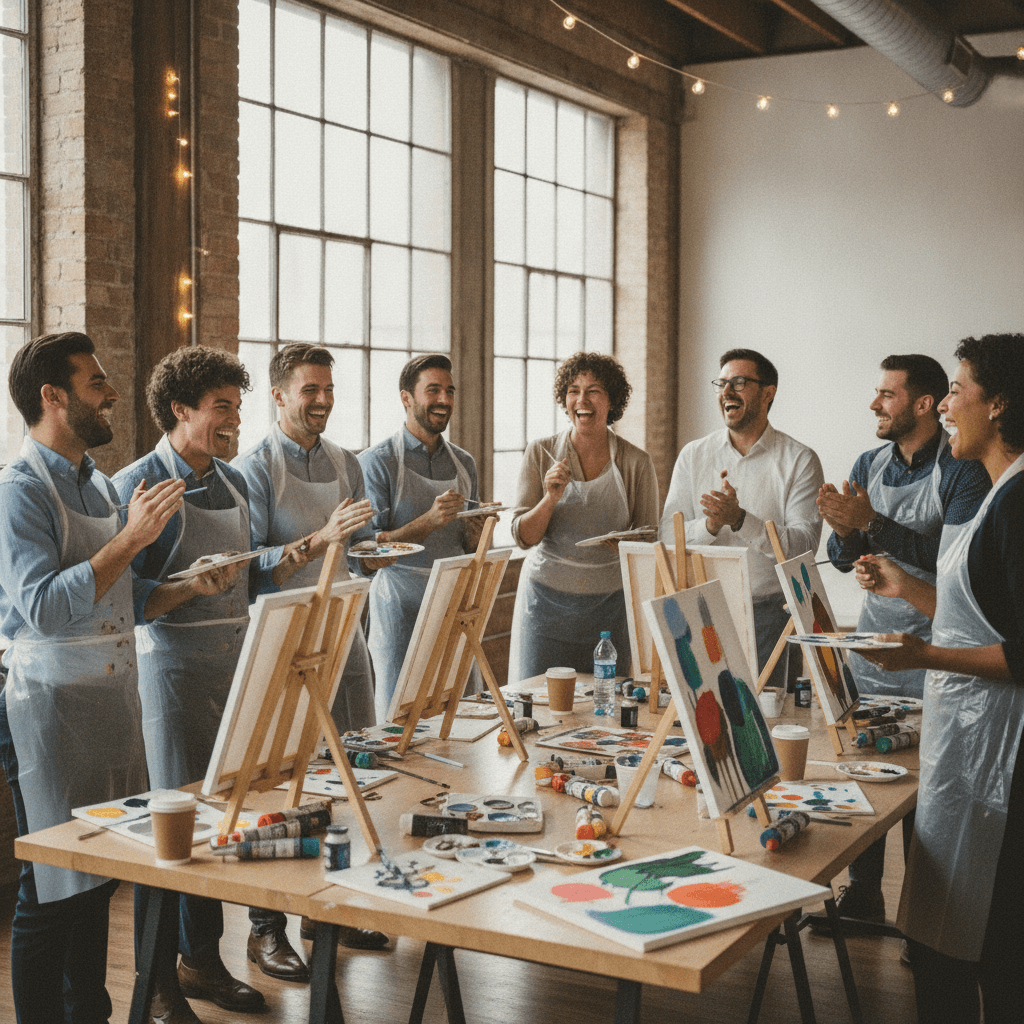
Most team building fails a simple test: would anyone do this voluntarily? Painting passes it. A team painting event gives people two hours of low-stakes creation, natural conversation, and proof that the quiet developer is secretly a color genius. But between "let's do a paint thing" and a successful event lies planning. Here's the playbook, from someone who hosts these regularly.
Why Painting Works Where Other Team Building Fails
The failure mode of team building is forced fun: competitive games that make introverts hide, icebreakers that make everyone regress to middle school. Painting side-steps all of it because the activity is *parallel*, not confrontational — everyone works on their own canvas while a shared instructor carries the social tempo. Conversation happens naturally during the low-focus steps (backgrounds, drying breaks) without anyone being put on the spot. It also cross-levels hierarchy beautifully: the VP and the intern are equally bad at painting trees, and that shared amateur status is genuine bonding.
Choosing a Format
Three main formats, ranked by team-building strength:
- Everyone paints the same image — best for cohesion; the end reveal of 20 interpretations of one painting is genuinely delightful and very photographable for the company Slack.
- Collaborative mural — the group collectively paints one large canvas or a grid of canvases that assemble into one image; the finished piece can hang in the office, which extends the event's life by years.
- Free-paint with a theme — everyone interprets "our next product launch as a landscape" or similar; highest creativity, most chaotic, best for teams that already like each other.
For a first corporate event, format 1 is the safe winner.
Group Size, Duration, and Timing Logistics
Size: 8–30 is the working range for a single instructor; above that, add instructors or split sessions. Duration: 2 hours is correct — 90 minutes rushes the painting, 3 hours drags. Timing: the 3:30–5:30pm slot outperforms evening for corporate groups (people keep their evenings, and nobody pretends it's not partly on the clock). Thursday beats Monday and Friday by an actuarial mile. If food is coming — and food should come — the dessert course is where our clients usually hand things to us: a mixed macaron and cupcake table in company colors is the standard close.
Budget Reality
Realistic per-person budgets for facilitated painting events run $45–$75 per person including materials and instruction; private studio buyouts for 20+ people push $65–$95 with drinks included. Food adds $12–$25 per person. The hidden budget line nobody plans: transportation and parking — pick a venue people can actually get to from your office, or attendance quietly craters. For local companies, our New Windsor studio events are deliberately priced inside the standard corporate wellness/team-offsite line items because we know exactly how those budgets work.
Getting Buy-In From the Skeptics
Every office has three people who will say "I'm not artistic" like it's a warning label. Three tactics that work: (1) frame it as a social event with painting attached, not an art class; (2) share photos from other companies' events — the room is always laughing, which sells better than any description; (3) announce that no artistic skill is required *and mean it*, because the instructor's job is making the paint-by-numbers-proof painting work for everyone. The skeptics, for the record, consistently leave with the best canvases — unburdened by vision, they follow instructions flawlessly.
The Follow-Through That Makes It Stick
The event ends; the team-building value depends on what happens next. Post the group canvas photo in the team channel that night. If you did a mural, hang it within a week — a framed collage of canvases in the break room becomes a permanent artifact and a recruitment photo-op. And book the next one before the glow fades: quarterly creative events build culture; annual ones build a fun anecdote. Teams that create together regularly report the effect in meeting rooms — painting is practice at being imperfect in front of colleagues, which is the core skill of honest collaboration.
Planning an offsite in the Hudson Valley? Bring the team to paint — we'll handle materials, instruction, and a dessert table that outlasts the quarterly all-hands in people's memories.