Team Building Painting Events: The Complete HR Planning Guide
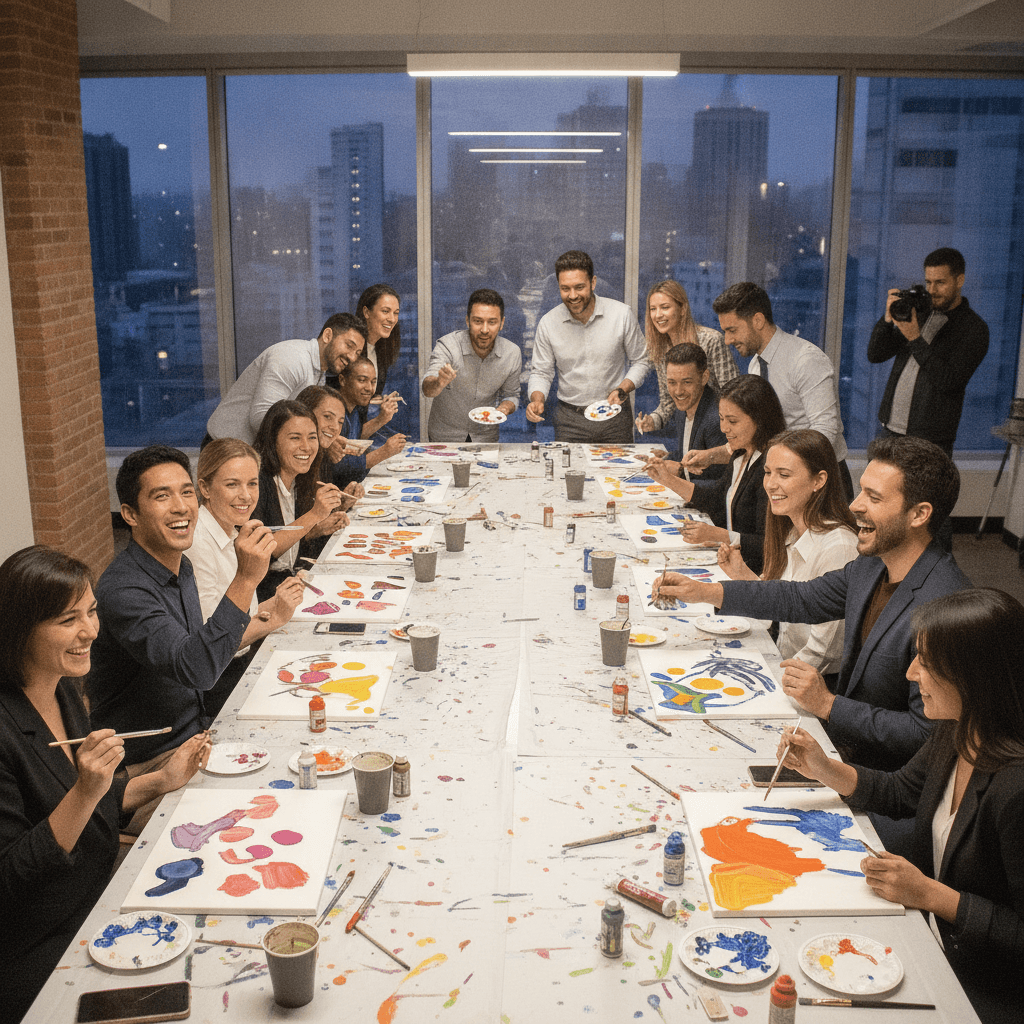
Painting events have become a top-three corporate team-building choice nationally, and the reason is measurable: they're the rare activity that works across age ranges, physical abilities, and temperament types simultaneously (see our introvert-inclusion post for the temperament argument). For the HR person or team lead planning one, here's the complete working guide — from budget math to the post-event metrics that justify doing it again.
Why Painting Specifically (The Comparison Table Nobody Gives You)
Team activities compared on the dimensions that matter:
- Escape rooms: great for puzzle-people, alienates others; max 8/room so big teams split
- Cooking classes: excellent but expensive and dietary-restriction-heavy
- Sports/ropes courses: high exclusion by ability and interest
- Happy hours: default, low-value, excludes non-drinkers
- Painting events: all-ability, all-personality, modest price, and produces a physical artifact (the canvases) that outlasts the event — the office-wall gallery from a team paint night becomes a culture artifact nobody throws away
The artifact is the underrated differentiator: most team-building evaporates by Friday; a team that painted together has 30 canvases as proof.
Formats and Group Sizes
- Small team (6–12): join a public session or take a semi-private table — lowest cost, studio atmosphere intact
- Department (12–30): private studio event — the standard format, 2 hours, instructor, all supplies, room for a short speech or award moment mid-break
- Company offsite (30–80): full-studio buyout or mobile event at your venue — needs 6+ weeks lead, sometimes multiple instructors
- Remote/hybrid: shipped-kit virtual paint events (canvas + paints mailed, instructor on video) — the pandemic-era format that survived because it actually works for distributed teams; engagement is lower than in-person but far above a virtual happy hour
Headcount confirmation discipline: lock the number 7 days out; studios staff and supply to the confirmed count.
Budget Framing and Approval Language
Typical pricing: $40–60/person in-studio, modest premium for private, mobile adds travel. A 20-person department event: $800–1,200 all-in. For the approval conversation: the per-person cost sits at or below the per-person cost of a team dinner at a mid-range restaurant, with substantially higher measured-engagement returns (the research on shared creative activity and group cohesion is genuinely strong). Frame it as 'structured team experience with a take-home artifact' rather than 'art class' — the former gets budget; the latter gets questions.
Making It Inclusive (The Checklist)
The inclusion points that matter operationally:
- Alcohol: choose a non-alcohol-centric format or ensure the event works fully dry — our studio does BYO with soft-drink parity, which handles this cleanly
- Ability: painting accommodates seated work, low mobility, and most physical considerations natively — flag any specific needs to the studio ahead
- Skill-anxiety: brief the team beforehand with the success-data (everyone finishes, 75% like their result) — the pre-event anxiety is the main attendance risk for quiet team members
- Voluntariness: strongly encourage but don't mandate; mandatory-fun framing poisons the format's reception. 'We're doing this, we'd love you there, here's why it's actually good' outperforms 'attendance will be taken.'
- Timing: during work hours beats after-hours for inclusion (no childcare/family penalty) — a 2:30–4:30pm paint event is the HR gold-standard slot
What Actually Makes It Succeed (The In-Room Factors)
From hosting many corporate groups:
- The executive behavior sets the tone — if the VP paints earnestly and laughs at their own lumpy tree, everyone relaxes; brief the leaders beforehand
- The mid-break moment: the 10-minute mid-session break is when the actual team-building happens (cross-table conversations start) — protect it, maybe put a dessert spread out for it
- Don't schedule a 'share-out' at the end — the canvases ARE the share; forced verbal debriefs deflate the ending
- The group photo with canvases: non-negotiable, and send it to everyone by next morning — the second-day slack thread is where the cohesion actually consolidates
- Keep it to 2 hours — longer formats test the enthusiasm; the arc completes at two hours
Measuring Whether It Worked
For the 'should we do this again' question: run a 3-question anonymous pulse the next day (enjoyed it / would do another / felt more connected to colleagues), and note retention-related signals over the following quarter. The honest industry finding: creative-activity events score highest on 'felt more connected' metrics among common team-building formats, and their effect is strongest on teams with mixed seniority. The paint canvases on the office wall serve as ongoing evidence — nobody hangs a happy-hour.
Budget it, brief the execs, protect the mid-break, and skip the share-out. We host corporate teams every week — tell us the headcount and we'll handle the rest.