The Ganache Ratio Chart (For Macarons, Cakes, and Truffles) — Print This
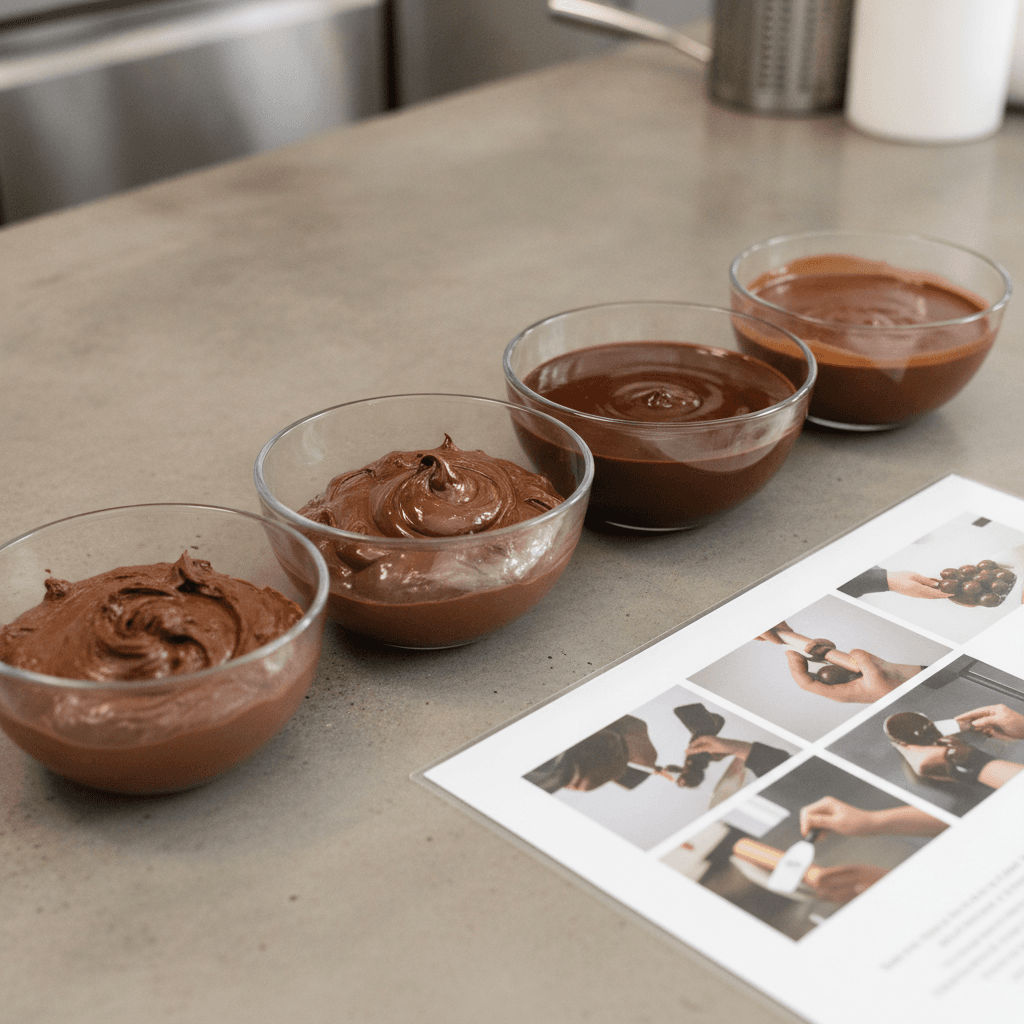
Ganache is two ingredients (chocolate + cream) and one variable (the ratio) — but the ratio changes everything, and getting it wrong is the most common cause of split, runny, or rock-hard results. This is the complete ratio reference we actually use at the bakery, organized by application, with the white-chocolate exception rules from our white-ganache guide built in. Print it, tape it inside a cabinet.
The Master Ratio Chart
Ratios are by weight, chocolate:cream. All assume a standard semi-sweet/dark baseline; milk and white adjustments follow.
DARK CHOCOLATE:
- 1:2 (thin) — drinks, fondue, sauce (pourable warm)
- 1:1 (medium) — cake glaze/drip (the drip-cake ratio — pours and sets with sheen), tart filling (soft set), whipped-ganache frosting base
- 2:1 (firm) — the workhorse: macaron filling, cake filling/layers, truffle centers (soft), piping
- 3:1 (very firm) — truffle rolled-centers, structural applications, shipped goods in heat
MILK CHOCOLATE: multiply dark ratios by ~1.25 (milk has less cocoa mass): macaron filling = 2.5:1, glaze = 1.25:1.
WHITE CHOCOLATE: multiply by ~1.5 (no cocoa solids at all): macaron filling = 3:1 (the full white guide), glaze = 1.5:1 — and watch the temperature more carefully at every stage.
Cream Matters Too (The Other Half of the Ratio)
The ratio assumes heavy cream (36–40% fat). Swaps change the outcome:
- Half-and-half or milk: adds water, ganache sets softer and splits easier — don't for firm applications
- Coconut cream (the dairy-free move): 1:1 swap by weight for heavy cream — works well, adds faint coconut note, sets slightly softer
- Butter additions: a knob of butter (5–10% of chocolate weight) at the end adds sheen and softness — the 'pastry chef's ganache' trick for glazes and macaron fills that need extra silk
- Flavor liquids (puree, liquor, coffee): substitute for PART of the cream (up to 30%), not added on top — extra water is the enemy at firm ratios
Method: Pour, Wait, Stir From Center
Universal method regardless of ratio:
- Chop chocolate FINE (even, small — melting uniformity is everything)
- Heat cream to steaming (not boiling — 180–195°F); white chocolate: gentler, 170–180°F
- Pour over chocolate, wait 2–3 minutes untouched (the wait is the melt; stirring early just drops the temperature)
- Stir from the center in small circles, widening — the emulsion forms center-out; don't whisk energetically (air + streaks)
- Cool to the consistency the application needs:
- Glaze/drip: use warm (90–95°F, pourable-but-thick)
- Macaron piping: cool at room temp 1.5–3 hours to peanut-butter texture
- Whipped ganache: cool fully, then whip briefly (30–60 sec — it breaks if over-whipped)
The Fix-It Table (Every Ganache Problem)
- Split/oily (fat separated): add warm cream 1 tbsp at a time, blending — usually emulsifies. Immersion blender pulses rescue stubborn cases. (Full rescue guide
- Too thin (never sets): melt in more chopped chocolate, ~20g at a time — rebalance upward
- Too hard: warm gently (10-sec microwave bursts) with a spoon of warm cream, re-emulsify
- Grainy (burnt/too-hot or chocolate bloomed): strain through fine mesh; if from burnt, it's done — burnt ganache can't be un-burnt
- Weepy at room temp (white especially): the ratio was too low for the chocolate type — recalibrate from the chart. White at 2:1 will always weep; white needs 3:1, full stop
- Matte glaze (should be shiny): the butter trick (5%) + stir less (air = matte) + use at proper temp
The Macaron-Specific Rules
For mac filling in particular, from the production side:
- Dark 2:1 is the default and covers most flavors (coffee, fruit-infused, mint)
- Wait for peanut-butter texture before piping — too-warm ganache flows out of the shells and macarons slide; too-cold tears the shells
- The maturation does the final texture work — the ganache-and-shell moisture exchange over 24h refrigerated (maturation guide) produces the final structure; judge ganache texture after maturation, not at piping
- Summer shipping: step up one ratio level (dark 2.5:1, white 3.5:1) for July–August shipped boxes — the heat management post explains why
- Flavor infusions: steep the cream (tea, zest, herbs, coffee) 15–20 min, strain, re-measure to weight, then proceed — the weight re-check matters because steeping loses volume
The Blanket Rules (Memorize These Two)
- The firmer the application, the higher the chocolate. Glaze: low. Macaron: medium-high. Truffle core: high.
- The lighter the chocolate (milk, white), the higher the ratio and the more careful the temperatures. White ganache is the graduate program(take the full seminar).
With the chart and those two rules, ganache stops being a hazard and becomes the most reliable component in your baking. It's two ingredients; the chart is the whole secret.
Print the chart, weigh in grams, wait before stirring — and for the reference standard: every shipped box is built on these exact ratios.