Watercolor Basics for Adults: The Starter Guide Nobody Gives Beginners
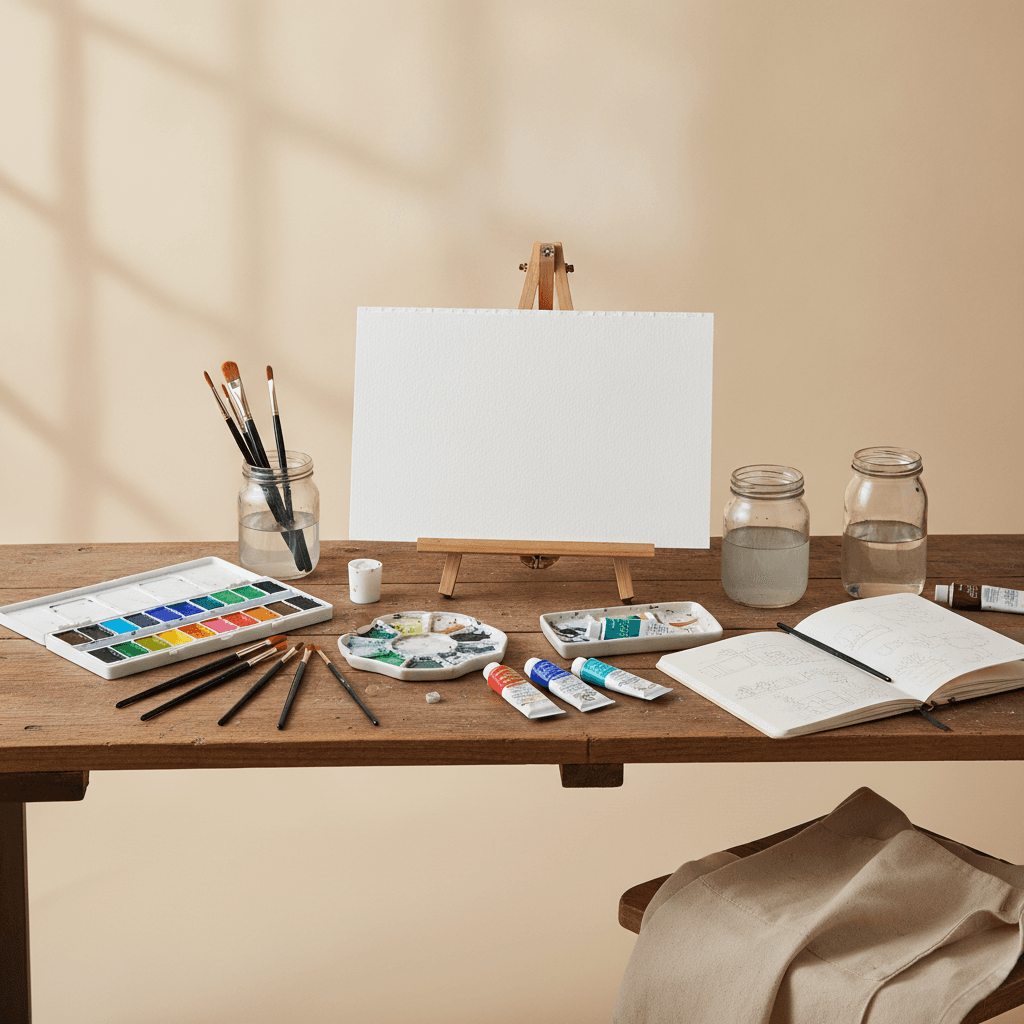
Watercolor is the most accessible serious painting medium — portable, clean, cheap to start — and the most misunderstood by beginners, who buy the wrong supplies, fight the paint instead of flowing with it, and quit convinced they lack talent. This is the guide that corrects the record: what to actually buy, the five techniques that unlock everything, and the mindset that makes watercolor click.
The Supply List That Actually Matters (~$40)
Watercolor's dirty secret: paper matters more than paint. The list, in order of importance:
- Paper: 100% cotton, 140lb/300gsm, cold-press — Arches or Baohong (the budget miracle). Cellulose 'student' paper makes paint behave badly; beginners blame themselves when it's the paper. Spend here.
- Paint: a 12–24 pan set of decent watercolor (Winsor & Newton Cotman for budget, Daniel Smith when you're hooked). Pans beat tubes for beginners.
- Brushes: two round synthetic brushes — a #8 and a #12. Good spring, decent point. One brush, honestly, gets you through month one.
- Two water cups, paper towel, and a plate for a palette. Done.
Total: $35–50. The expensive-supply trap is real; resist it until month three.
Technique 1: Wet-on-Wet (The Signature Watercolor Look)
Wet the paper area first, then drop in color — it blooms, blends, and edges diffuse. This *is* the watercolor aesthetic (skies, washes, soft backgrounds). The control variable is paper dampness: shinier = more spread, barely-damp = soft-but-controlled edges. Practice: wet a 2-inch square, drop two colors into it, watch them marry. This 5-minute drill teaches more about water-control than any lecture.
Technique 2: Wet-on-Dry (Control)
Paint onto dry paper: crisp edges, full control. This is how details, lines, and defined shapes happen. The beginner insight: watercolor paintings are mostly layers of wet-on-wet (for atmosphere) with wet-on-dry details added after each layer dries. The impatience failure mode — adding details onto damp paper and watching them bleed into fuzz — is the #1 beginner frustration, and it is entirely solved by waiting or owning a hairdryer.
Techniques 3–5: Glazing, Lifting, and Dry-Brush
- Glazing (layering): a fully-dry layer receives a new transparent layer; colors build optically (yellow glazed over blue = luminous green you can't mix in a pan). The key: previous layer must be BONE dry, and your brush must not scrub (you'll re-wet and lift the lower layer into mud — the color-mixing physics apply exactly)
- Lifting: watercolor can be *removed* while damp (blot with clean damp brush or paper towel) — clouds, light effects, and mistake-rescue. The forgiving secret nobody tells beginners: watercolor is erasable for about 20 seconds after application.
- Dry-brush: a barely-wet brush dragged across cold-press paper texture leaves broken, sparkly strokes (tree bark, grass, light-on-water). The texture of the paper does the work — another reason paper matters
The Water-Control Mindset (The Actual Skill)
Watercolor is 20% about color and 80% about water ratio — the water-to-paint balance controls value (more water = lighter), spread, and edge behavior. The mindset shift: you're not applying paint; you're managing water that carries pigment. Once the question changes from 'what color' to 'how wet,' the medium clicks. Track three consistencies in practice: tea (pale washes), milk (mid-value), cream (rich color). Say them as you mix. It feels silly; it works.
The Practice Plan (First Month)
Week 1: washes and water-control drills only (graded washes, flat washes, blooming experiments) — boring on paper, transformative in skill. Week 2: simple subjects in 3 values (a pear, a mug, a leaf). Week 3: the two-layer painting (wet-on-wet background, dry-on-top subject). Week 4: a painting you care about (the porch, a pet, the Hudson view). One 30-minute session daily beats a marathon Sunday. And if in-person guidance accelerates things: paint events build exactly the same brush-handling confidence — the acrylic-on-canvas skills transfer directly, and guided classes collapse the lonely-learning curve either way.
Buy the good paper, manage the water, and let the paint do the watercolor-y part itself. The medium forgives; the paper doesn't. Start tonight — or start with us at the studio.