Watercolor Basics for Adults: Your First Week With a $30 Kit
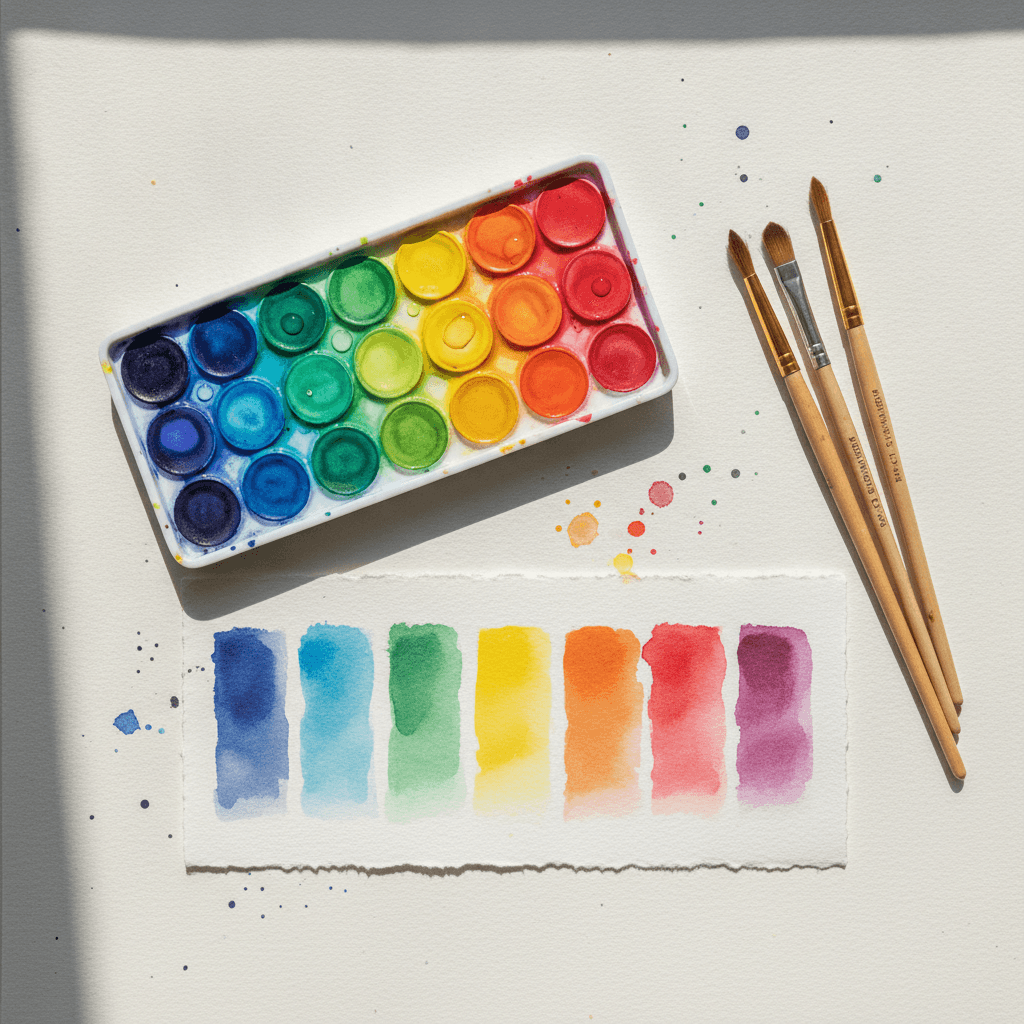
Watercolor has a reputation for being unforgiving, which is undeserved — it's just *honest*. Water goes where water goes, and the trick is learning to suggest rather than command. The good news: the barrier to entry is $30 and a week of twenty-minute sessions. Here's a genuinely practical starter path that skips the supply-store overwhelm.
Buy This, Not That
The $30 starter kit that outperforms $150 mistakes:
- Paint: a student-grade pan set of 12–24 colors (Winsor & Newton Cotman or similar — around $15–20). Tube paints are lovely and entirely unnecessary right now.
- Brushes: two rounds — a size 6 and a size 10. Synthetic is fine. Ignore every other brush in the store.
- Paper: this is the one non-negotiable — 140lb (300gsm) cold-press watercolor paper, a small pad. Cheap paper is why beginners think they can't paint; the paper was the problem all along.
- Extras: two water cups (rinse + clean), paper towel, a pencil, masking tape. Total: about $30.
The Only Three Techniques That Matter at Week One
1. Wet-on-wet: wet the paper first, touch paint to it, watch it bloom. This is skies, backgrounds, and magic. The lesson: you are not painting, you are *introducing paint to water* and negotiating.
2. Wet-on-dry: paint on dry paper — controlled shapes, edges where you put them. This is everything structural.
3. Lifting: blot wet paint with a clean damp brush or paper towel to pull pigment back up. Watercolor's partial undo button.
Master the feel of these three and everything else you ever learn is a variation on one of them.
The Paint-to-Water Ratio Is the Whole Game
Beginners fail at watercolor by using it like acrylic — thick and controlled — or like juice — all water, no pigment. Learn the four consistencies by feel: tea (mostly water, pale washes), milk (the default, mid-tones), cream (rich, strong color), and butter (barely wet, for dry-brush texture). Practice loading the brush at each consistency and painting a graded swatch from tea to butter. Twenty minutes of swatch-making teaches more than an hour of painting.
Your Seven-Day Starter Plan
Twenty minutes a day, nothing precious:
- Day 1: swatch every color in your set, full strength and diluted — learn what you own
- Day 2: flat washes (wet-on-dry rectangles) and graded washes (dark to light) — boring and essential
- Day 3: wet-on-wet color blends — two colors meeting on wet paper; do ten tiny ones
- Day 4: paint three simple skies using only wet-on-wet and lifting for clouds
- Day 5: a single object — a mug, an apple — one shape, two tones, one shadow
- Day 6: the same object again, faster; notice how much less you fiddle
- Day 7: free paint — put everything together with permission to make garbage
By day 7 you'll know more about water behavior than art students who own $400 of supplies.
Common First-Week Mistakes (And Fixes)
- Muddy colors: you mixed three+ pigments or your rinse water is paint soup — two cups exist for this reason
- Hard edges you didn't want: the wash dried mid-pass — work smaller or faster, or re-wet and blend while damp
- No white left: watercolor's white is the paper — plan your highlights *first*, paint around them
- Overworking: watercolor rewards economy. Every extra stroke past "done" subtracts. The single best beginner habit: stop one brushstroke early.
Want live feedback instead of trial and error? Our studio paint sessions cover the same water-behavior instincts in a social setting — same hands, more wine.
Where Watercolor Goes From Here
The hobby scales beautifully: travel kits, urban sketching, botanical studies, abstract color experiments, greeting cards people actually keep. The supplies never get much more expensive unless you want them to — many painters stay on a student-grade kit for years because constraint is half the fun. The other half: watercolor is one of the few creative practices that travels with nothing more than a sandwich-sized pouch, which means a hobby that leaves the house with you survives long-term. Studio hobbies die quietly; portable ones live.
Prefer your painting with guidance and good company? Join a paint night — the techniques transfer both directions.