Why Creative Hobbies Reduce Stress (The Research, Honestly Explained)
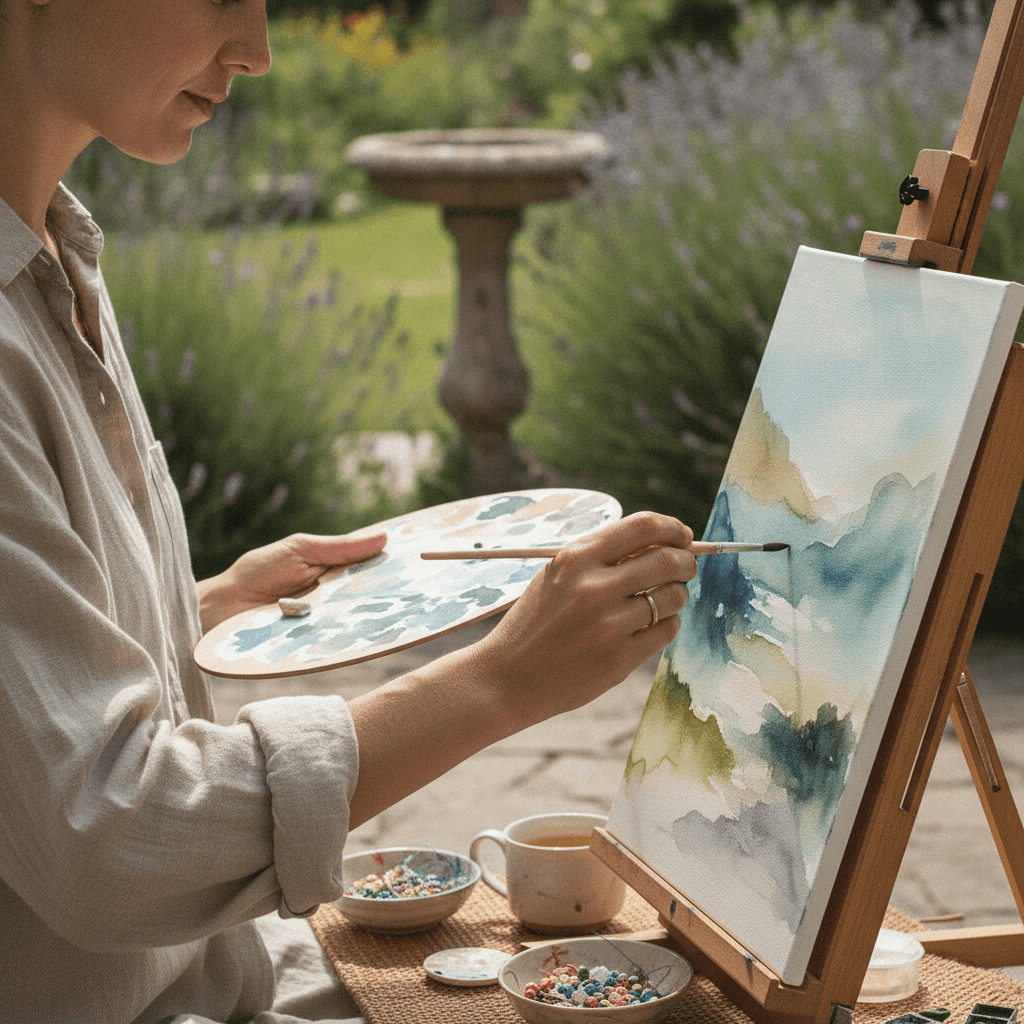
'Creative hobbies reduce stress' is one of those claims that sounds like wellness-marketing fluff — but it happens to be one of the best-supported findings in the psychology of leisure. The research is real, it's specific, and the mechanisms are known. Here's the honest state of the science, with the 'how to actually apply it' layer that the headlines always skip.
The Cortisol Finding (The Headline Result)
The most-cited study in this space measured salivary cortisol (the stress hormone) before and after 45 minutes of art-making in adults — and found significant reductions in 75% of participants, regardless of skill level or prior experience. The crucial detail: cortisol dropped *during the making*, not after. The stress relief isn't a reward for finishing something; it's a consequence of the process itself. This has been replicated across drawing, painting, clay, and crafts. The finding is robust. The caveat: about 25% didn't show the drop — and the follow-up research suggests the self-critical perfectionist subset sometimes stresses *more* during art (which has implications covered below).
Mechanism 1: Flow (The Attention Displacement)
Creative activity is one of the most reliable flow-state generators available to ordinary people. Flow (Csikszentmihalyi's concept) = full absorption in an optimally-challenging activity, and its stress effect is structural: during flow, the brain's threat-monitoring (the default-mode network's rumination loops) quiets because attention is fully sequestered by the task. You can't worry about the email while blending a gradient — the bandwidth is occupied. The stress relief is partly just *attention theft* from the worry machine. This is why an hour of painting feels like a longer break than an hour of scrolling: scrolling doesn't sequester attention; creating does.
Mechanism 2: The Completion-Chemistry Loop
Creative projects deliver small measurable completions (a finished stroke, a blended section, a filled canvas region, a dried macaron batch) — and each micro-completion delivers a small dopamine signal. The brain's reward system responds to *progress*, not just outcomes, which is why even a bad painting session leaves a person feeling accomplished: dozens of micro-progress signals accumulate regardless of the aesthetic verdict. Behavioral-activation research (used in depression treatment) exploits exactly this mechanism — doing-and-finishing things, even small things, is mood-active. Creative hobbies are behavioral activation with better branding.
Mechanism 3: The Externalization Effect
Making something is a form of processing: choosing colors for a feeling, shaping materials, even following a recipe — the internal state gets externalized into physical choices. The art-therapy literature is built on this: representing internal states in a medium makes them more workable (it's easier to look at a feeling on a page than in your head). You don't need to be in therapy or making 'emotional art' for this to work — the mechanism is passive. Baking bread while anxious and painting while sad are both, measurably, regulatory acts. This is the least-obvious mechanism and possibly the most powerful.
Which Creative Activities Deliver the Most? (The Ranking)
From the research and our observation across the bakery and paint studio:
- Process-oriented crafting (painting, pottery, baking for pleasure) — the strongest and most consistent effects; the physical-medium feedback seems to matter
- Cooking/baking — high effect, plus nourishment-caretaking bonus, plus the sensory grounding (smell, taste)
- Making with a social component (classes, group paint events, crafting circles) — the social-connection benefit stacks on the creative benefit; two mechanisms at once
- Digital creation — real but smaller effects; the tactile component appears to be load-bearing
- Perfectionist-framed creation ('I'm going to become great at this') — the weakest; the self-judgment cancels the benefit in ~25% of people. The trick: process goals ('paint for the feeling'), not outcome goals ('paint something good'). The stress benefit doesn't care how the canvas looks — and that's not a platitude, it's the mechanism
The Dose (How Much, How Often)
The research suggests the dose-response is forgiving: effects show up in single 45-minute sessions, with cumulative benefits from regular weekly practice (the art-therapy standard is weekly). The consistency beats intensity — a weekly 1-hour session outperforms a monthly 4-hour binge for sustained stress-reduction effects. The practical framing: treat creative time like sleep or exercise — small recurring doses, protected on the calendar, with a lowered bar ('the session happens' is the whole KPI). The people who benefit most are not the ones who take it seriously — they're the ones who take it *regularly*.
The Bakery/Studio View (Anecdote as Confirmation)
We see it weekly in both halves of the business: the stressed-looking person arrives at a paint night shoulders-up; at the half-break they're laughing about their lumpy tree; at the end they photograph their canvas and linger. The same arc in the bakery's regulars — the person who comes in tense and leaves with a box and a slower gait. The science matches the lived view from our side of the counter. Creative time works; we are the local infrastructure for it and we're biased, but we're biased *with data*.
Make things weekly, badly if necessary, and let the mechanism work. Start here: paint night, or the recipe archive for the in-kitchen version. Either way — an hour of making is an hour of regulated nervous system.