Why Did My Macarons Spread? The Flat-Pancake Diagnosis
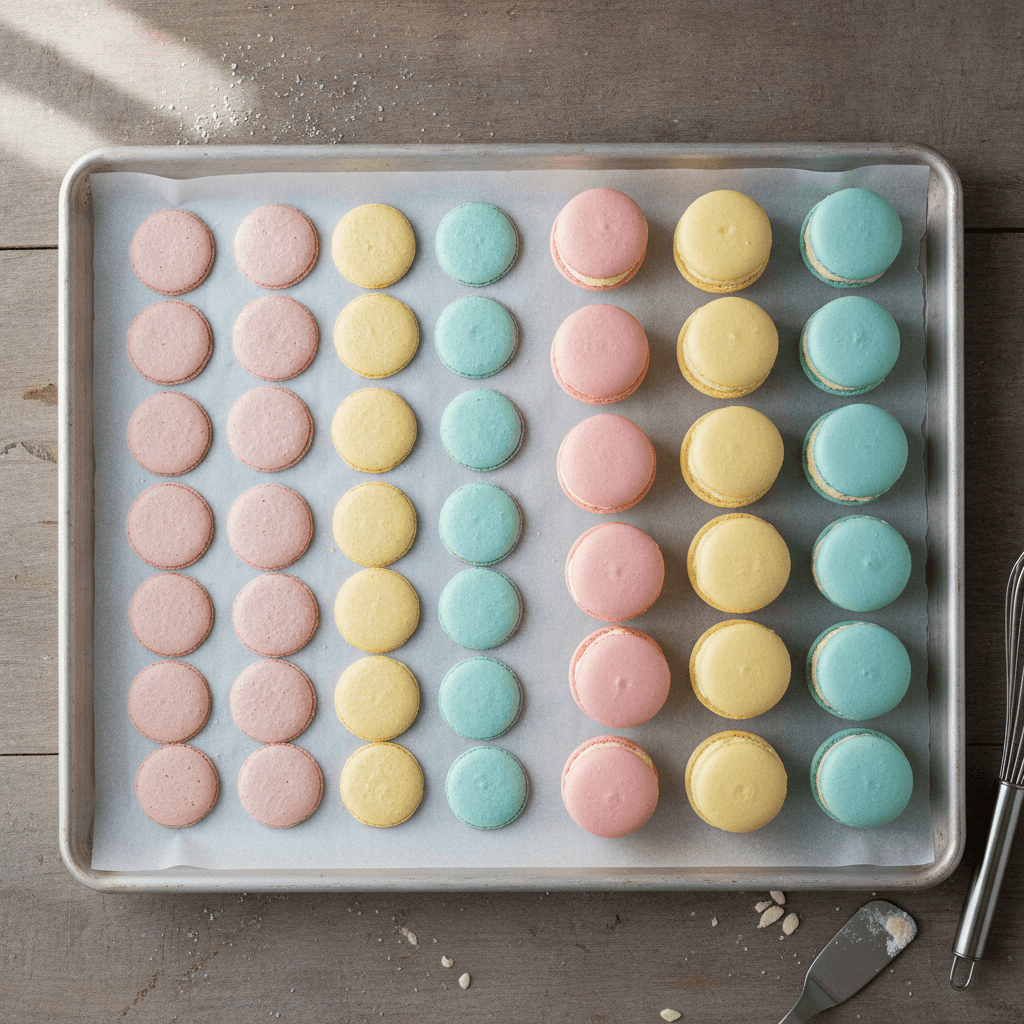
Flat, spread-out macarons that look like tiny pancakes are the mirror-image failure of our thick-batter guide — the batter went too far the other direction. Spread macs are almost always a liquidity problem, and liquidity has specific causes. Here's the diagnosis, ranked by probability, with the mid-batch rescue moves that sometimes save a tray.
Cause 1: Overmixed Batter (80% of Cases)
Macaronage past the ribbon stage deflates the meringue — the batter goes from 'flows in ribbons' to 'pours like cake batter,' and piped shells spread instead of holding. Test: if your batter ran off the spatula in a continuous stream rather than folding ribbons, you over-folded. Fix next batch: fold less; stop at the figure-8 test. Mid-batch: let the batter rest 20–30 minutes — overmixed batter sometimes tightens slightly as the almond flour hydrates; not a full fix but takes the edge off. Pipe the test shells and see.
Cause 2: Under-Whipped Meringue
A soft-peak meringue has no structure to hold the batter up — even perfect macaronage can't save it. The shells spread and bake flat with no feet. Test: did your whipped whites hold a firm, glossy point when you lifted the whisk? If they flopped or looked dull/curdled, this was the problem. Fix: rewhip isn't possible mid-batch, but baking the flat shells anyway often still yields edible (if homely) macs — sandwich them and don't photograph them.
Cause 3: Syrup Too Cool (Italian Method)
Sugar syrup below ~110°C doesn't cook the whites enough — you get a soft, loose meringue that can't support the batter. The syrup temperature is not a suggestion; 118°C / 244°F is the number. If your thermometer was slow-reading, the actual temp at pour-time may have been well under. Fix: calibrate your thermometer (ice water = 32°F, boiling water = 212°F at sea level — we're close enough to sea level in the Hudson Valley that this works); use a fast-read digital.
Cause 4: Too Much Liquid Additive
Liquid food coloring, liquid extracts beyond a teaspoon, fresh fruit juice in the batter — all add water that thins the mix. Gel colors only, extracts measured carefully, and never juice in the shell batter. If you added a liquid flavor this batch: that's your answer. Fix next batch: switch to gel/powder flavor carriers. Mid-batch: extra almond flour (a tablespoon at a time) can thicken, but it shifts the recipe ratio — a last resort, and the shells may bake denser.
Cause 5: Over-Rested Piped Shells
Yes, both directions are possible — shells rested 2+ hours can lose enough surface tension to spread slightly in the oven, especially in humid August kitchens where the skin never firms properly. If your shells sat for hours because life intervened: that's the cause. The rest window is 30–60 minutes, not 3 hours. Fix: bake within the window; in humid weather use a fan to firm the skin faster (see the hollow-mac guide for the full humidity protocol).
The Mid-Batch Triage
When shells are spreading on the tray right now:
- Stop piping. Assess: did the piped rounds spread within 10 seconds of piping (batter too thin) or hold for a minute then flatten (borderline)?
- Instant-spread = bake one test shell anyway and prepare to re-bake the batch; the batter is past saving
- Borderline = rest 30 min, test-bake 2–3 shells; if they feet-up acceptably, bake the rest
- Whatever happens: log what you did differently this batch in your baking notes — spread-macs have a cause, and it's findable retroactively
For more diagnostics the full troubleshooting series covers the other failure modes (hollows, cracks, no feet) — spread is rarely the only symptom a batch shows.
Flat macs are usually one fold too many. Fold to the figure-8, stop, pipe. For the reference standard: our macs hit the texture target every batch — yours will too with the diagnostics above.