Why Do My Macarons Have No Feet? The Complete Feet-Failure Guide
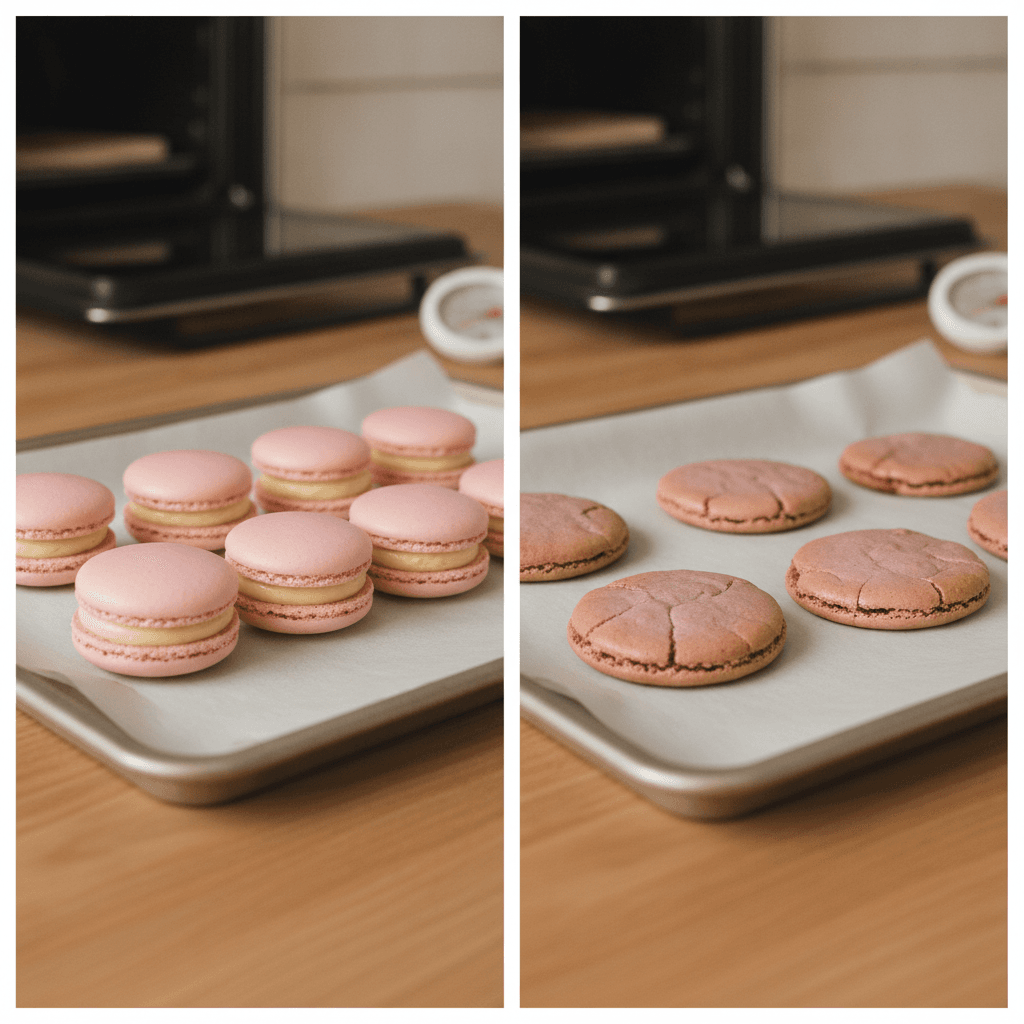
The foot — the frilly ruffled ring at a macaron's base — is the visual proof the bake went right, and its absence is the most demoralizing macaron failure because the shells often *look* fine otherwise. No-feet macs taste the same (sandwich them happily) but they're diagnostic gold: the foot forms only when several things go right simultaneously, so 'no feet' means at least one specific thing went wrong. Here are all six causes, ranked.
How Feet Form (So the Failures Make Sense)
In the oven, the shell's top sets early into a skin; the interior air then expands as it heats, pushing the shell up; the expanding air escapes at the *bottom* edge, lifting the shell and depositing the frill. Feet = trapped air escaping at the base under a set top. Any failure of (a) the top to skin over, (b) the interior air to expand properly (weak meringue, over-deflated batter), or (c) the oven to deliver bottom-heat correctly → no feet. The causes below map exactly to these mechanisms.
Cause 1: Under-Rested Shells (No Skin, No Feet)
The drying rest before baking forms the surface skin that forces air to escape at the base. Piped-then-baked shells with no rest: the top sets *and* expands simultaneously, surface cracks form, air vents through the cracks, no lift, no feet. Fix: the touch test — the piped shell should be completely dry to a light fingertip touch before baking, 30–60 min depending on humidity. August humidity can double rest times; a small fan on low aimed near (not at) the tray cuts it.
Cause 2: Overmixed Batter (The Structural Cause)
Over-macaronaged batter has no air structure left to expand — the batter spreads instead of lifting, and spread batter bakes flat with no foot. This links directly to our spread-diagnosis post: flat spreading shells and no feet travel together. Fix: fold less; verify with the figure-8 test before piping.
Cause 3: Oven Temperature Too Low
Feet need a rapid bottom-heat push: 300–325°F is the range, and many home ovens run 15–25°F cool at these settings (verify with an oven thermometer — not optional equipment for macaron baking). A 285°F-actual oven bakes shells that slowly set without the explosive bottom expansion. Fix: thermometer first; if the oven reads true and feet still fail, try 315°F with close watching — some ovens deliver better bottom-heat at higher settings.
Cause 4: Double-Panning Done Wrong
Stacking two sheet pans is a standard trick against bottom-scorch, but it *slows* bottom-heat transfer — which can blunt the foot-forming burst in ovens that already run cool. The right answer depends on your oven: if your bottoms scorch without the double-pan, use it; if your feet fail without scorching, go single-pan. Test one tray each way in the same bake. There's no universal answer because ovens are chaos; the test bake resolves it in 15 minutes.
Cause 5: Batter Piped On the Wrong Surface
Silicone mats vs parchment: both work, but cheap thick silicone insulates too much (slow bottom-heat) and warped pans tilt the batter. The feet-friendly setup: quality thin-ish silicone mat or parchment on a FLAT heavy-gauge aluminum pan. If your pans wobble, that's a feet-suspect you can fix for $12.
Cause 6: The Meringue Was Weak
Soft-peaked or broken meringue produces batter that can't hold the expansion pattern — the shells bake dense and flat regardless of resting and oven. Weak meringue traces back to old or un-aged whites, grease in the bowl, or under-whipping. Fix: the meringue should be glossy and hold a firm point; if it looks dull or curdled before the fold, no downstream step saves it. Start the meringue over — 4 egg whites is cheaper than a failed batch.
The Feet-Formation Checklist (Print This)
- Whites whipped to firm, glossy peaks
- Batter folded to ribbon stage, not past
- Piped shells rested to fully dry-touch
- Oven verified with thermometer at 300–310°F
- Flat pan, single (test) or double-panned (if scorching)
- Bake until the shell doesn't wobble when nudged
Six things, all true → feet appear. That's the whole system. And when a batch fails anyway: the troubleshooting series for the other failure modes, or let us bake them and eat your test batch in private like everyone does.
Feet are earned by the skin, the air, and the heat — rest properly, fold correctly, verify your oven, and the frill appears. For feet you can count on: Antonio's, shipped.