Why Is My Buttercream Too Soft? (Summer Baking Edition)
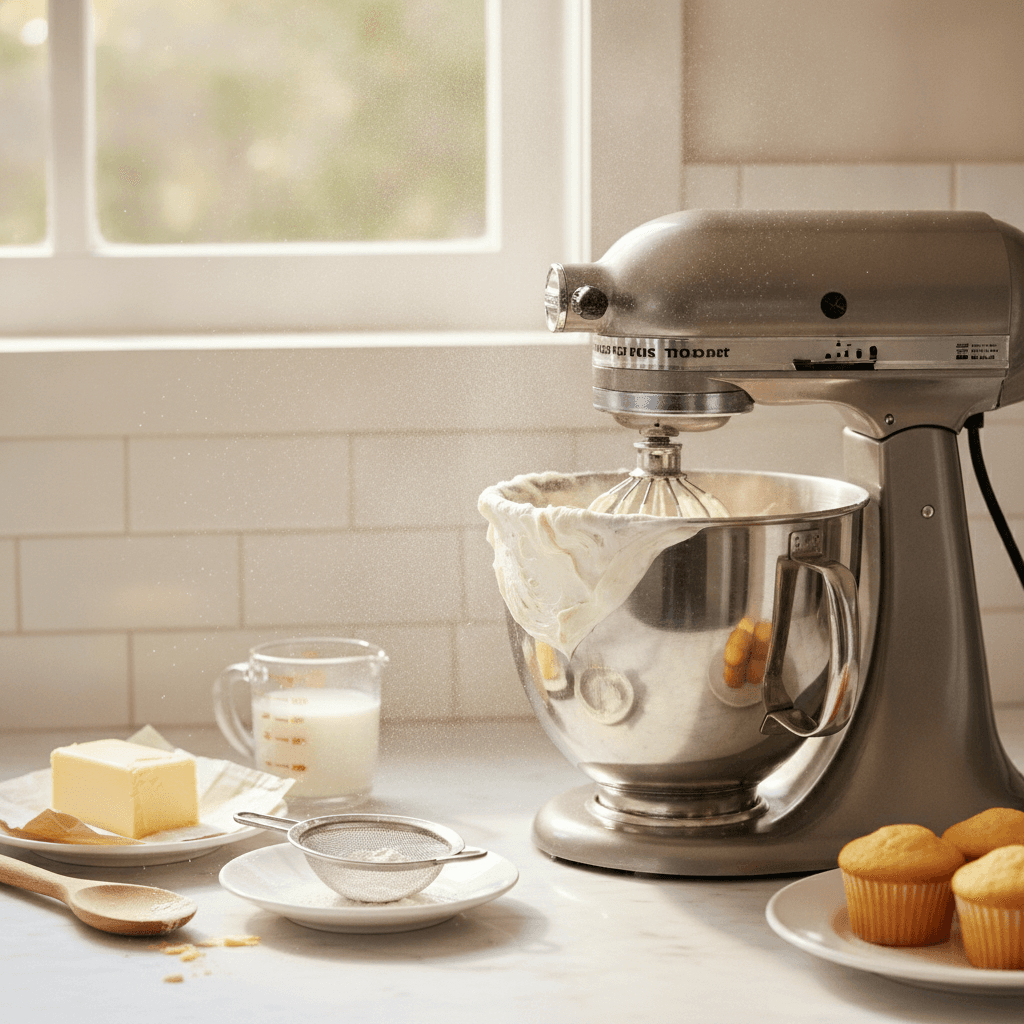
It's August, your buttercream is loose and sliding off the cake, and the recipe insists it should be fine. The recipe is right at 70°F; at 78°F with humidity it's wrong. Soft buttercream in summer is primarily a temperature-and-ratio problem, and the fixes are specific and fast. Here's the complete breakdown.
The Real Cause: Temperature (90% of Cases)
Buttercream is primarily butter (American) or butter-and-meringue (Swiss/Italian). Butter softens dramatically between 70°F and 80°F — the difference between a frosting that holds sharp piping edges and one that sags. When buttercream won't hold its shape in August, the answer is almost always: your kitchen (and your butter) was warmer than the recipe assumed.
The check: taste it. If it tastes right but looks wrong, it's temperature. The immediate fix: refrigerate the whole bowl 15–20 minutes, then beat on high for 2 minutes. This re-firms and re-emulsifies. Most summer buttercream is rescued by exactly this.
Fix 1: Chill-and-Re-Whip (The Move)
Detailed:
- Refrigerate the buttercream bowl for 15–20 minutes (the surface will harden; that's fine)
- Beat on high in a stand mixer 2–3 minutes, scraping down
- The buttercream will go through an awkward-looking phase (slightly broken) and then come back
- If it still reads too soft after re-beating: another 10 minutes of chilling, then another whip
This protocol fixes 80% of soft summer buttercream. If it's not firming after two rounds, the issue is ratio, not temperature.
Fix 2: Add Powdered Sugar (For Ratio Issues)
When the recipe has genuinely too little sugar (or too much liquid): powdered sugar adds stiffness without changing flavor much at additions of 1/4 cup at a time. Add 1/4 cup, beat fully, evaluate, repeat up to 3/4 cup additional. Beyond that, the buttercream starts tasting cloyingly sweet — the trade is not free. The other ratio-fixes: a tablespoon of cornstarch (stabilizes without sweetness) or 1–2 tablespoons of meringue powder (the pro hack, invisible in flavor, firming in texture).
Fix 3: The Summer-Formula Swap (Prevention)
For summer events, bake with the stabilized version (covered in detail in our melting-buttercream guide) — the half-shortening formula holds up in heat that defeats all-butter buttercream. This is the summer party planning move, not the mid-crisis fix, and it's the difference between a cake that survives the July afternoon and one that doesn't. The flavor difference is subtle; the stability difference is not.
Fix 4: Chill the Cake Between Coats (The Technique)
Professional summer decorating runs on fridge-time: crumb-coat, chill 20 min, frost, chill 20 min, decorate. The chilled cake underneath is the structural anchor for the buttercream — even slightly-soft frosting holds better on a cold cake than on a room-temp one. The rhythm of summer decorating is bake → cool → crumb → chill → frost → chill → decorate → chill → transport-cold → serve-at-last-moment. It's longer than the cool-weather rhythm, and skipping the chill-stops is the difference between a July cake and a July cake-splat.
The Climate Reality Check
If your kitchen is 80°F+ in August: buttercream is fighting physics. Options: (1) bake and decorate in the cooler morning, (2) run the AC harder during decorating (this sounds obvious, but it's easy to forget that the oven-heated kitchen is the enemy while you're decorating), (3) build fridge-time into your schedule as a real line item, (4) consider the ganache route (which holds in heat better than buttercream at equal prep) for summer birthdays. There's no shame in picking a heat-appropriate frosting design — the 'we'll power through the soft buttercream' plan is how summer cakes end up as a puddle with flags stuck in it.
Chill, re-whip, and consider the stabilized recipe. For cakes where the heat-logistics are ours to handle: order your summer cake from us.