Why Macarons Get Hard in the Fridge (And the 20-Minute Rule That Fixes It)
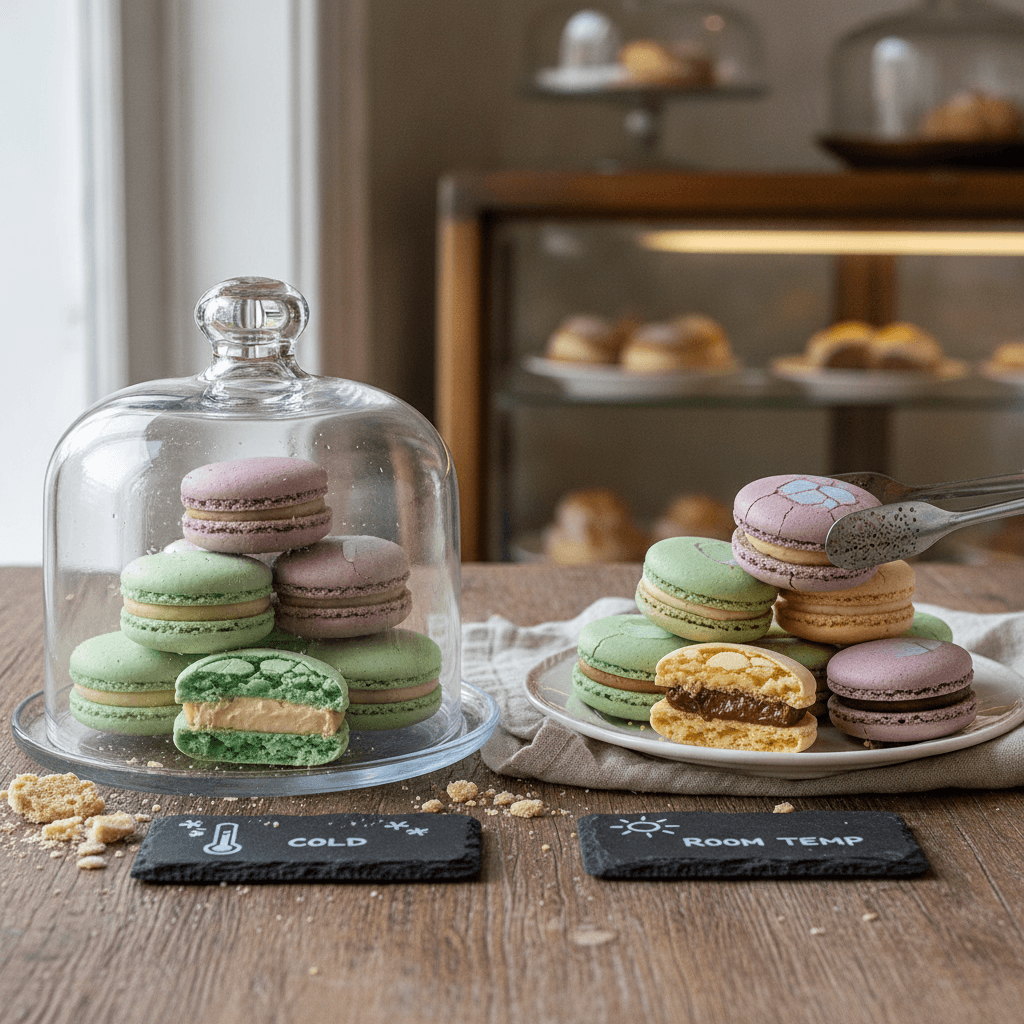
Here's a confusing macaron paradox: macs must be refrigerated to mature and store, but they must NOT be served cold. Bite a fridge-cold macaron and you get a firm, muted, slightly waxy experience — a shadow of the dessert's potential. Give it twenty minutes on the counter and it transforms. Understanding why tells you the one rule of macaron service that can't be broken.
The Science of Cold Macaron Texture
Macaron texture is a fat-and-moisture behavior story. The filling is fat-based (buttercream, ganache); the shell is a meringue foam whose texture is set by its moisture content. In the fridge:
- The filling fat hardens. Buttercream becomes stiff; ganache becomes waxy.
- The shell's moisture equilibrium slows. The chew that matured in the fridge doesn't disappear, but it tightens — the whole sandwich firms up.
- Flavor compounds suppress. Aromatic flavor molecules are more volatile at warmer temps; cold dulls them measurably.
The result is a macaron that eats like a firm cookie with hard icing: edible, pleasant, but missing the chewy-soft-waxy-free experience that defines a proper mac.
The 20-Minute Rule (30 Is Better)
The protocol: remove macarons from the fridge 20–30 minutes before serving, container open or ajar so they don't sweat. At the 20-minute mark the filling has softened back to its designed texture, the shell's chew re-expresses, and the aromatics wake up. At 30 minutes it's perfect. Past an hour (in warm conditions) you start trading freshness for temp balance, which is fine for immediate serving but not for a long afternoon display without air conditioning.
Why You Still Need the Fridge (Both Rules Are True)
The apparent contradiction resolves: refrigeration is the *storage* phase (which the macs need for maturation and food safety), and room temperature is the *service* phase (which the macs need for texture and flavor). They need both phases in sequence. Fridge to mature, room temp to serve. Neither alone is right: room-temp storage causes premature staling and filling-spoilage risk; fridge-at-service kills the texture. The sequence is the recipe.
Serving Situations and the Protocols
- Home dinner: pull the macs from the fridge when you sit down to eat the main course. By dessert, they're perfect.
- Party dessert table: 20 minutes before you want the dessert moment, macarons come out — the timing matters more outdoors in summer; macs tolerate the full party if they started cold
- Shipping arrival: refrigerate immediately on arrival, serve after the 20-minute counter rest — shipped macs deserve the same service discipline
- Display cases / gifting: macs in a gift box should come with a note 'best at room temp 20 minutes after opening the fridge' — it's the piece of advice that doubles the recipient's experience
The Extreme Cases
Frozen macs: never serve frozen — see our freezing guide for the thaw protocol (overnight in fridge, then 20-min counter). Macs left out too long: after 4+ hours at warm room temp, the texture softens further and the buttercream can sag in heat. Re-chill briefly (10 min) to firm them, then return to the 20-minute rule at service. Very cold weather service: macs sitting in a cold room or car overnight need the full 30 minutes or even 45 to come up to temp — the rule scales with the temperature differential.
The Tasting Confirmation
If you want to prove this to yourself (recommended — it's a dramatic difference): take two macs from the fridge. Bite one immediately. Wait 25 minutes. Bite the other. The second one is what the dessert actually is — chewy, yielding, flavorful, the filling soft and rich against the shell. The first one was the shadow. This is the single easiest way to improve your mac experience, it costs you 20 minutes, and it's the reason every bakery serves macs at ambient, not chilled. Our shop's macs sit at the case's ambient temperature for exactly this reason.
Twenty minutes, from fridge to perfect — it's the entire secret. Taste the result with a fresh box, and remember: the 20 minutes starts the moment you remember to take them out.