Why You Should Take a Painting Class Even If You'll 'Never Use It'
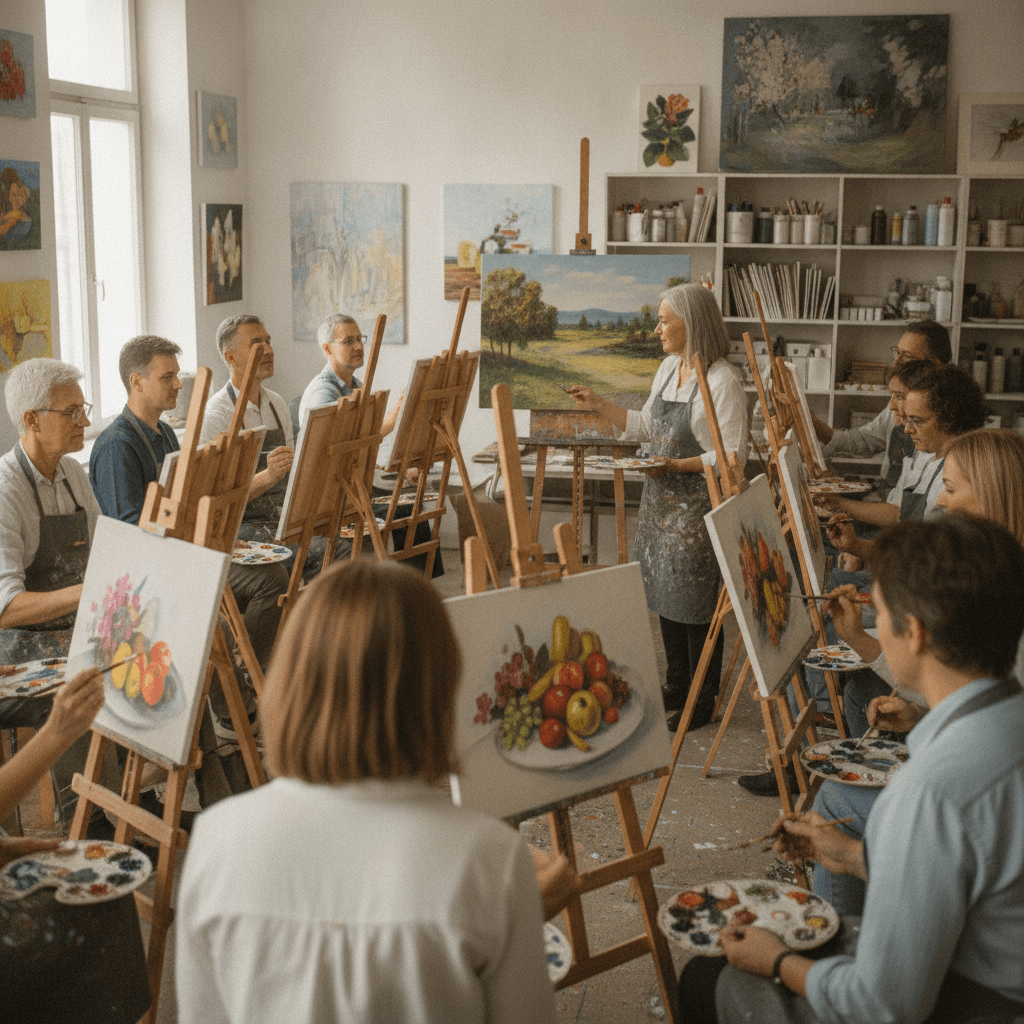
'Why would I take a painting class? I'll never be a painter.' The implied argument — that a class is only worth taking if it leads to professional use — is the exact mindset that adult life drills into us, and it's wrong in a measurable way. Taking a painting class (or any creative class) as a non-painter is one of the stranger investments an adult can make, and the returns are weird, durable, and worth understanding.
The Case in One Sentence
Learning to be bad at something, in public, as an adult, is one of the few reliable ways to keep your brain flexible, your humility practiced, and your week interesting. That's the whole argument; everything below is explanation.
Brain Plasticity (The Science Bit)
Adult brains remain plastic — capable of forming new connections — but the plasticity is increasingly use-dependent as we age. Novel skill acquisition is the most reliable plasticity-driver we know; routine is its enemy. A painting class is exactly the kind of novel-skill environment (motor, visual, decision-making, aesthetic) that keeps the mind's flexibility alive. This isn't woo — the research on adult learning and neuroprotection consistently shows that adults who take up new skills maintain cognitive function better than those who don't. The painting class isn't about painting; it's about the neural workout.
The Courage Practice (The Invisible Skill)
Adults are cowards about being beginners. Not because we're weak, but because adult life is optimized to never put us in beginner situations — work is where we're expert, social life is where we're fluent, and nearly nothing in modern life requires vulnerability through incompetence. This is a muscle that atrophies. The painting class — where you will, for two hours, be objectively worse at something than other adults — is the beginner-courage gym. The first-class jitters and the surprise-that-it's-fine are practice: the next time life asks you to be a beginner (and it will, in career changes, relationships, moves, losses), you'll have the muscle.
The Attention Economy Counterweight
Your phone is attention-harvesting infrastructure; a painting class is two hours where your phone stays away and your eyes stay on a physical thing you're making. That shift — from attention-consumed to attention-given — is the most immediate and underpriced wellness gain in modern life. Nobody leaves a paint class saying 'that was nice but I wish I'd scrolled more.' The two hours of full attention is itself the outcome.
The Identity Bonus
After one class, a thing changes in your self-narrative: you're someone who took a painting class. After a few, you're someone who paints (at some level). This identity shift matters more than the skill — 'person who makes things' is a protective identity against all kinds of life's flatness. The psychologists call this 'self-expansion': broadening the story of who you are. The painting class is cheap, safe self-expansion.
The Social Dimension
Adult friendship research is grim: post-college, friendships get harder to make and harder to keep. Classes are the remaining structured social venue where adults meet peers around a shared interest. Your paint-class cohorts aren't guaranteed friendships, but they're *possible* friendships in a way that a gym, an office, and an app aren't. Over years of hosting classes at the studio, we've watched paint-class acquaintances turn into paint-class friends turn into each other's dinner-party guests — the class is the excuse, but the social scaffolding is the real deliverable.
The Realistic FAQ
Will I be bad at first? Yes. Every beginner is. The instructors don't mind; they've seen it thousands of times, literally.
Will anyone judge my painting? No — everyone is looking at their own canvas.
What if I have zero talent? Not a real category. 'Talent' in painting is mostly exposure-plus-practice; you haven't drawn or painted since childhood, and that's the whole gap.
Do I have to continue after one class? No — but the people who continue are disproportionately the ones who were most nervous before the first one. There's a pattern; we have data.
What's the actual cost? A paint-night class runs the cost of a nice dinner out. For two hours of attention, some new skills, and a canvas you made: that's a great trade even before counting the courage practice.
Take the class. Whatever 'it' is for you — painting, pottery, baking — take it. And if painting's the one that called to you: we'll have a seat ready.