Why Your Cupcakes Dome (And Macarons Don't): Leavening Explained
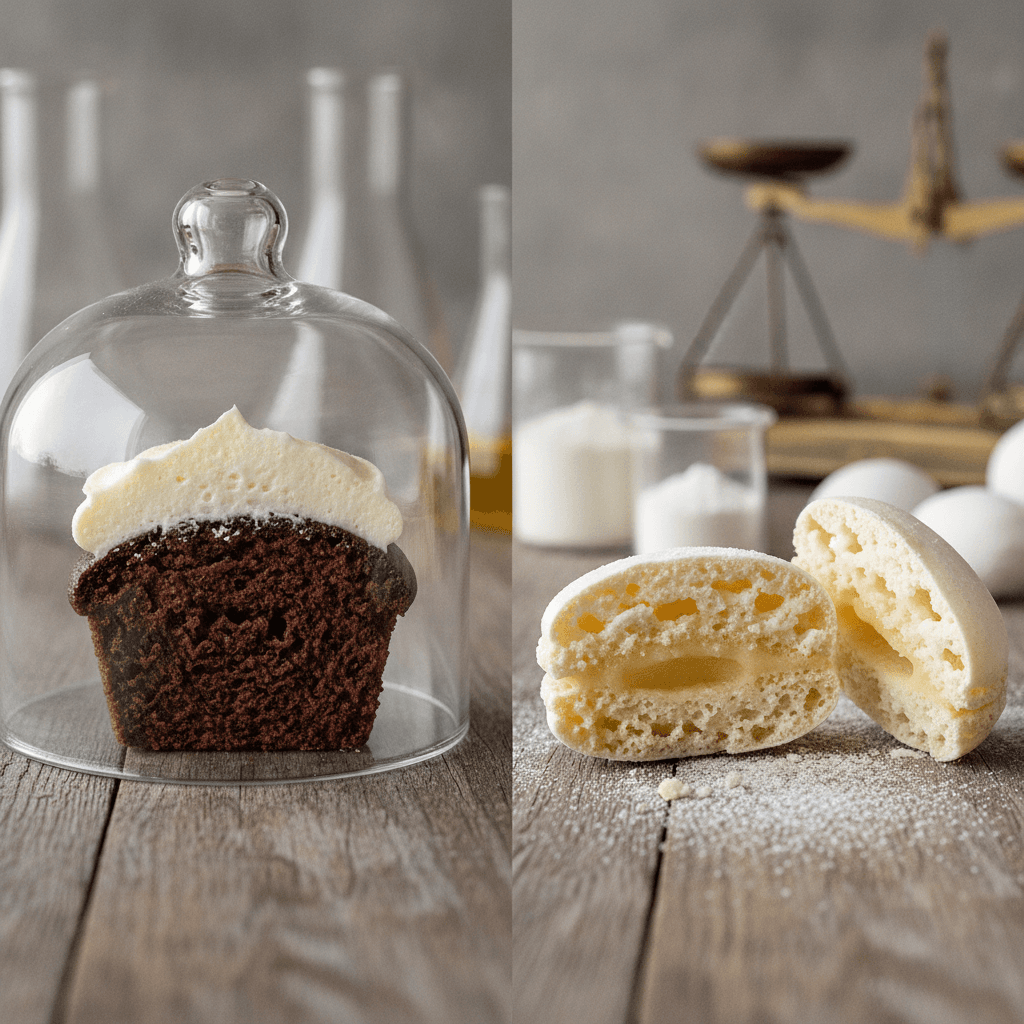
A cupcake rises into a dome; a macaron rises into feet. A cookie spreads; a soufflé climbs. All four outcomes come from the same basic physics — gas expansion and structure-setting — with deliberate engineering differences. Understanding leavening properly is the single most explainer-y thing a home baker can learn, and it prevents a hundred minor mysteries.
The Three Leavening Gases
All rising comes from gas. The three sources:
- Air (incorporated by beating eggs, creaming butter, whipping meringue)
- Steam (moisture in the batter turning to vapor in the oven — significant in everything)
- CO₂ from chemistry (baking soda + acid, or baking powder's self-contained reaction)
Which gas dominates shapes the result: cupcakes lean on chemical leavening, macarons on air+steam only, croissants on steam almost exclusively. The art is delivering the right amount of gas at the right rate for your target structure.
Why Cupcakes Dome (On Purpose)
Cupcake batter is a pourable foam stabilized by flour's gluten. Baking powder generates CO₂, steam joins in, and the structure sets (starches gelatinize, proteins set) at around 180–210°F interior. The dome forms because the edges set first (hot pan contact) while the center is still liquid and rising — the still-rising center has nowhere to go but up. That's the whole mechanism.
When cupcakes peak (a volcano-shaped point instead of a gentle dome): oven too hot (edges locked too fast). When they're flat: under-leavened, over-mixed (tough structure can't rise), or oven too cool (everything set before the gas got going). The dome is the target shape, and the dome's geometry reports the oven's behavior.
Why Macarons Rise Into Feet Instead
Macaron batter has NO chemical leavening — only air and steam. The piped shells form a dried skin on top (that's what resting is for), which means when steam expands during the bake, it can't escape upward (the skin blocks it), so the internal pressure pushes the whole shell up from the base and exits at the bottom edge in ruffles: the feet. The feet are literally the steam's escape route, made visible.
Same gas physics as a cupcake, completely different architecture: the cupcake's top is open and rises into a dome; the macaron's top is sealed and rises into feet. Once you see this, you can't unsee it — and you also know why a short rest (incomplete skin) means no feet: the steam has an open ceiling and no reason to push down.
The Other Players (So the Model Is Complete)
- Soufflés: pure air+steam, no flour structure in the foam — hence maximum rise and immediate collapse (the structure can't hold once cooling removes the steam pressure)
- Cookies: butter melting controls the outcome — fat liquefies before leavening can fully act, so the cookie spreads more than it rises; chilled dough = less spread, more rise
- Bread: yeast CO₂ + gluten's stretchy structure = big, sustained rise with real architecture
- Croissants/puff pastry: steam alone, trapped between fat layers, lifting them apart — the purest steam-leavened result
- Angel food cake: nearly pure whipped-egg air stabilized by a little flour — the cupcake's dome taken to its structural extreme
Practical Application: Fixing Rise Failures by Gas Type
Troubleshooting with the model:
- Chemical leavening failures (flat cupcakes, dense muffins): check baking powder freshness (it dies in 6–12 months), check acid-base match for soda recipes
- Air incorporation failures (flat cakes, no-feet macs): the foam structure wasn't built or was destroyed — undercreamed butter, under-whipped whites, over-mixing after foam stage
- Steam management (soggy bottoms, pale interiors): oven temp too low or moisture too high
- Structure-setting failures (fallen cakes, collapsed soufflés): opened the oven too early, or the structure (flour/egg) was too weak for the gas load
Every baking failure traces back to one of these. The model is small but mighty — and once you have it, the troubleshooting guides all slot into place.
How to Actually Level Up Using This
The best use of leavening literacy: read recipes as engineering specs instead of magical formulas. When a recipe says 'cream butter and sugar for 5 minutes,' you now know why (building air as leavening); when a mac recipe says rest until touch-dry, you know why (building the skin so steam must exit downward). Every instruction has a reason, and knowing the reasoning is the difference between following recipes and understanding them. Understanding is what lets you adapt — the baker who knows the physics is the baker who can rescue a batter that went sideways, because they know which gas went wrong.
Baking is applied physics with better smells. For the macaron physics done for you: our macs demonstrate perfect feet, every time.