Wrinkled Macaron Shells: What's Causing That Bumpy, Prune-Like Surface
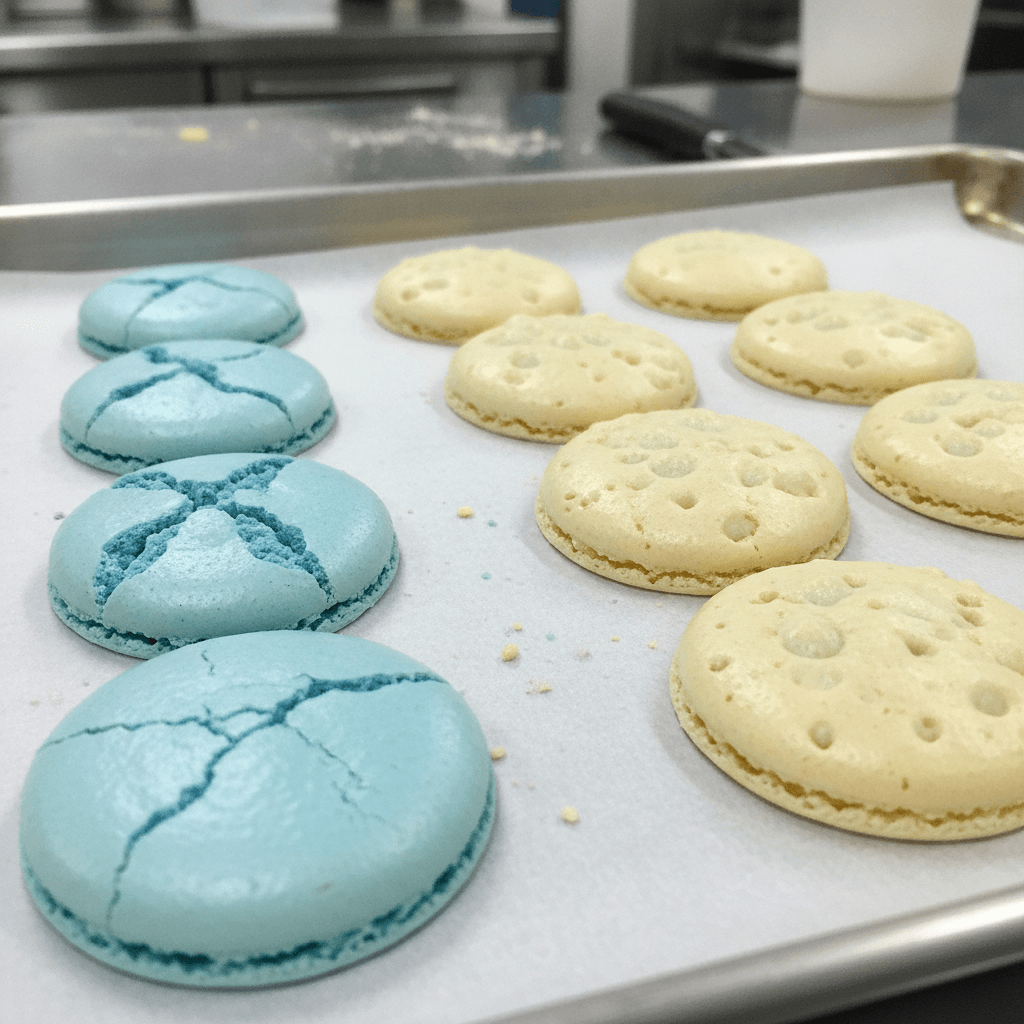
Wrinkled macarons — shells that come out looking deflated, prune-y, or covered in fine bumps — are the defect that stumps even intermediate bakers, because the fixes for cracks and hollows don't address it. Wrinkles have their own shortlist of causes, and each wrinkle pattern tells you which one is guilty. Read your shells like a dermatologist and the answer is usually right there.
Pattern A: Fine Overall Wrinkling (Prune Shells)
Shells that look uniformly shriveled, usually with weak or absent feet and flat profiles: low oven temperature. The structure sets slowly without the initial steam-driven expansion that puffs the shell up before fixing it in place. Fix: verify your true oven temp with a thermometer, bump by 10–15°F, and preheat longer. If your feet are also missing, this is your cause almost every time.
Pattern B: Bumpy, Grainy Tops
Visible graininess or bumps across the surface point to almond flour issues or insufficient mixing. Coarse almond flour leaves physical bumps; under-mixed batter leaves trapped air and unblended clumps that bake into a textured skin. Fix: sift rigorously (discard what doesn't pass), make sure you're hitting the ribbon/figure-8 stage, and if your almond flour is on the coarse side, pulse it with the powdered sugar before sifting.
Pattern C: Shells Wrinkle as They Cool
Perfect-looking in the oven, wrinkled on the counter — this is over-mixed batter or oily ingredients collapsing. The shell structure was never strong enough to hold its dome; once the internal steam cooled, it deflated like a balloon. Oily almond flour (old, or over-processed into pasty territory during your own re-grinding) is a frequent accomplice, as is too much liquid flavoring. Fix: mix less next batch, test flour freshness (sweet smell, no clumping), cut liquid additions, and don't re-grind almond flour without powdered sugar in the processor buffer.
Pattern D: Wrinkled Tops with Crispy/Browned Frills
Usually oven too hot or rack too high — the exterior cooked faster than structure could form. The fix is the mirror of Pattern A: verify temperature, lower by 10°F, move the rack to center, or double-pan (a second sheet pan beneath the first insulates the bottoms and is an old pro trick for finicky ovens).
The Humidity Amplifier
Wrinkling of every pattern worsens in humidity, because shells absorb ambient moisture while resting and the skin never sets up evenly. If your wrinkles appear seasonally (summer in the Northeast is famous for this), add the climate countermeasures: longer rests with a fan, dehumidifier in the kitchen if you're serious, and consider switching to the Italian method on wet days. The pros change process with the weather because the weather changes the chemistry — you're not failing at macarons, you're just in a fight with the atmosphere.
Are Wrinkled Macs Ruined?
Structurally imperfect, functionally delicious. Wrinkled shells have the same flavor and nearly the same texture after maturation; the filling still sings. Fill them, refrigerate overnight, and serve without apology. (This is also exactly the sort of 'imperfect but delicious' logic that built our flavor box program — the standard is the eating experience, and that's decided at maturity, not at minute 12 in the oven.)
For more shell science, browse the baking guides — or skip straight to wrinkle-free shells by ordering a box while you perfect your process.